












Conductive Slurry Production Line Solutions

Conductive Slurry Production Line Solutions
Overview

Boyee provides integrated Conductive Slurry Production Line solutions for lithium-ion battery and advanced electronic material manufacturing. Designed for carbon nanotube (CNT) conductive additives, our production lines combine automated feeding, precise batching, pre-dispersion, nano grinding, homogenization, filtration and intelligent process control to support consistent conductive slurry production.


Our Carbon Nanotube Slurry Production Line can be configured for single-walled carbon nanotubes (SWCNTs) and multi-walled carbon nanotubes (MWCNTs), with processing parameters tailored to different CNT characteristics, solid contents, viscosity requirements and dispersion targets.


By integrating CNT Conductive Slurry Equipment with online process monitoring and automated material handling, Boyee helps manufacturers address CNT agglomeration, uneven dispersion, slurry viscosity fluctuations and batch-to-batch inconsistency.


From laboratory process validation and pilot-scale development to industrial manufacturing, Boyee provides equipment configuration, process engineering, automation integration and complete production line solutions for EV batteries, energy storage batteries, lithium-ion battery materials and electronic material applications.

Conductive Slurry Production Line Solutions
Characteristic
Nanoscale dispersion is achieved through high shear force, solving the problems of easy agglomeration and poor dispersion of conductive fillers.
Unique agitator blade structure minimizes shear impact on slurry uniformity.
Multi-layer filtration technology (coarse filtration + fine filtration) solves the problem of micron-level impurity contamination in conductive pastes.
Optimizing the production process can reduce batch differences and product defective rates in the production process of conductive slurry

I. Conductive Slurry Performance & Quality Control

Conductive slurry performance depends on the characteristics and distribution of conductive fillers, the solvent and binder system, and the manufacturing process. For carbon nanotube (CNT) slurries, uniform dispersion must be balanced with suitable mechanical treatment to avoid unnecessary damage to CNT structures.

Boyee develops Conductive Slurry Production Line configurations around the customer's formulation, quality targets, and operating requirements. Evaluation may cover the following technical indicators.

1. Key Performance Parameters for CNT Conductive Slurry

Quality ParameterEvaluation FocusProcess Control Approach
Solid Content (wt%)Concentration of conductive materials in the slurry.Raw material weighing, formulation management and liquid addition.
Viscosity (mPa·s)Flow behavior and processing consistency.Mixing conditions, dispersion parameters and process monitoring.
CNT Dispersion & AgglomerationBundle separation and remaining agglomerates.Pre-dispersion, controlled grinding and dispersion evaluation.
Electrical ConductivityConductive performance of the material system or prepared electrode.Formulation and process validation with defined test methods.
Storage StabilitySedimentation, separation and viscosity drift over time.Mixing, stabilization approach and defined storage testing.
Batch ConsistencyVariation between production lots.Controlled dosing, standardized operating conditions and monitoring.

Actual acceptance limits and test methods must be established for the specific CNT material, binder, solvent system and end-use application.

2. Solid Content & Viscosity Control

Automatic weighing and batching help control the ratios of CNTs, liquid media and other formulation components. Suitable mixing conditions and process monitoring help maintain repeatable slurry preparation.

3. CNT Dispersion & Agglomeration Control

SWCNTs and MWCNTs can form bundles and agglomerates. A suitable combination of wetting, pre-dispersion, grinding and homogenization helps distribute these materials more uniformly, while limiting excessive shear exposure.

4. Conductivity & Stability Validation

Improved dispersion does not by itself guarantee a fixed electrical conductivity result. Conductive performance also depends on CNT loading, structure, binders, other additives and electrode processing. Storage stability should be evaluated under specified time and temperature conditions.

5. Process Testing & Quality Assurance

Laboratory and pilot-scale trials support selection of dispersion methods, equipment configuration and testing criteria before industrial line scale-up.

II. Conductive Slurry Production Line Solutions


1781162136321184.png

1. One Line Covering Both SWCNT and MWCNT Conductive Additives

Carbon nanotube conductive additives — single-wall (SWCNT) and multi-wall (MWCNT) — are replacing carbon black in lithium-ion battery electrodes because a small addition builds a continuous conductive network at much lower loading, freeing up space for active material and improving fast-charge performance.

SWCNT is typically used at 0.05-0.3wt% for its high aspect ratio and superior long-range conductivity, while MWCNT is used at slightly higher loading for cost-sensitive cathode and anode formulations. Both require thorough dispersion to avoid agglomeration, which is where the production line design becomes critical.


工作环境.png

2. Full-Process Equipment, From Feeding to Finished Slurry

Boyee supplies complete conductive slurry production lines from raw material feeding through to finished, coating-ready slurry: automated powder/slurry feeding and metering with precise ratio control against solvent and binder; high-speed pre-dispersion mixing to break down initial CNT bundles; nano bead mill fine dispersion using Boyee's ceramic bead mills (BYZr Ceramic Turbo Bead Mill, NMM series) to separate CNT bundles without excessive tube breakage; online viscosity and particle size monitoring for closed-loop batch consistency; and vacuum degassing and filtration before packaging or direct piping to the coating line.

产线 (4).png

3. Validated From Pilot Scale to Mass Production

Line throughput scales from lab/pilot (liter-scale) to full production, with the same core dispersion technology carried across scales so process parameters validated in pilot runs transfer directly to mass production.

For producers standardizing on single-wall CNT specifically, see Boyee's SWCNT Slurry Preparation Line , which applies a shear profile tuned to SWCNT's longer, more fragile tube structure and can integrate directly with our FCCVD growth system for producers synthesizing SWCNT on-site.


Main craft
Unpacking and feeding system
1
Pneumatic conveying system
2
Metering and batching system
3
Emulsification dispersion system
4
Coarse grinding/Fine grinding system
5
Homogenizing system
6
Filtration system
7
Demagnetization system
8
Finished product packaging system
9
Flow Chart for Conductive Paste

III. Core Equipment Configuration for Conductive Slurry Production Lines

Boyee provides integrated CNT Conductive Slurry Equipment for material feeding, precise batching, pre-dispersion, nano grinding, homogenization, filtration, demagnetization and finished slurry handling. Equipment selection depends on the CNT type, medium, viscosity and target throughput.

1. Equipment Configuration by Manufacturing Stage

Production StageCore EquipmentPurpose
Raw Material FeedingUnpacking and Feeding SystemControlled introduction of powders and liquid raw materials.
Material ConveyingPneumatic Conveying and Liquid Transfer SystemsEnclosed transfer and reduced manual handling.
Metering & BatchingAutomatic Weighing and Batching SystemFormulation dosing and ratio control.
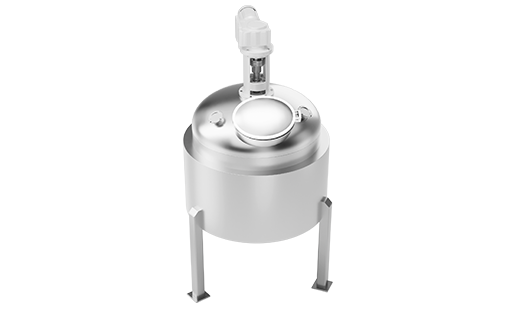
Pre-Mixing & EmulsificationMixing Tank; Inline Mixer; High-Shear Emulsifying MachineWetting of CNTs and initial dispersion.
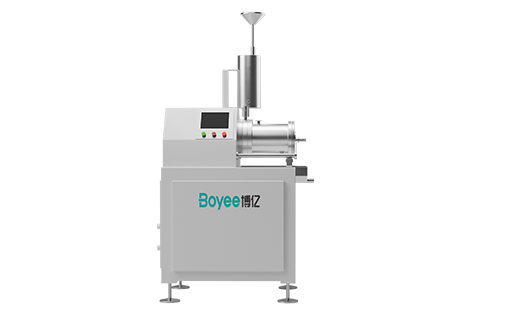
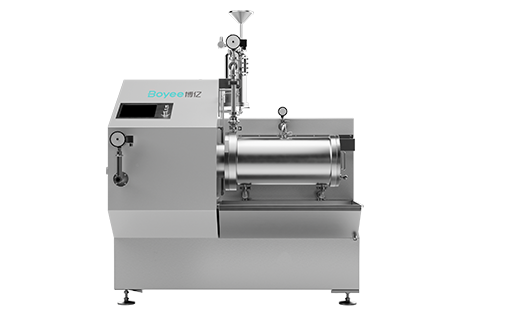
Coarse/Fine GrindingNano Bead MillControlled CNT deagglomeration and fine dispersion.
HomogenizationHomogenizing EquipmentImprovement of slurry distribution and process consistency.
FiltrationMulti-Stage Filtration SystemRemoval of particles above specified filtration limits.
DemagnetizationMagnetic Separation EquipmentReduction of magnetic contaminants.
Finished Slurry HandlingStorage Tanks; Transfer and Packaging SystemsSlurry collection, handling and packaging.

2. Pre-Dispersion & Nano Grinding

Initial mixing and wetting help prepare CNT powders for further processing. Controlled nano grinding can then reduce agglomerates and improve the distribution of conductive additives. The BYZr Ceramic Turbo Bead Mill is one grinding option to assess through material testing.

3. Homogenization & Slurry Consistency

Homogenization can support more uniform slurry processing. Boyee's High-Pressure Homogenizer may be considered where the formulation and process validation support its use.

4. Filtration, Demagnetization & Packaging

Multi-stage filtration and magnetic separation support contamination management, while storage and packaging systems provide controlled finished-slurry handling. Degassing may be configured when required by the process.

5. Related Processing Equipment

The Mixing Tank and High-Shear Emulsifying Machine can support pre-mixing and initial dispersion. The complete equipment combination is confirmed based on material testing and project requirements.

High-Shear Deagglomeration Principle

The high-speed rotating rotor structure in the bead mill applies intense shear forces to break interparticle bonds between conductive filler particles.

Nanoscale Dispersion Performance

High shear forces effectively disperse agglomerated particles, achieving nanoscale distribution of conductive fillers and resolving agglomeration /dispersibility issues.

Specialized Blade Design Ensures Uniform Dispersion

Equipped with uniquely designed multi - layer stirring blades, the mixer operates with coordinated rotational directions at each level to promote circulatory flow. This prevents localized shear anomalies and maintains slurry homogeneity.

Multi-Stage Filtration (Coarse + Fine Filtration)

Completely eliminates micron-scale impurities in conductive slurries.

Dual-Action Stabilization: Dispersants + Stabilizers

Dispersants reduce surface energy solidification of fillers, while stabilizers form protective films on particle surfaces to enhance repulsive forces and improve slurry stability.

Dynamic Mixing & Viscosity Control Prevent Sedimentation

Continuous low-speed stirring or recirculation pumping maintains slurry fluidity, while viscosity adjustment enhances particle suspension—dynamically preventing sedimentation and stratification.

IV. Scalable Production Capacity & Integrated Line Delivery

Boyee supports the progression from laboratory-scale CNT slurry testing to pilot-line evaluation and industrial conductive slurry manufacturing. Scale-up requires evaluation of material behavior, equipment characteristics, quality specifications and operating conditions.

1. Laboratory Process Validation

Testing helps evaluate wetting behavior, CNT dispersion, solid content, viscosity and preliminary process parameters for the proposed material system.

2. Pilot-Scale Production

Pilot trials help verify equipment compatibility, production consistency and operating parameters under representative manufacturing conditions.

3. Industrial Production Line Integration

Automated feeding, batching, dispersion, grinding, homogenization and downstream handling can be coordinated for larger production requirements. Material transfer may be configured as a continuous process where appropriate.

4. Automation & Process Monitoring

  • Automatic raw material feeding, weighing and liquid dosing.
  • Dispersion and grinding process parameter control.
  • Viscosity monitoring where instrumentation is configured.
  • Coordinated slurry storage, transfer and packaging.
  • Production data management according to project scope.

5. Integrated Line Delivery

  • Process route evaluation and equipment configuration.
  • Core equipment manufacturing and integrated line engineering.
  • Automation system configuration and process integration.
  • Installation, commissioning and technical support according to project scope.

6. Customized Production Capacity Planning

Required throughput depends on the material formulation, solid content, viscosity, operating schedule and selected process route. Production capacity should be confirmed through engineering calculations and appropriate process validation rather than assumed from equipment category alone.

Typical project workflow: Material Validation → Process Optimization → Equipment Engineering → Production Line Integration → Commissioning → Industrial Production.

V. Applicable Conductive Materials & Industries

Boyee develops Carbon Nanotube Slurry Production Line configurations for conductive additive dispersion and preparation. Equipment compatibility must be assessed for each CNT type, solvent or dispersion medium, binder system and required final properties.

1. Multi-Walled Carbon Nanotubes (MWCNTs)

MWCNT slurry processing focuses on wetting, controlled deagglomeration, uniform distribution of CNT bundles and viscosity management to support downstream electrode manufacturing.

2. Single-Walled Carbon Nanotubes (SWCNTs)

SWCNTs require process selection that accounts for their structure and sensitivity to excessive mechanical treatment. For dedicated applications, see Boyee's SWCNT Slurry Preparation Line.

3. Typical Application Industries

  • Electric Vehicle Batteries: Conductive additive preparation for lithium-ion battery electrodes.
  • Energy Storage Batteries: CNT conductive slurry processing for stationary energy storage applications.
  • Lithium-Ion Battery Materials: Conductive slurry preparation for compatible cathode and anode formulations.
  • Electronic Materials: Conductive slurry processing for suitable electronic material formulations.

VI. Frequently Asked Questions About Conductive Slurry Production Lines

Below are common engineering questions from manufacturers planning CNT conductive slurry production and equipment sourcing.

1. What materials can the conductive slurry line process?

The line can be configured for SWCNT and MWCNT conductive additives. Material compatibility and processing parameters should be evaluated for each CNT type, solvent and binder system.

2. How does the line improve CNT dispersion?

The process combines wetting, pre-dispersion, controlled nano grinding and homogenization to reduce agglomerates and improve distribution. Processing conditions must be selected to limit excessive mechanical treatment.

3. Can solid content and viscosity be controlled?

Weighing, dosing, mixing and appropriate process monitoring support formulation control. Actual target ranges depend on the material system and must be validated during process development.

4. Can the same equipment process both SWCNT and MWCNT slurries?

Some equipment can serve both materials, but appropriate rotor design, dispersion conditions and operating parameters may differ. Material testing is recommended before configuration is finalized.

5. Can Boyee provide a complete conductive slurry production line?

Boyee provides integrated solutions for feeding, batching, dispersion, grinding, homogenization, filtration and downstream handling. The final supply and service scope is confirmed for each project.

6. What information is required for a line proposal?

Please provide the CNT type, solvent and binder system, target solid content, viscosity requirements, quality criteria, desired throughput and automation requirements.

VII. Request a Customized Conductive Slurry Production Line Solution


Planning a new Conductive Slurry Production Line or expanding CNT slurry manufacturing capacity? Boyee offers process evaluation, dispersion and grinding equipment, automation integration and coordinated production line solutions.


Share your CNT type, slurry formulation, target solid content, viscosity requirements and expected throughput with our engineering team. Contact Boyee for a Conductive Slurry Line Solution

二维码

扫码关注