











Lfp/Lmfp Cathode Production Line

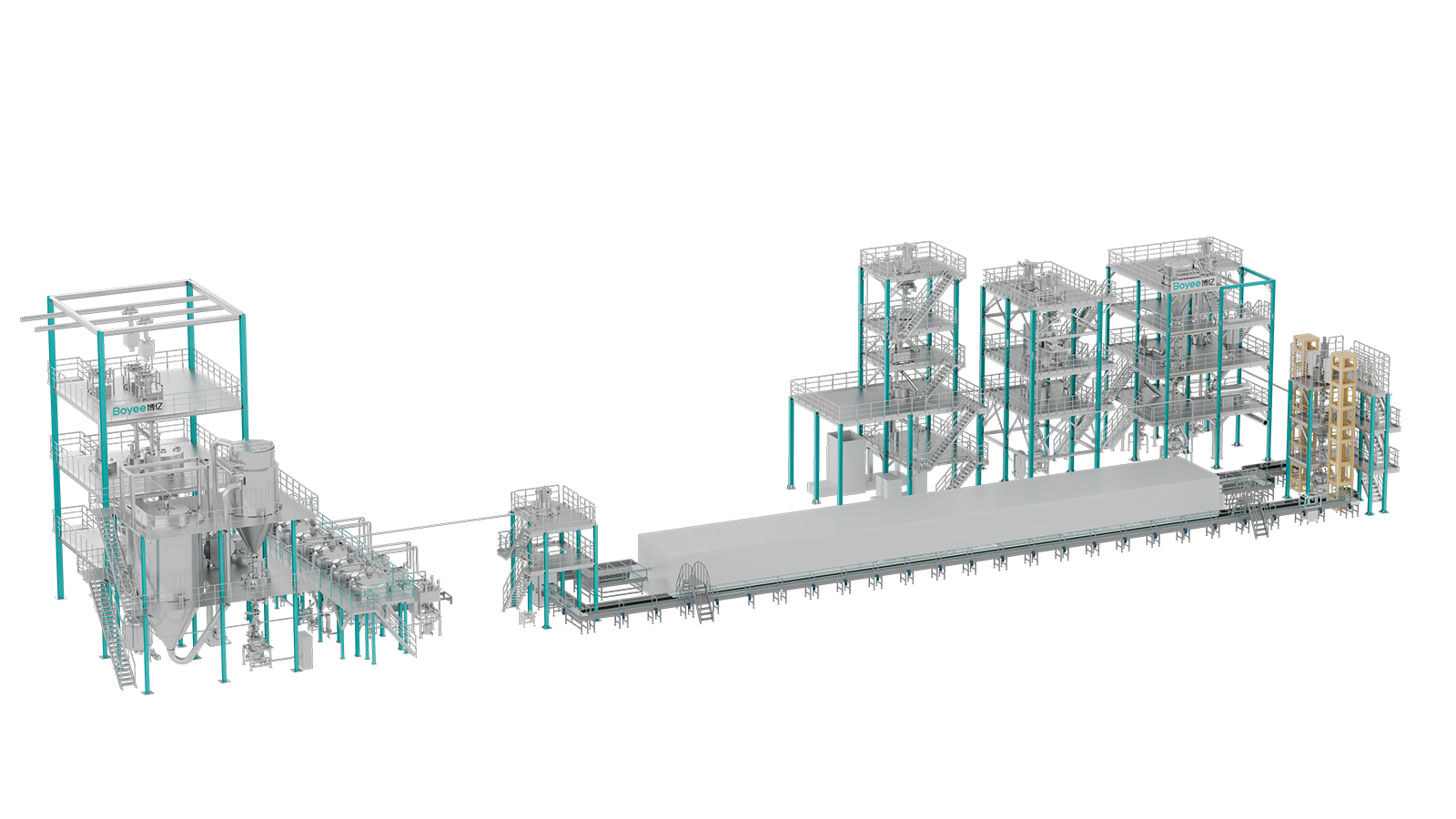
LFP/LMFP Production Line Solution
Overview
LFP/LMFP Production Line Solution
Characteristic
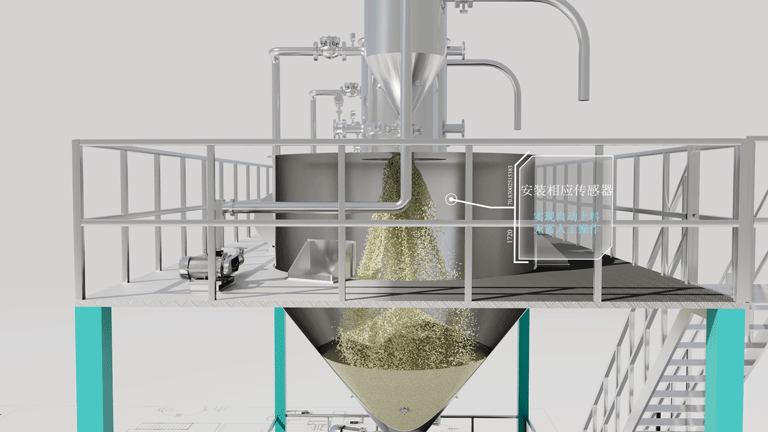
Automated ton-bag unpacking,reduce manual operations
Continuous long-distance positive pressure pneumatic conveying design + Adoption of anti-clogging type gas replenishment pipeline
Nano-grinding technology solves the issues of agglomeration and uneven particle size in lithium iron phosphate materials
Secondary sintering process improves material energy density
High-precision measuring and packaging system reduces material waste
Low-loss powder conveying design minimizes clogging and waste of raw materials during long-distance transport

Production Line Challenges & Solution
Non-uniform particle size & low grinding efficiency

Bead milling combined with nano-grinding technology effectively improves particle dispersibility, suppresses agglomeration, solves size uniformity issues, and enhances overall material performance.

Significant temperature fluctuations & unstable atmosphere control

Temperature Adjustment:Excessive temperature causes particle agglomeration and reduced activityInsufficient temperature leads to impurity retentionRequires precise temperature regulation. Sintering Time Control:Short duration results in poor material performanceProlonged duration increases energy consumption and side reactionsRequires optimal reaction time determination.

Particle agglomeration & difficult moisture removal

Drying Process Optimization:Adjust drying temperature and duration to balance dehydration efficiency and anti-agglomeration requirements. Additive Application:Incorporate dispersants weaken interparticle forces.Combine with desiccants enhances dehydration effectiveness.

II. Continuous Wet Grinding for LFP/LMFP Cathode Materials

Particle size distribution, dispersion uniformity and process consistency are critical considerations in LFP and LMFP cathode material manufacturing. Conventional batch grinding can create challenges related to particle agglomeration, uneven dispersion and repeated processing interruptions.

Boyee integrates continuous wet grinding into its LFP/LMFP Cathode Material Production Line. Controlled slurry feeding, nano bead milling and stable discharge help prepare finely dispersed materials for downstream spray drying and thermal processing.

1. Uniform Particle Size Control

High-efficiency wet bead milling helps break down particle agglomerates and improve particle size distribution uniformity. Final particle size targets must be established for each formulation and validated through testing.

2. Improved Slurry Dispersion

Continuous grinding supports more uniform distribution of solid particles in the liquid phase, reducing localized agglomeration and improving feed consistency for subsequent processing.

3. Continuous Processing & Production Efficiency

Coordinated feeding, grinding and discharge can reduce handling interruptions and support integration with upstream mixing and downstream spray drying systems.

4. Scalable Equipment Configuration

Grinding chamber selection, media size, residence time and process parameters should be selected according to slurry characteristics, target particle size and production requirements. Pilot trials can support scale-up decisions.

5. Recommended Nano Grinding Equipment

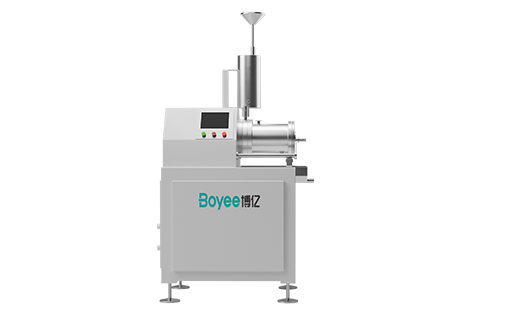
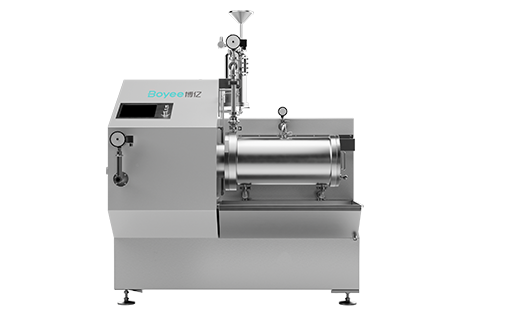
For LFP/LMFP applications, Boyee offers the NMM High-Flow Screen-Type Nano Bead Mill and the NMM Direct-Drive Nano Bead Mill. Equipment suitability is determined through material and process evaluation.

Main craft
Unpacking and Feeding
1
Metering&Batching
2
Wet Grinding
3
Spray Drying
4
Sintering
5
Air Jet Milling
6
Batch Mixing
7
Screening/Demagnetisation/Packaging
8

III. Core Equipment Configuration for LFP/LMFP Production Lines

Boyee provides integrated LFP Production Equipment for the main stages of lithium iron phosphate and LMFP cathode material manufacturing. The final equipment list is selected according to material characteristics, process routes, project scale and quality-control requirements.

1. Main Production Equipment & Functions

Production StageMain EquipmentPrimary Function
Raw Material FeedingTon-Bag Unpacking Station; Dust Collection and Pneumatic Conveying SystemsControlled raw material feeding, dust control and material transfer.
Metering & BatchingAutomatic Weighing and Batching SystemRaw material measurement and formulation control.
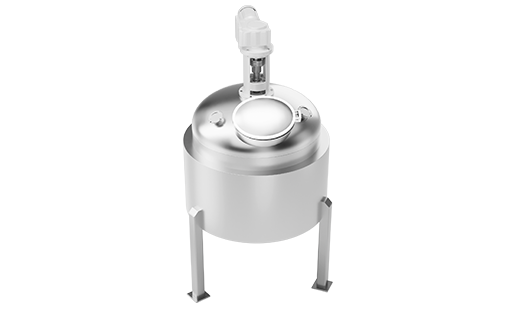
Wet Grinding & DispersionNMM Nano Bead Mill; Dispersion and Intermediate Storage Tanks; Filtration and Magnetic Separation EquipmentFine particle grinding, slurry dispersion and preparation.
Spray DryingCentrifugal Atomizer; Spray Drying Tower; Hot Air and Powder Collection SystemsMoisture removal and powder collection following wet processing.
SinteringMulti-Zone Sintering Kiln; Feeding, Temperature Control and Cooling SystemsControlled thermal treatment based on the selected process route.
Air Jet MillingJet Mill; Dynamic Classifier; Cyclone Separator; Pulse Dust Collection SystemDeagglomeration, particle size classification and powder handling.
Batch MixingRibbon Mixer; Powder Transfer and Weighing SystemsBlending of processed powders to improve batch uniformity.
Screening & PackagingScreening, Demagnetization, Weighing and Packaging EquipmentParticle screening, reduction of magnetic contaminants and finished product packaging.

2. Integrated Processing & Automation

Boyee can coordinate material conveying, weighing, grinding, drying, sintering and packaging within an integrated production line. Supporting systems include the Centrifugal Spray Drying System and the High-Temperature Continuous Sintering Kiln System.

Configuration note: The production stages above are a general equipment reference. Individual LFP/LMFP projects may differ in sintering sequence, powder processing and system specifications; equipment and operating parameters must be confirmed against the customer's process.


Flow Chart for Battery Slurry

IV. Scalable Production Capacity & Turnkey EPC Delivery

Boyee supports Battery Material Manufacturing Solutions from laboratory material evaluation and pilot-scale trials to industrial production line integration. Each project is developed around the customer's material system, technical specifications, target output and facility conditions.

1. Process Route Design

Develop a suitable sequence of dosing, dispersion, grinding, drying, thermal processing and downstream powder handling based on the formulation and quality targets.

2. Equipment Selection & Integration

Configure the key production and auxiliary systems as a coordinated line, considering material compatibility, operating conditions, dust control and maintenance access.

3. Production Capacity Planning

Production throughput and equipment sizing are evaluated against the proposed process, material behavior, operating schedule and trial results. No fixed output is assumed without a validated project specification.

4. Automation & Process Monitoring

Automatic feeding, weighing, transfer and process monitoring can be configured to support coordinated operation and consistent production conditions.

5. Turnkey EPC Project Support

Depending on the agreed project scope, Boyee supports process engineering, equipment manufacturing, integration, installation, commissioning and production preparation.

6. From Validation to Industrial Production

Material Validation → Process Engineering → Equipment Configuration → Installation & Commissioning → Industrial Production

To assess a proposed LMFP Production Line or lithium iron phosphate production line, please share your material formulation, required particle size, target output, processing route and plant conditions.


V. Applications of LFP/LMFP Cathode Material Production Lines

The LFP/LMFP production line is designed for lithium-ion battery cathode material manufacturers serving several downstream markets. Specific equipment configurations and material properties depend on the intended battery system and manufacturing process.

1. Electric Vehicle Batteries

Cathode material preparation for lithium-ion batteries used in electric passenger vehicles, commercial vehicles and related automotive applications.

2. Energy Storage Systems

LFP/LMFP cathode material processing for stationary energy storage batteries, where repeatable powder manufacturing and stable quality management are important.

3. Battery Material Manufacturing

Integrated grinding, drying, sintering and powder processing equipment for cathode material manufacturers planning new lines or capacity expansions.


VI. Plan Your LFP/LMFP Cathode Material Production Line


Planning a new Lithium Iron Phosphate Production Line or an LMFP cathode material project? Boyee can help evaluate process routes, core grinding and processing equipment, production line automation and integration requirements.


Share your target capacity, raw material characteristics, particle size requirements and facility conditions. Contact Boyee for a Customized Production Line Solution

二维码

扫码关注