












High-Density Lithium Iron Phosphate Production Line Solution

High-Density Lithium Iron Phosphate Production Line Solution
Overview

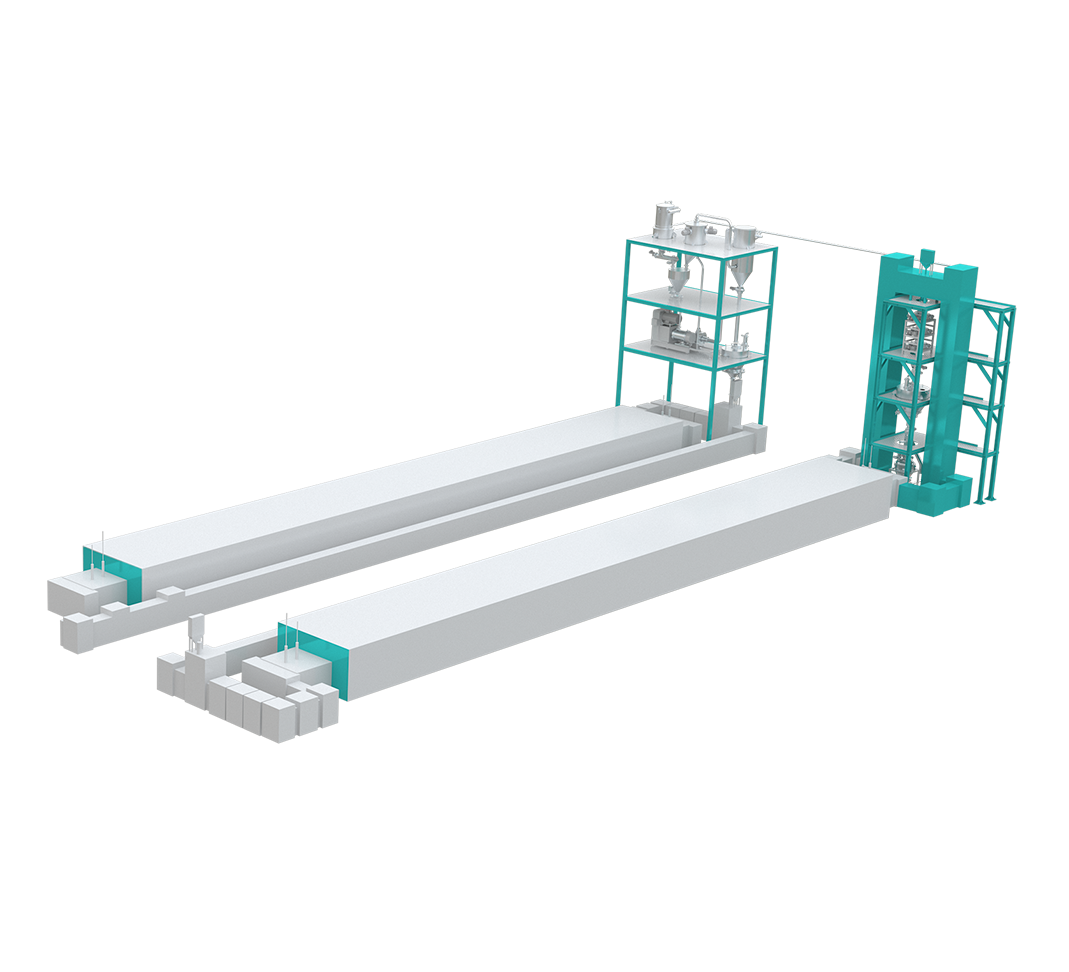
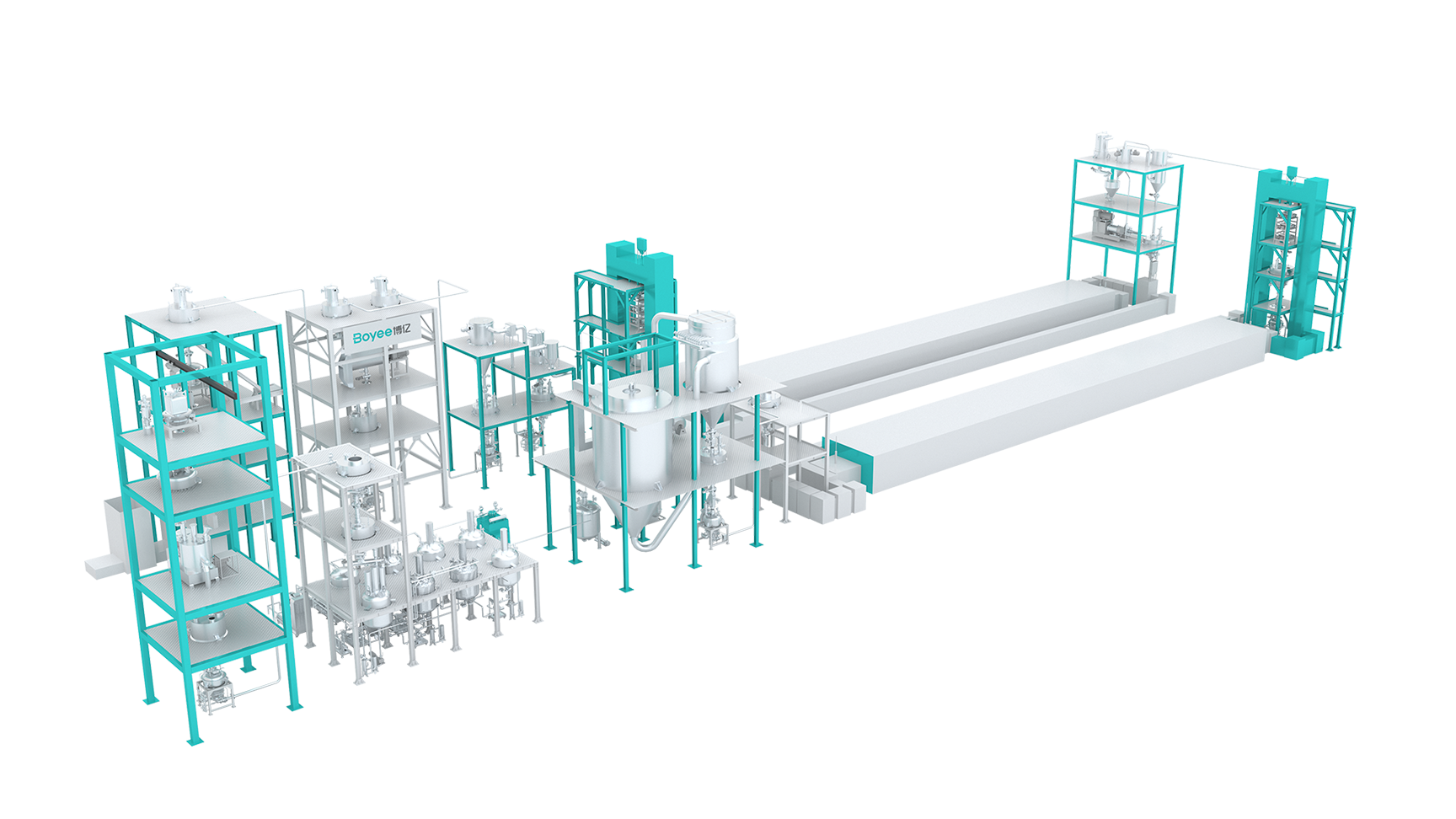
Boyee Industrial provides complete High-Density Lithium Iron Phosphate Production Line Solutions for advanced LFP cathode material manufacturing. The production line integrates raw material mixing, slurry preparation, wet grinding, spray drying, calcination, crushing, classification and packaging processes to achieve efficient and stable lithium iron phosphate production.

Designed for different LFP material systems and production requirements, Boyee's LFP cathode material production line supports customized equipment selection and capacity configuration according to customer materials, target output, process routes and factory conditions. The solution covers the complete project process from laboratory verification and pilot production to large-scale commercial manufacturing.


High-Density Lithium Iron Phosphate Production Line Solution

I. High-Density Lithium Iron Phosphate Production Line Solution


1781162136321184.png

1. One-Stop Full-Process Equipment Provider

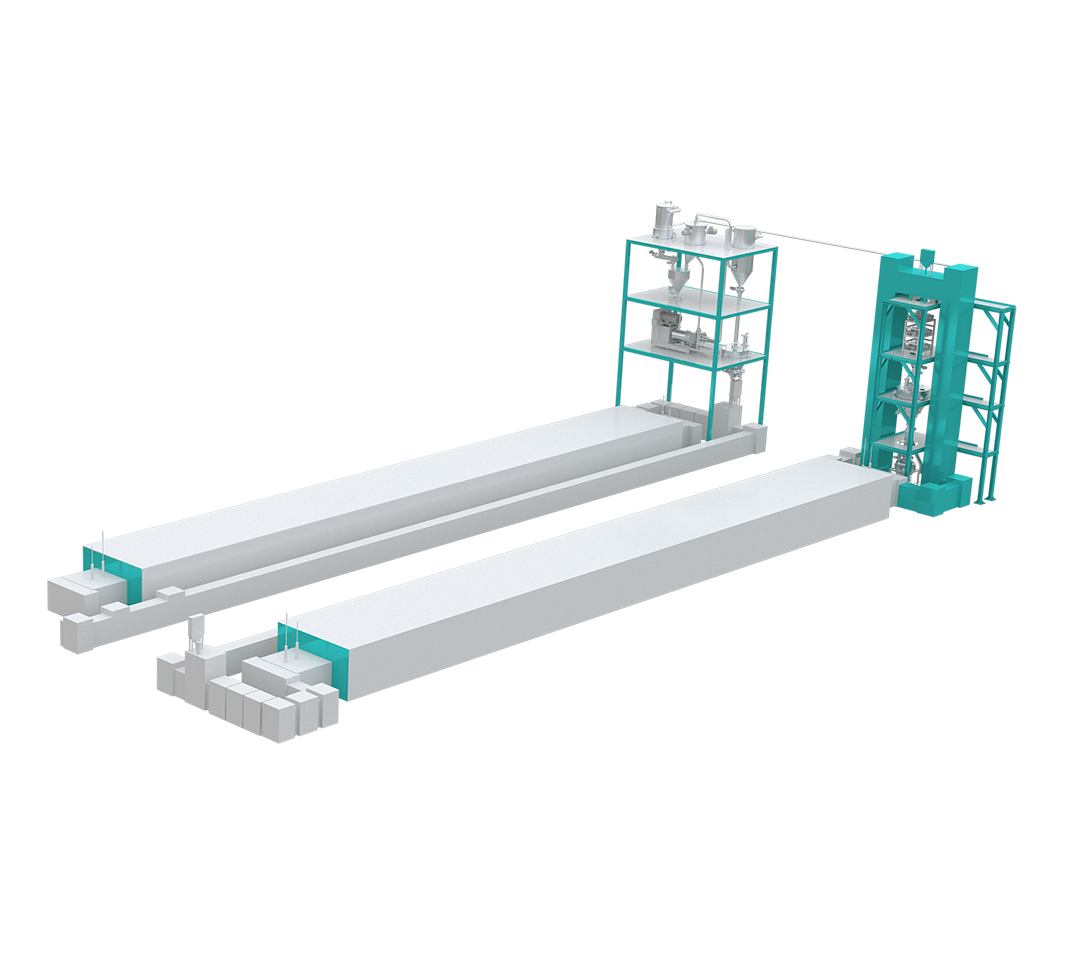
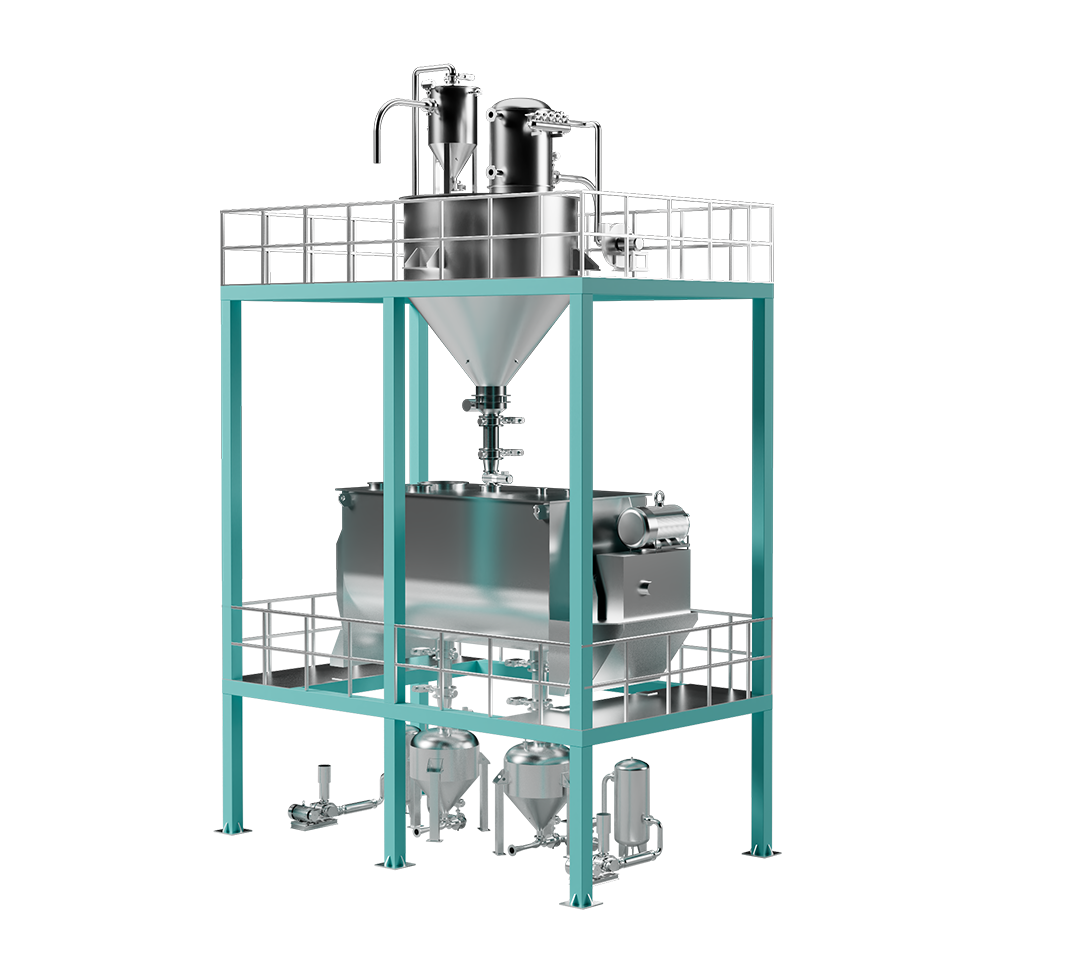
Boyee is an industry-leading supplier of full-process equipment for high-density lithium iron phosphate (LFP) and LMFP (lithium manganese iron phosphate) production lines, covering raw material feeding, weighing and batching, wet grinding, drying, sintering, jet milling, demagnetization/filtration, and packaging.


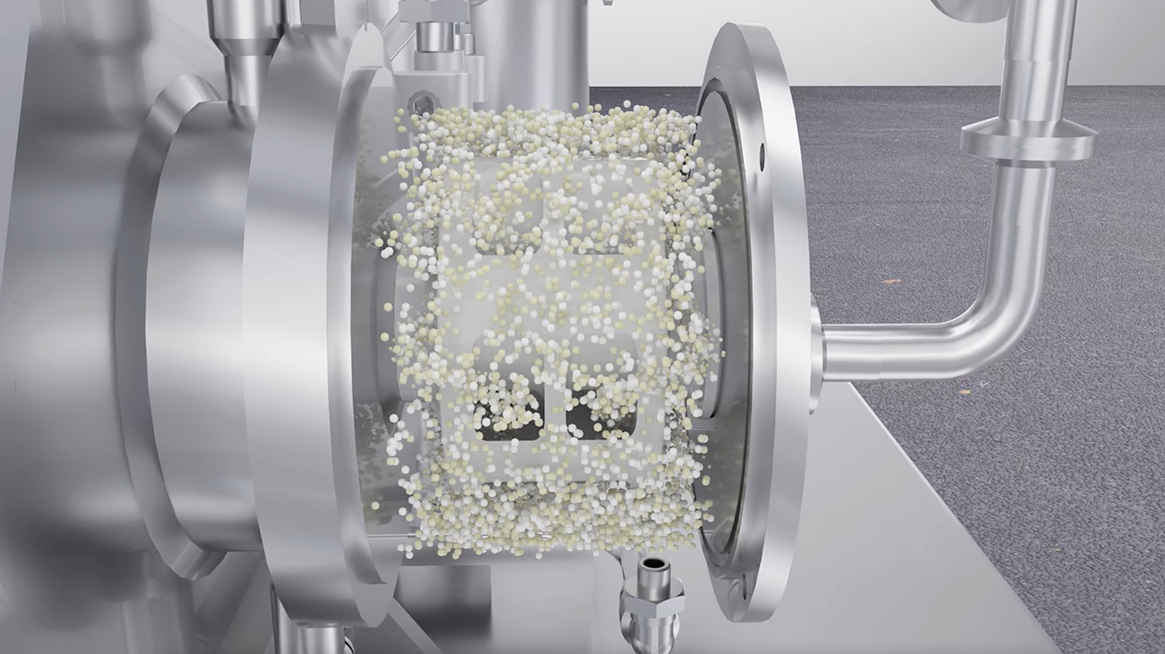
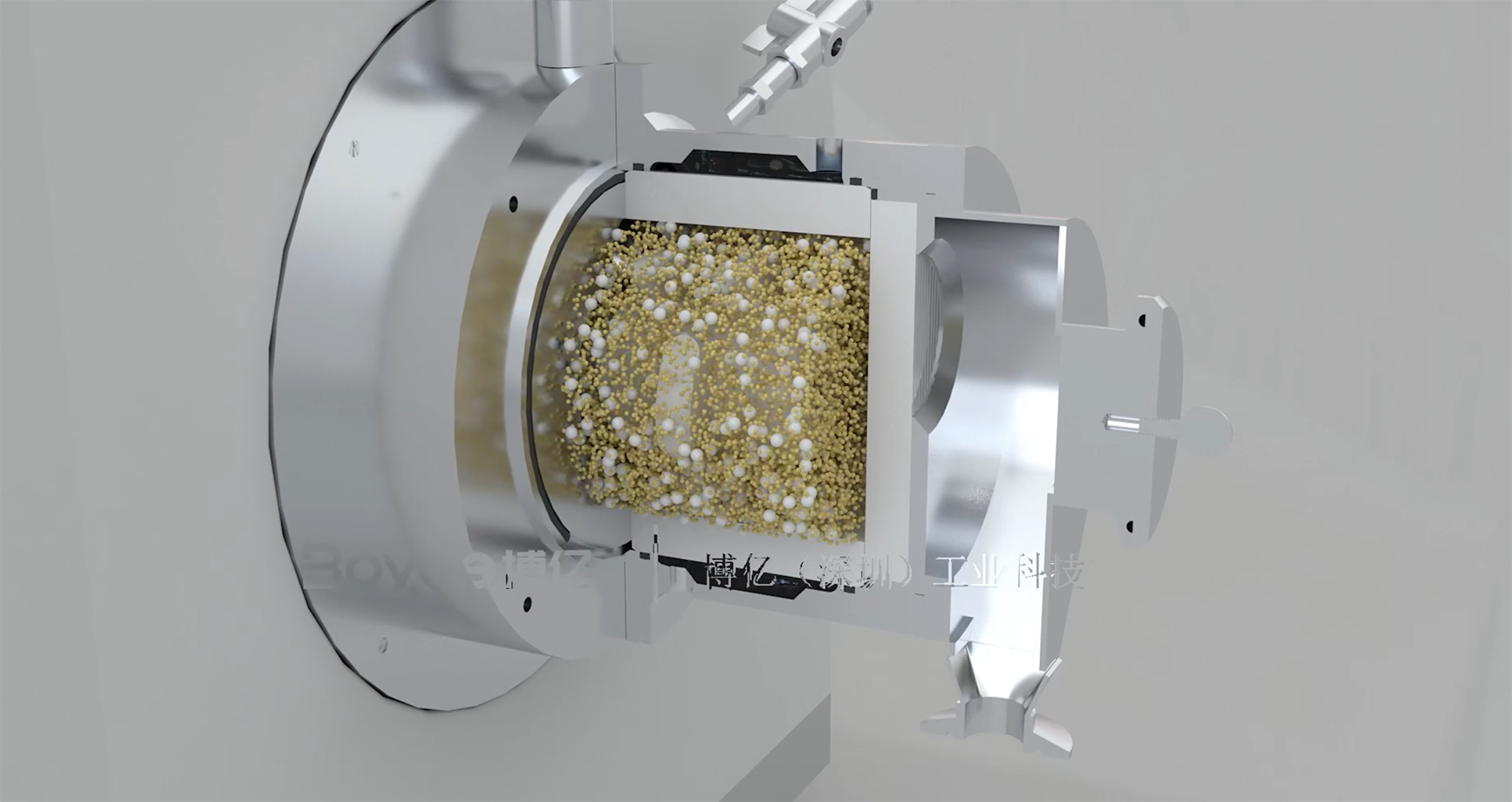
Centered on our direct-drive nano bead milling technology, we effectively resolve particle size inconsistency and agglomeration issues, ensuring uniform particle size distribution and a higher, more consistent tap density.


工作环境.png

2. Proven Turnkey Lines for Large-Scale Cathode Material Production

Boyee has built mature mass-production turnkey lines for multiple domestic cathode material manufacturers, accumulating extensive experience in 10,000-ton-scale production line implementation.


Our solutions cover mainstream LFP and LMFP cathode material systems, helping customers rapidly bridge the gap from small-batch trial production to large-scale industrial output.


产线 (4).png

3. In-House Pilot Line for Process Validation

Boyee has built an in-house, open-access pilot line for high-density LFP and LMFP production, supporting process validation with customer-supplied raw materials.


Without investing in their own equipment or facility, customers can perform full-process trials on Boyee's line, verify complete process parameters in advance, and significantly reduce industrialization risks and upfront investment costs.


Uneven dispersion of raw materials

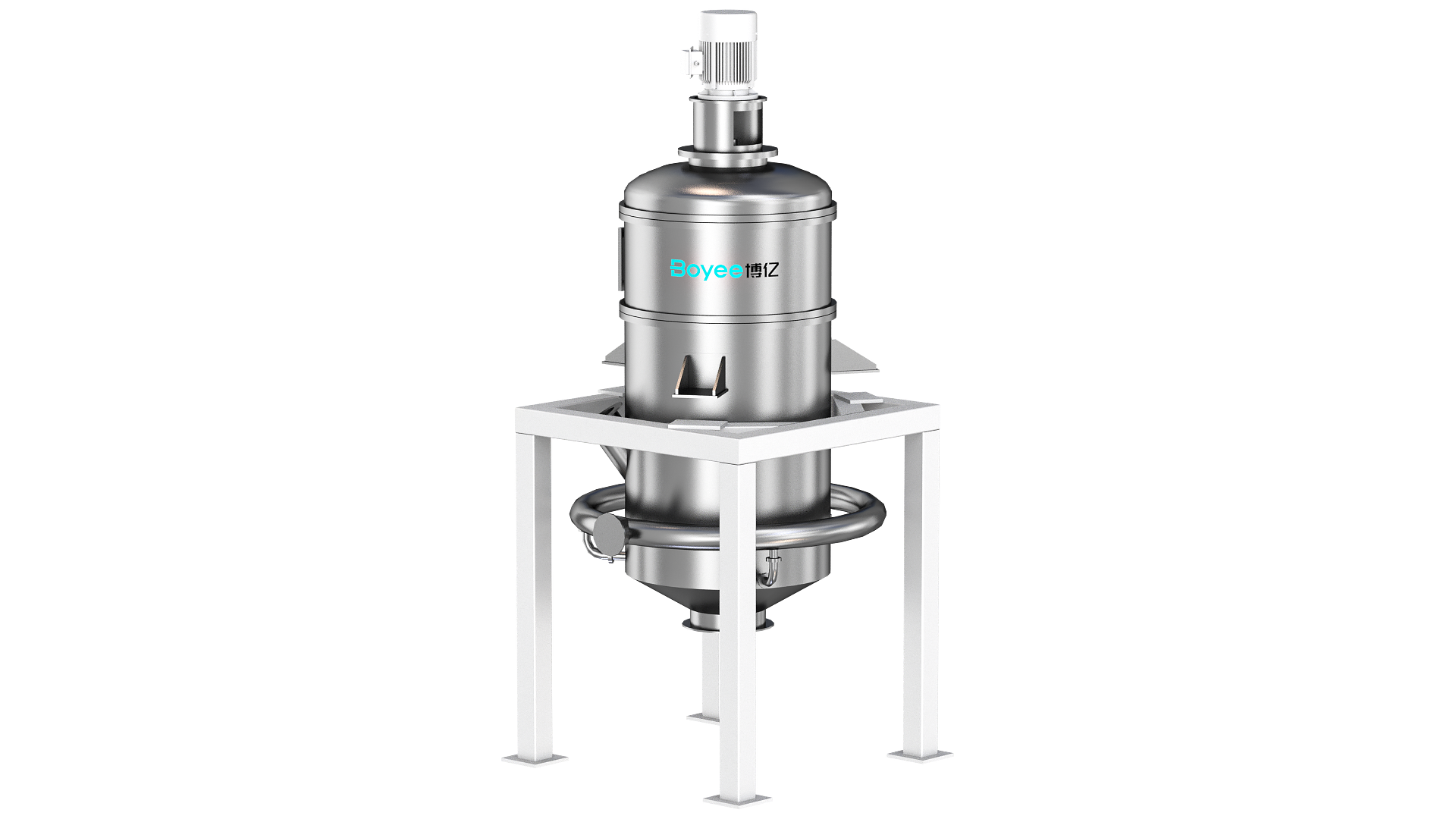
Employing a combination of unpacking and feeding with wet grinding technology to achieve micron-level depolymerization of raw material parricles, coupled with a closed-loop processing system, effectively blocks impurities at the source to ensure material purity.

Traditional drring methods are prone to clumping and take a long time

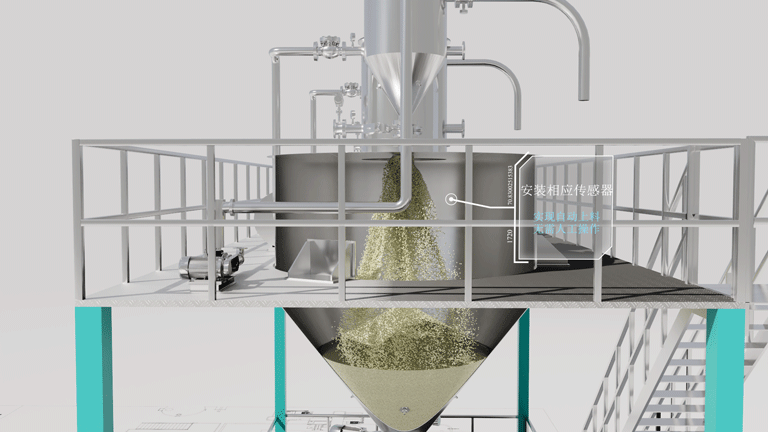
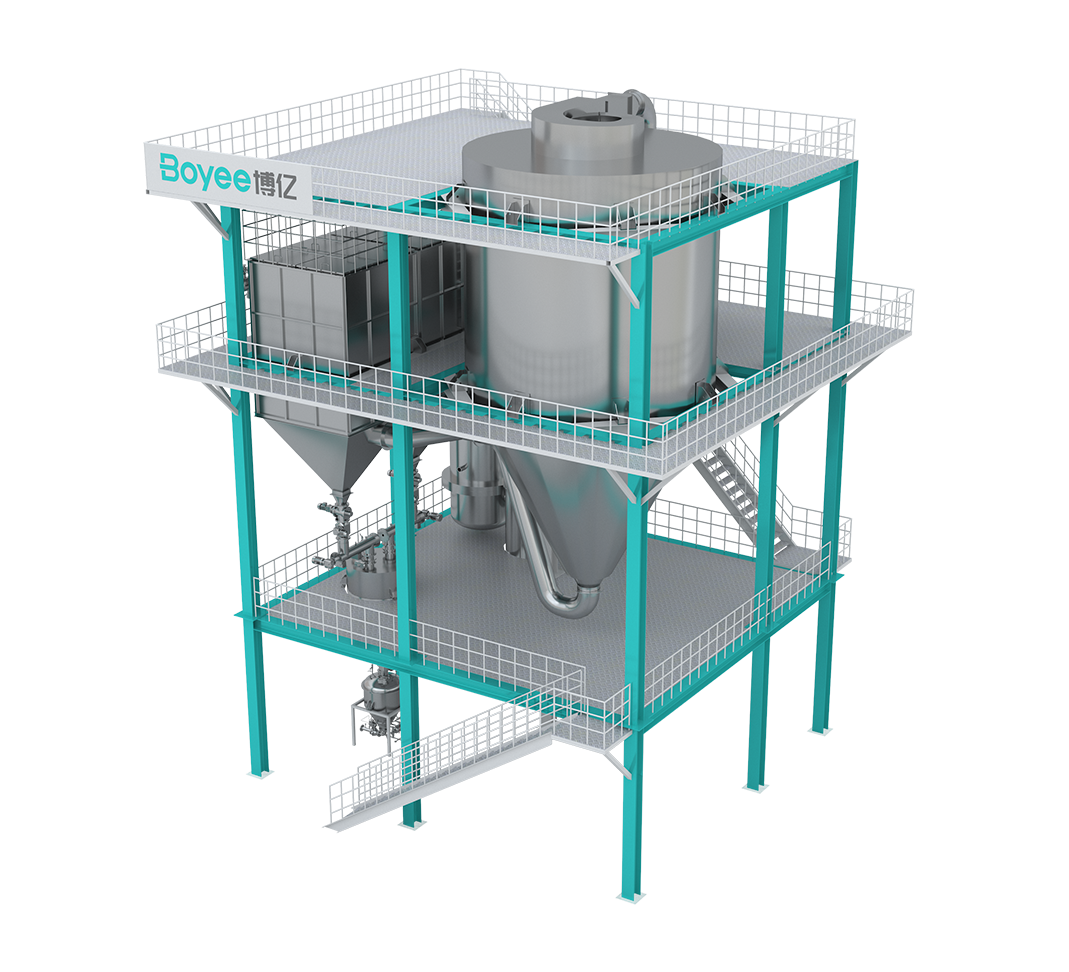
Using spray drring technology, the feed solution is atomized into droplets of 10–50 μm. Through instantaneous mass and heat transfer with hot air, rapid drring produces spherical, free-ffowing powder. This effectively suppresses agglomeration, signiffcantly enhancing drring efffciency and the stability of ffnished product quality.

Signiffcant ffuctuations in parricle size distribution

The combined process of air jet milling and batch blending zone employs precise parricle size control through air jet milling to regulate distribution, while the batch blending zone ensures uniform mixing and eliminates batch-to-batch parricle size ffuctuations, guaranteeing high consistency in parricle size across multiple production batches.

Crrstal Phase DeviationLow compaction density

Employing a closed-loop process of “primarr sintering + drr grinding + secondarr sintering,” the primarr sintering establishes the foundational crrstal structure while drr grinding breaks down parricles. Secondarr sintering optimizes crrstal integrity and grain density, enhancing material compaction density and electrochemical perrormance.

II. Production Line Process Flow
Unpacking&Feeding
1
Wet Grinding
2
Spray Drying
3
Primary Sintering
4
Dry Grinding
5
Second Sintering
6
Jet Mill
7
Mixing Zone
8
Screening/Demagnetization/Packaging
9

LFP Wet Grinding Performance and Particle Size Control

Particle size distribution is a critical factor affecting the performance and consistency of high-density lithium iron phosphate materials. Boyee Industrial provides advanced LFP wet grinding and nano grinding solutions to achieve efficient particle refinement, agglomeration reduction and precise particle size control.

Through optimized grinding process parameters and equipment configuration, Boyee's LFP production equipment improves material dispersion and achieves stable D50 and D90 particle size distribution for different LFP cathode material production requirements.


图片3 (1).png图片4 (1).png

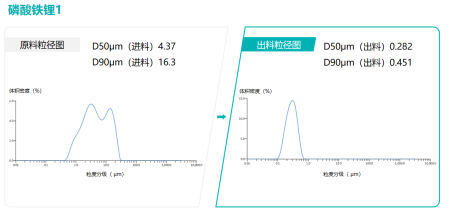
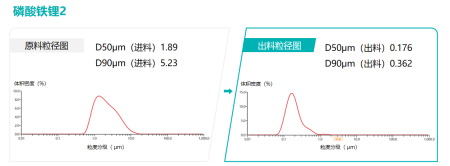
Particle Size Distribution Before and After LFP Wet Grinding

The particle size comparison demonstrates the grinding performance before and after processing. After wet grinding, lithium iron phosphate particles are effectively refined, and agglomeration is reduced, resulting in improved particle uniformity and material consistency.

The particle size analysis shows the changes in D50 and D90 values before and after grinding. Through advanced nano grinding technology, Boyee's equipment helps achieve precise particle size control for high-performance lithium iron phosphate production lines.


Key Performance Benefits:

● Reduced particle size and improved material refinement
● Effective reduction of particle agglomeration
● Enhanced slurry dispersion and processing stability
● Improved batch consistency for large-scale LFP production


The actual grinding results may vary depending on raw material characteristics, material formulation and process conditions. Boyee Industrial can provide customized LFP wet grinding verification and equipment matching based on customer materials, target capacity and production requirements.

Industry application
二维码

扫码关注