
















As solid-state batteries move from the laboratory to mass production, it is not only the materials that are being upgraded, but the entire production equipment as well.
With the advancement of solid-state battery technology, the industry’s focus is gradually shifting from verifying material performance to process stability, batch consistency, production efficiency, and manufacturing costs. Different solid-state electrolyte approaches also impose distinct requirements on equipment selection and the overall production line process.
1. From the Laboratory to Mass Production: Why Do Solid-State Battery Systems Need to Be Upgraded?
As solid-state electrolyte materials enter the pilot-scale and large-scale production line construction phases, production equipment must not only meet material preparation requirements but also address issues such as process scaling, quality consistency, environmental control, and production costs.
This has driven the evolution of solid-state battery production equipment from the optimization of individual machine performance toward specialization, sealed systems, automation, and full-line system integration.
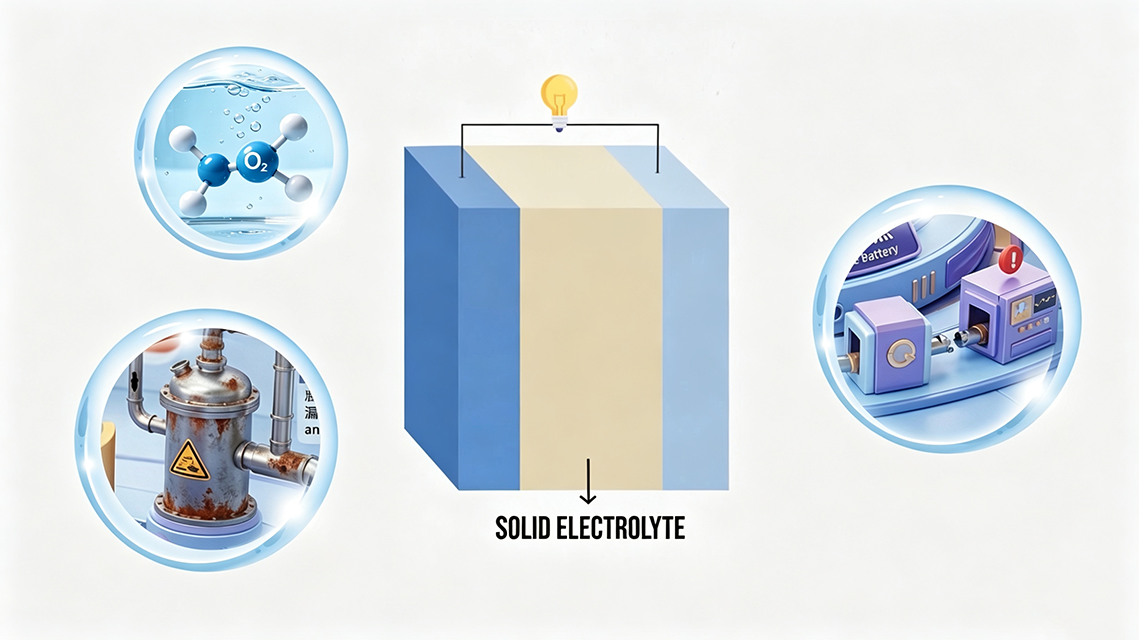
2. What Are the Differences in Equipment Requirements Between Oxide and Sulfide Solid-State Electrolytes?
Oxide solid-state electrolytes: The focus is on fine grinding and powder uniformity.
The production process involves steps such as raw material mixing, grinding and dispersion, heat treatment, and post-processing, which place high demands on particle size distribution, mixing uniformity, and control of grinding contamination.
Sulfide solid-state electrolytes: The focus is on low moisture and oxygen levels and sealed safety controls.
Some sulfide materials are sensitive to moisture; therefore, the production process must prioritize sealed feeding and conveying, inert gas protection, low-moisture and low-oxygen control, off-gas treatment, and safety interlocks.
Process differences across various material routes are driving the development of solid-state electrolyte production equipment toward greater specialization and customization.
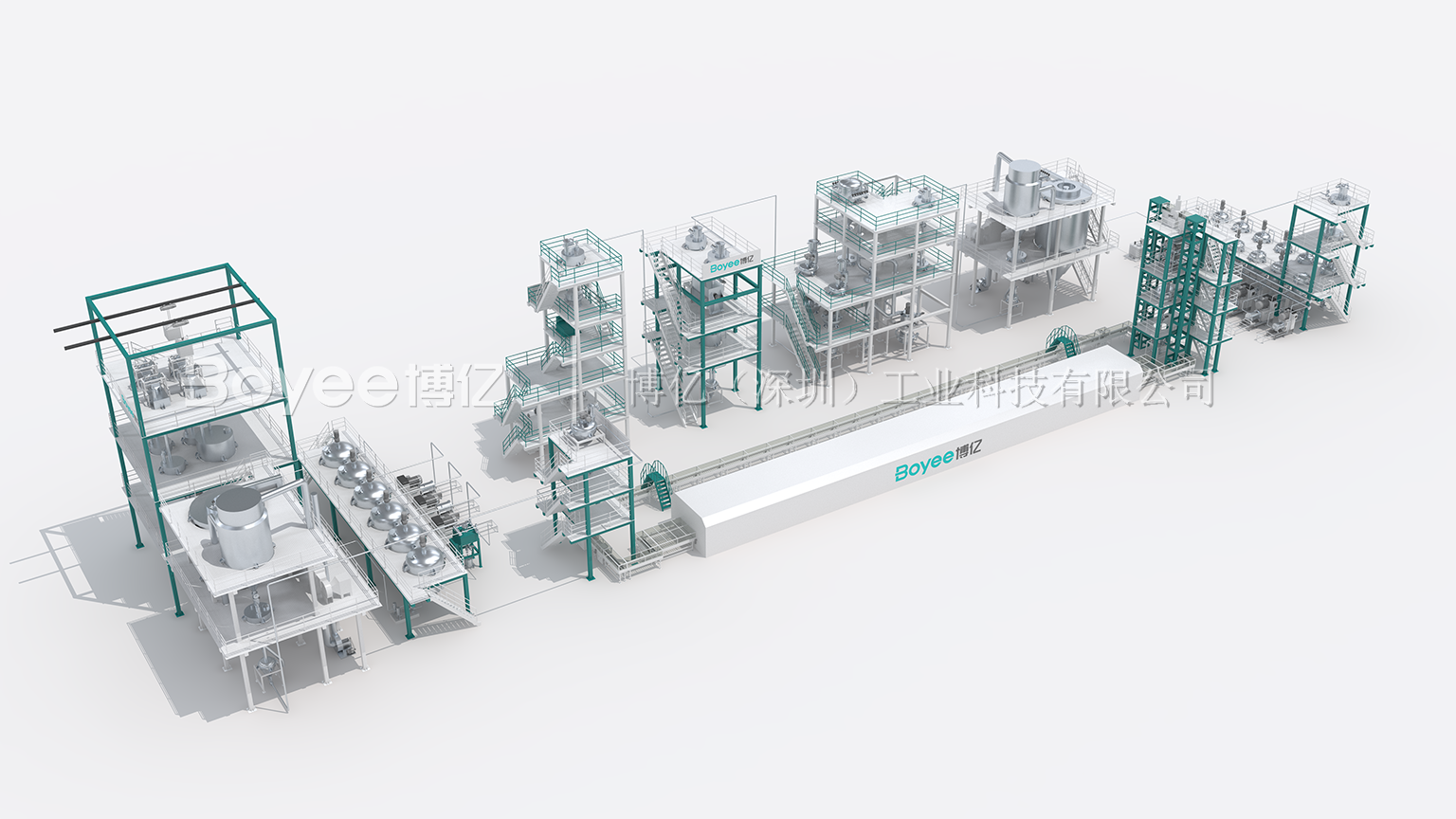
Pictured: Boyee Industrial for Oxide Solid-State Electrolytes Production Line Solution
3. How Will the Large-Scale Adoption of Solid-State Batteries Drive Upgrades in Equipment Technology?
In the future, the development of high-end equipment will primarily manifest in four areas:
Precision Grinding: Optimizing particle size distribution, dispersion uniformity, and contamination control to improve material processing quality.
Sealed Production: Upgrading from sealed individual machines to full-process environmental control covering feeding, mixing, conveying, and collection.
Dry-Process Technology: Promoting the application of dry mixing, powder dispersion, and dry electrode technologies in suitable material systems.
Automated Production Lines: Strengthening process monitoring, parameter control, and production data traceability to achieve synergy between equipment and processes.
The key to future equipment competitiveness lies not only in the performance of individual machines but also in process adaptability, system integration, and large-scale production capacity.
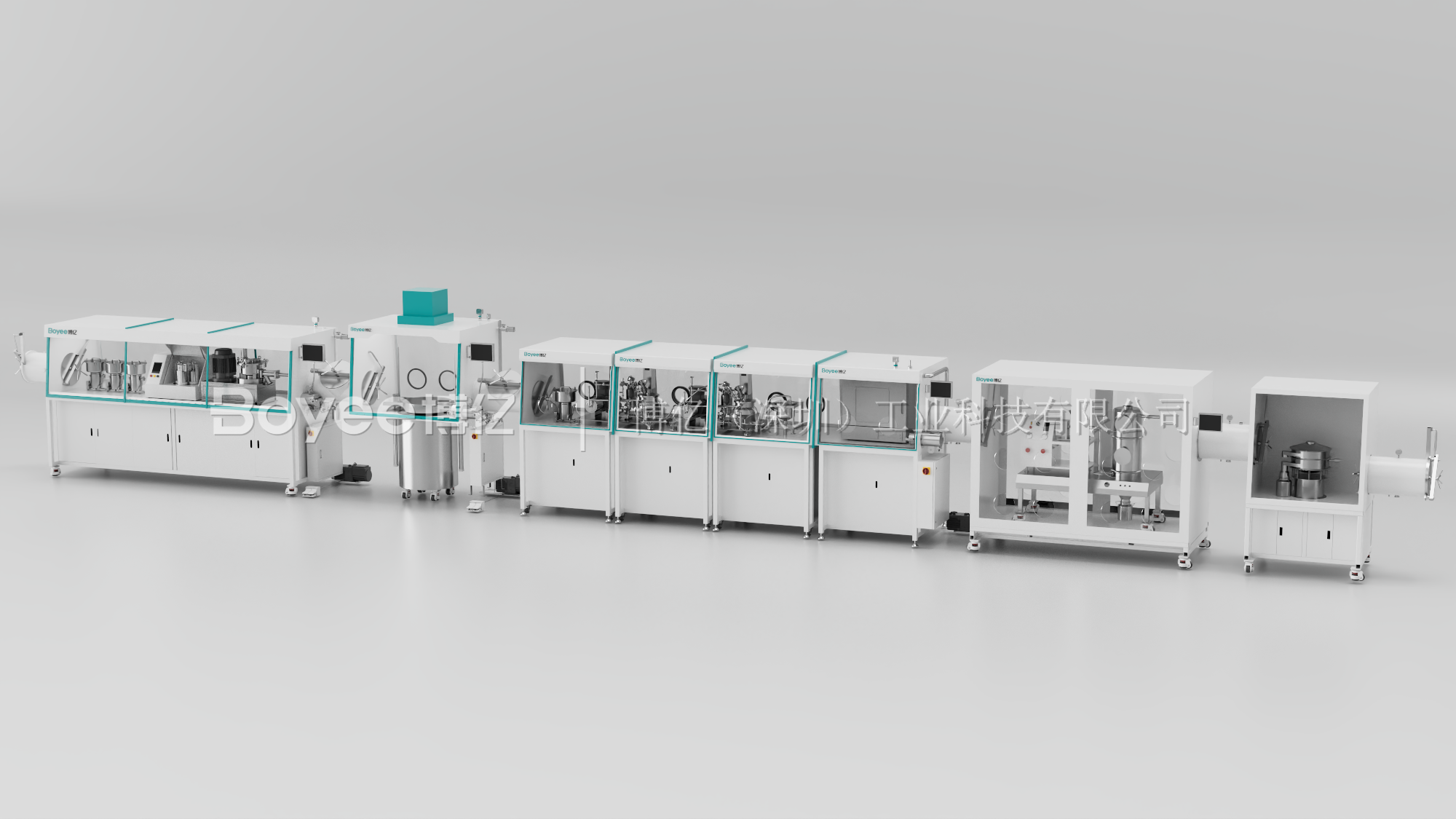
Pictured: Boyee Industrial for Sulfide Solid-State Electrolytes Production Line Solution
4. Boyee Industrial: From Core Equipment to Turnkey EPC for Solid-State Electrolyte Production Lines
Addressing the production needs for oxide and sulfide solid-state electrolytes, Boyee Industrial provides integrated solutions ranging from experimental validation and core equipment to turnkey EPC engineering, covering:
Nano-Grinding and Mixing/Dispersion: Provides equipment such as nano-bead mills and mixing/dispersion systems to meet the fine processing requirements of various materials.
Contained Powder Handling: Configures contained feeding, conveying, mixing, and inert atmosphere protection systems.
Process System Integration: Coordinates the configuration of heat treatment, post-treatment, and related process equipment.
Automation and Turnkey EPC: We provide process design, equipment manufacturing, system integration, and engineering implementation services.
In terms of project delivery experience, Boyee has participated in the construction of a 1,000-metric-ton-scale oxide solid-state electrolyte production line and has successfully secured contracts for turnkey EPC projects in South Korea and China. Additionally, we have established multiple pilot lines for sulfide solid-state electrolytes and continue to accumulate experience in large-scale engineering applications.
FAQ | Frequently Asked Questions About Solid-State Battery Production Equipment
1) What equipment is required for the large-scale production of solid-state batteries?
Depending on the material route and process requirements, the equipment typically includes systems for raw material processing, mixing, fine grinding, heat treatment, dry electrode processing, and automated control. The configuration of a solid-state electrolyte production line differs from that of a complete battery cell production line.
2) What are the differences between equipment for oxide and sulfide solid-state electrolytes?
The oxide route emphasizes powder grinding, uniform mixing, and heat treatment; the sulfide route places greater emphasis on low-moisture and low-oxygen control, sealed conveying, inert atmosphere protection, and safety management.
3) Is a nano bead mill required for solid-state electrolyte production?
Not necessarily. The choice depends on material properties, target particle size, contamination requirements, and whether a dry or wet process is selected. Nano bead mills are suitable for the fine grinding and dispersion of certain solid-state electrolyte materials.
4) What should be considered when scaling up a solid-state electrolyte production line from pilot-scale to mass production?
Key considerations include process reproducibility, batch consistency, equipment processing capacity, environmental safety, production costs, and the stability of the entire line’s operation. These should be validated through necessary experiments and pilot-scale testing.
5) What EPC solutions for complete solid-state electrolyte production lines does Boyee Industrial offer?
Boyee provides core equipment and complete EPC solutions for oxide and sulfide solid-state electrolytes, covering grinding and dispersion, sealed powder handling, process system integration, automated control, and engineering implementation. Configurations can be customized based on material systems and production capacity requirements.
