
















With growing demand for high-energy-density batteries in sectors such as power batteries and consumer electronics, silicon-carbon anodes have emerged as a key technological direction. Among these, the technical approach combining a porous carbon scaffold with chemical vapor deposition (CVD) has garnered significant attention; however, the transition from laboratory R&D to industrial-scale mass production still faces multiple challenges, including process, equipment, and cost issues.
1. Upgrading Material Approaches: Why Are Silicon-Carbon Anodes Gaining Attention?
Traditional graphite anodes have limited potential for capacity improvement, while silicon materials possess a high theoretical specific capacity. However, volume expansion, structural changes, and cycle degradation during charging and discharging have hindered their industrial application.
To address these issues, the industry continues to explore technical approaches such as silicon oxide (SiOx) anodes, nanoscale silicon–carbon composites, and CVD silicon-carbon.
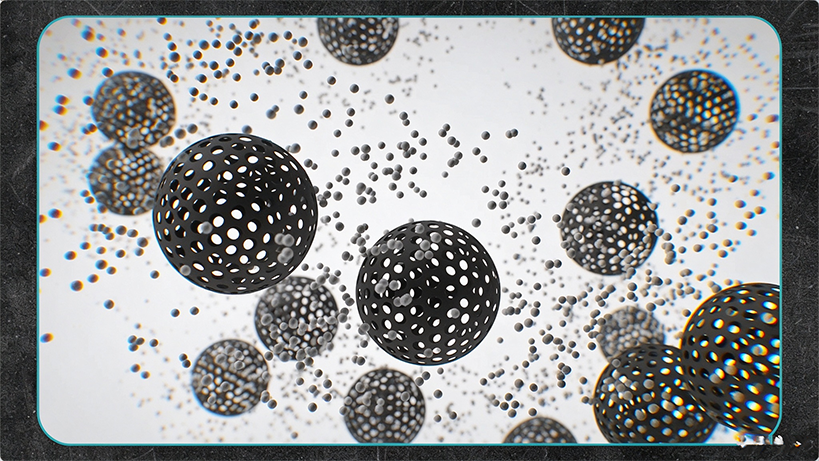
Among these, CVD silicon-carbon anodes deposit nano-silicon onto a porous carbon scaffold, leveraging the conductivity of carbon materials and the buffering effect of their pores to improve structural stability, thereby offering a new technical option for high-capacity anode materials.
As material systems continue to advance, production equipment has gradually evolved from single-unit processing toward continuous, automated, and fully integrated production lines.
2. From the Lab to Mass Production: What Are the Challenges of CVD Silicon-Carbon Anodes?
The fact that high-performance materials can be produced in the lab does not mean they can be directly scaled up to stable mass production at the metric ton or thousand-metric-ton level.
A typical CVD silicon-carbon anode production process includes: preparation of a porous carbon scaffold → CVD silane vapor deposition → carbon coating → post-treatment and screening → finished product packaging.
Large-scale production faces four major challenges:
Deposition uniformity: How can the distribution of silicon within the porous carbon scaffold be controlled to minimize deposition non-uniformity?
Batch consistency: How can reaction temperature, gas flow rates, and process parameters be consistently controlled?
Production Safety: How can enclosed silane gas transfer, off-gas treatment, and safety interlocks be implemented?
Production Economics: How can silicon source utilization and production efficiency be improved while controlling overall costs?
Meanwhile, as the industry places greater emphasis on technological innovation, product quality, and production costs, the competitive focus for silicon-carbon anodes is shifting from individual material properties to process stability, equipment reliability, and large-scale manufacturing capabilities.
3. From Core Equipment to Turnkey EPC: How Does Boyee Support the Mass Production of Silicon-Carbon Anodes?
To meet the demands of large-scale CVD silicon-carbon anode production, Boyee Industrial provides integrated EPC solutions ranging from core equipment and process system integration to turnkey engineering implementation.
Tailored to different material systems and production capacity requirements, Boyee’s CVD silicon-carbon anode production lines can include:
CVD Silane Deposition System: Centered around fluidized-bed CVD equipment, this system enables gas-solid reactions and controls temperature and process parameters.
Carbon Coating and Post-Treatment: Integrates processes such as carbon coating, cooling, screening, collection, and packaging.
Automation and Turnkey EPC: Provides process design, equipment configuration, system integration, safety interlocks, and engineering implementation services.
In terms of project delivery experience, Boyee has accumulated expertise in ton-scale CVD silicon-carbon anode mass production projects and has successfully secured and implemented a turnkey EPC project for a CVD silicon-carbon anode production line with an annual capacity of 1,000 metric tons, continuing to advance the large-scale application of production equipment for new energy materials.
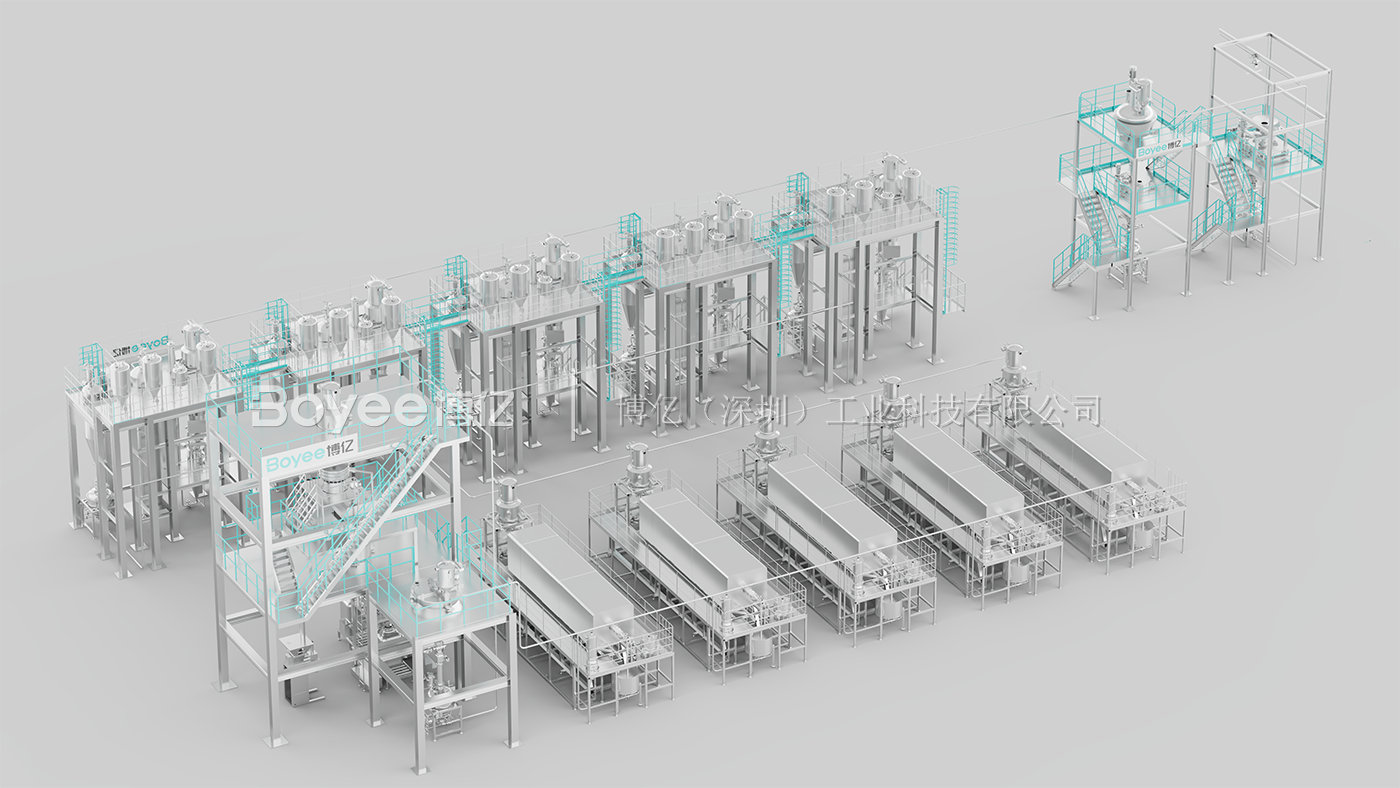
Pictured:Boyee Industrial CVD Silicon-Carbon Anode Production Line Solution
FAQ | Frequently Asked Questions About CVD Silicon-Carbon Anodes
1) What is a CVD silicon-carbon anode?
A CVD silicon-carbon anode is a composite anode material formed by depositing silicon onto carbon-based materials, such as a porous carbon scaffold, using chemical vapor deposition (CVD) technology. It helps address issues related to volume expansion and cycling stability in silicon materials.
2) What equipment is included in a CVD silicon-carbon anode production line?
Typically, it includes equipment for processing porous carbon scaffolds, fluidized-bed CVD reactors, gas delivery systems, carbon coating equipment, post-treatment and screening equipment, off-gas treatment systems, and automated control systems. The specific configuration depends on the process route.
3) What are the main challenges in the large-scale production of CVD silicon-carbon anodes?
The main challenges include silicon deposition uniformity, batch consistency, silicon source utilization, process safety, and production costs, which require coordinated optimization of core equipment and the entire production line process.
4) How should one select a manufacturer for CVD silicon-carbon anode production line equipment?
It is recommended to focus on evaluating the supplier’s CVD reactor technology, ability to adapt to specific material processes, practical project experience, automation and safety control capabilities, and ability to deliver turnkey production lines.
5) What CVD silicon-carbon anode solutions does Boyee Industrial offer?
Boyee provides fluidized-bed CVD equipment and turnkey EPC solutions for silicon-carbon anode production lines, covering process design, core equipment, automation system integration, and engineering implementation, and supports experimental validation, pilot-scale testing, and industrial-scale project construction.