
















In the fields of nanomaterials, electronic materials, new energy materials, and fine chemicals, bead mills serve as critical equipment for processing micron- and nanoscale powders. Their core function is not merely to “grind particles into smaller sizes.”
More importantly, the challenge lies in achieving uniform dispersion, controlling particle size distribution, minimizing material damage, and meeting the demands of continuous production—all while reducing particle size.
One of the key factors determining the performance of a bead mill is the structure of its grinding rotor.
Currently, the common bead mill configurations in the industry primarily include: disc-type bead mills, pin-type bead mills, and turbine-type bead mills.
These different configurations exhibit significant differences in the motion of the grinding media, energy transfer efficiency, and suitable materials.
So, what exactly are the differences between these three types of configurations?
1. Disc-Type Bead Mill: Classic Design, Suitable for Traditional Dispersion and Grinding
The disc-type bead mill is one of the earliest types of grinding equipment to be adopted. Its core structure consists of a high-speed rotating disc-type disperser that drives the grinding media.
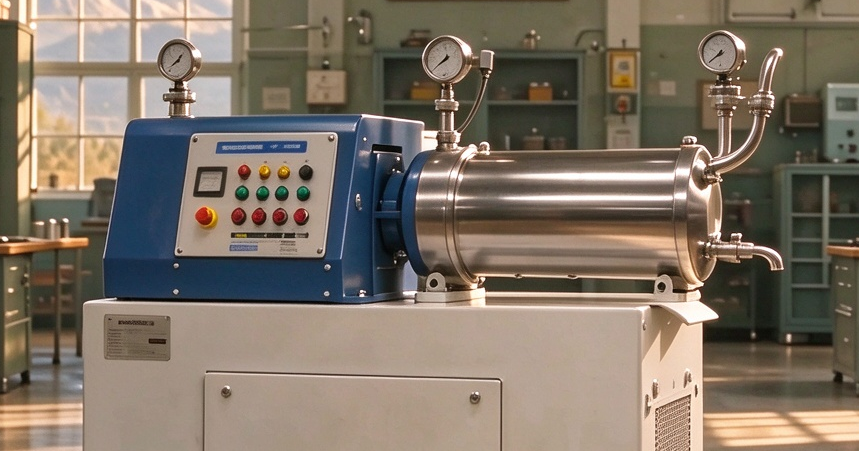
During operation, the rotation of the disc generates shear forces and centrifugal forces, causing the grinding beads to move within the chamber and subject the material to impact, shear, and friction.
Structural Features: Disc-type rotor design, relatively concentrated grinding zone, mature design, and simple maintenance.
Advantages: The equipment features a mature design, stable operation, and is suitable for dispersion and grinding with general fineness requirements.
Limitations: As materials evolve toward nanoscale sizes, high solids content, and high consistency, the traditional disc-type structure is increasingly facing challenges in terms of energy efficiency and fine particle size control.
In particular, for applications requiring higher grinding intensity and a narrower particle size distribution, further optimization of the grinding structure is necessary.
2. Pin-Type Bead Mill: Enhanced Energy Transfer for Nanoscale Grinding
With the development of industries such as new energy materials, electronic ceramics, and nanoscale powders, higher demands have been placed on bead mills:
They must not only grind but also achieve effective deagglomeration, uniform dispersion, and stable particle size control. As a result, the pin-type structure has found widespread application.
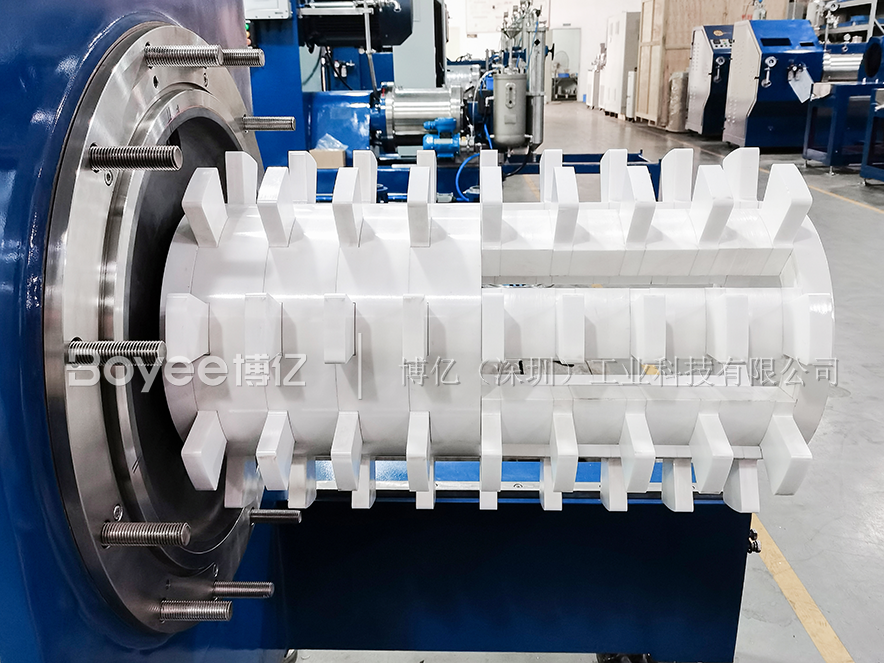
Pictured: Actual photo of the Boyee Industrial pin-type bead mill
Its core features: A large number of pins are arranged in the rotor and stator regions to increase the intensity of grinding media movement.
Through high-speed rotation, higher-frequency collisions, shearing, and friction occur between the grinding beads, increasing the grinding energy per unit volume. By increasing the rotor’s linear velocity, pin-type bead mills enhance energy input during the grinding process, achieving more efficient dispersion and grinding.
Advantages of the pin-type structure:
1) High energy density: The pin-type structure increases the effective collision area for grinding media, improving energy utilization efficiency.
2) Better suited for nanoscale processing: Ideal for battery materials, electronic ceramics, nanopowders, and high-performance slurries.
3) Supports continuous production: Capable of meeting high-throughput, high-efficiency production demands.
3. Turbine-Type Bead Mill: Gentle Grinding for High-Quality Dispersion
Compared to pin-type designs, which emphasize high energy input, turbine-type bead mills focus more on material circulation, energy transfer efficiency, and high-quality dispersion.
Its core structure features a turbine rotor with a specially designed flow path. The high-speed rotation of the rotor creates a stable circulating flow field, promoting uniform movement of the grinding media within the chamber and enabling the material to undergo more thorough shearing, collision, and dispersion.
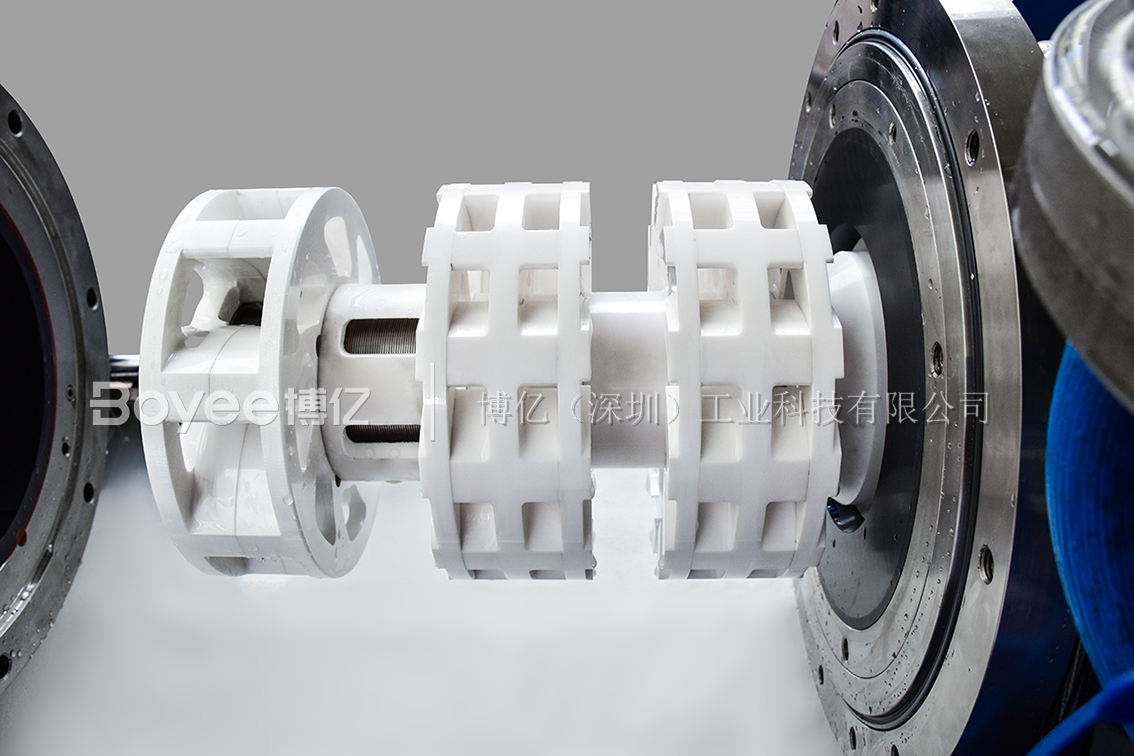
Pictured: Actual photo of the Boyee industrial turbine bead mill
The turbine structure not only achieves particle refinement but also reduces localized energy concentration and minimizes the risk of over-grinding, making it more suitable for applications that demand high material integrity and superior dispersion performance.
Features of the Turbine-Type Structure:
1) More Uniform Force Application on the Material
The optimized turbine flow field design ensures more stable movement of the grinding media, reduces localized high-energy zones, and achieves a more uniform grinding effect.
2) Reduced risk of material structural damage
Through a smoother energy transfer mechanism, the original properties of the material are better preserved while meeting particle size reduction requirements.
3) Improved dispersion quality
Suitable for applications with high requirements for particle size distribution, dispersion uniformity, and material integrity.
Based on continuous research into the processing needs of high-end materials, Boyee Industrial began R&D on all-ceramic turbine bead mills at an early stage and has accumulated relevant technical expertise.
As one of China’s pioneers in all-ceramic bead mill technology, Boyee Industrial has continuously optimized turbine structures, grinding chamber designs, and material applications, leading to the launch of the BYZr all-ceramic turbine bead mill. This equipment features an all-ceramic grinding system combined with a proprietary turbine design, achieving: efficient grinding and uniform dispersion, reduced risk of metal contamination, enhanced wear resistance, and the ability to meet the processing requirements for high-purity, high-consistency materials.
4. Three Types of Bead Mills: How Should You Choose?
There is no absolute superiority or inferiority among the different designs; the key lies in: material characteristics + process objectives + production requirements.
Structure Type | Key Features | Applications |
Disc Type | Mature design, stable and reliable | Traditional dispersion, conventional grinding |
Pin-type | High energy density, high grinding intensity | Nanomaterials, battery materials, electronic powders |
Turbine Type | Uniform circulation, gentle dispersion | High-quality slurries, structure-sensitive materials |
For example: For hard materials that require rapid particle size reduction, the focus is on high energy input.
For systems where the structural integrity of the material must be maintained, the focus is on uniform dispersion and low-damage grinding. Therefore, selecting a bead mill should not be based solely on the equipment model; rather, it must be tailored to the specific material system.
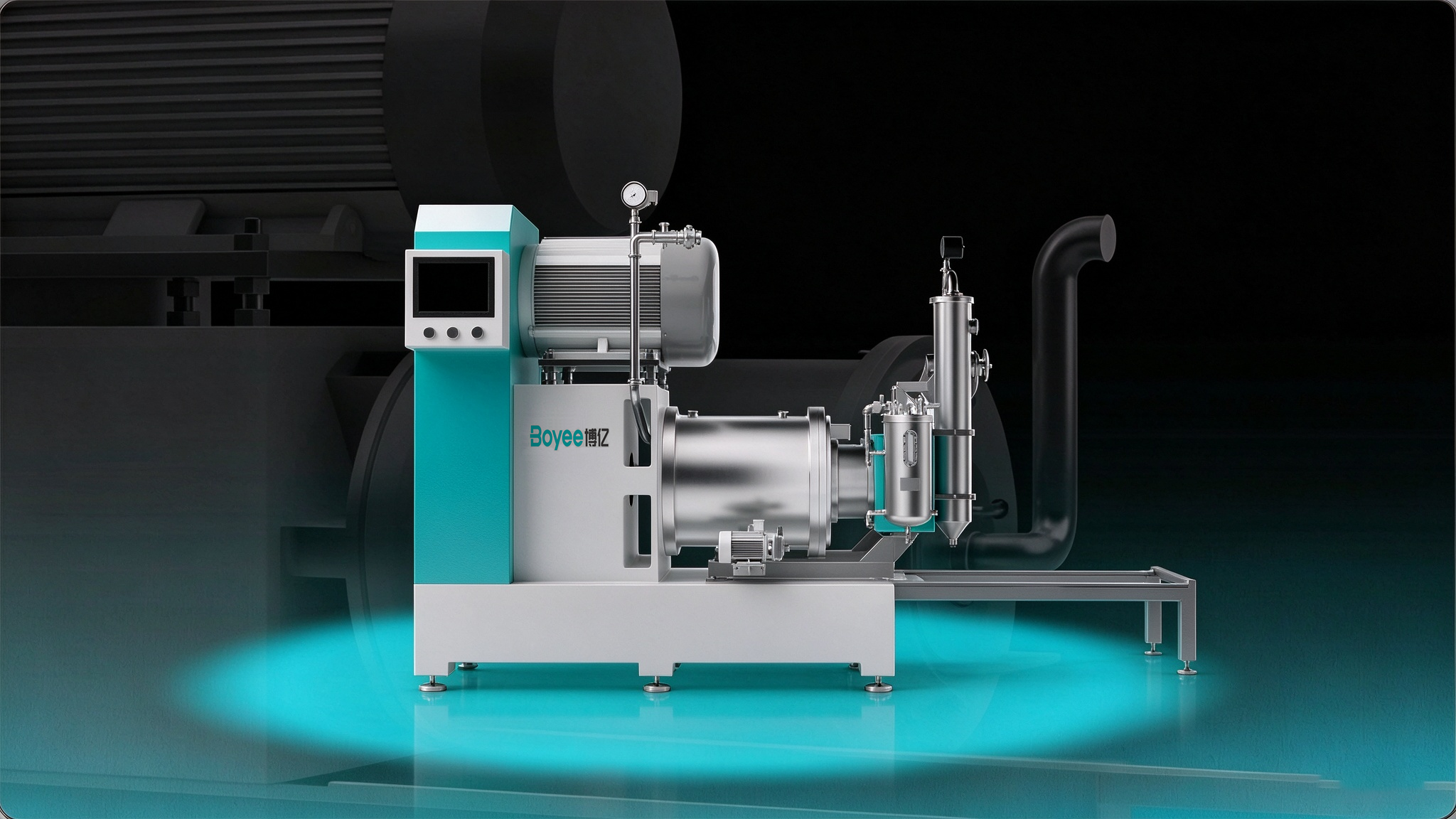 Pictured: Boyee industrial LMM ultra-fine centrifugal bead mill
5. From Rotor Structure to the Overall Grinding System
In fact, rotor structure is not the only factor affecting the performance of a bead mill. Other factors include: grinding chamber design, separation system, cooling structure, choice of grinding media, equipment materials, and process parameter control.
An excellent bead milling system must achieve a balance among grinding efficiency, particle size control, temperature control, and stable operation.
6. Boyee Industrial: Providing Grinding Solutions Tailored to Material Requirements
To address the diverse processing needs in fields such as new energy materials, electronic materials, semiconductor materials, inks and coatings, and advanced powders, Boyee Industrial continuously optimizes the structural design of its bead mills.
The company has established a comprehensive product portfolio that includes pin-type grinding systems, turbine-type grinding systems, nanoscale grinding equipment, dry bead mills, as well as equipment for laboratory, pilot-scale, and mass production applications.
From material testing and validation to equipment selection and large-scale production applications, Boyee Industrial helps customers identify the most suitable grinding solutions.