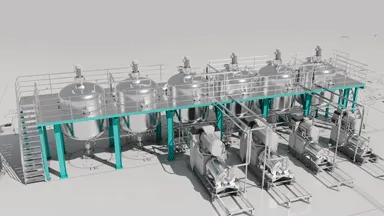
















“How many liters?”
“What is the power rating?”
“Can it grind down to 100 nm?”
However, what truly affects the grinding results is not any single parameter, but rather whether the equipment design, material properties, grinding media, and process conditions are properly matched.
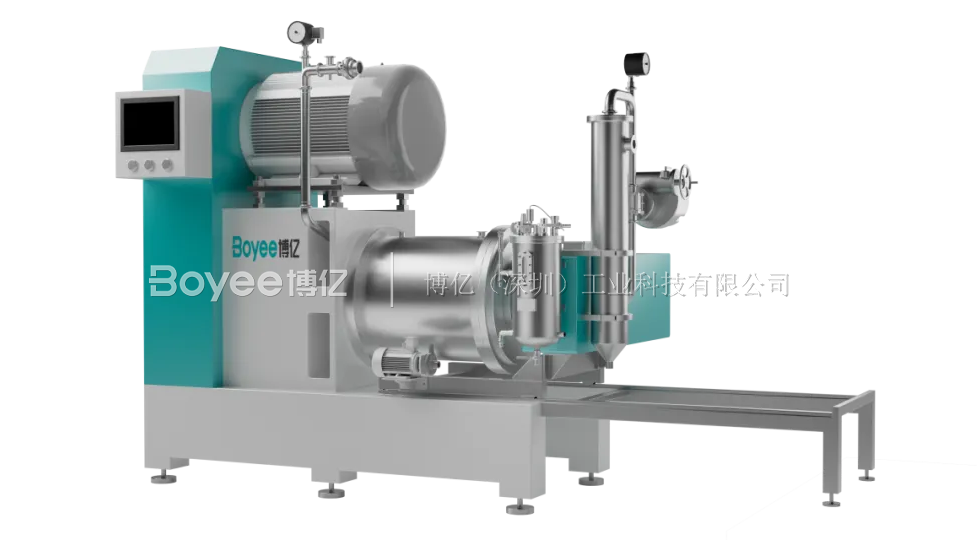
Pictured: Boyee Industrial's LMM Series Nano Bead Mill
Common consequences of improper equipment selection include: failure to achieve the desired particle size, low efficiency, excessive temperature rise, and even abnormal pressure during continuous operation.
Different materials—such as lithium-ion battery materials, MLCC electronic ceramics, silicon-carbon anodes, carbon nanotubes, semiconductor materials, and inks and coatings—vary in particle size, viscosity, hardness, solids content, temperature sensitivity, and contamination control requirements.
Therefore, the key to selecting a bead mill is not simply “the higher the parameters, the better,” but rather achieving a reasonable match between the material, equipment, and process.
1. Does a Higher Rotational Speed Mean Higher Grinding Efficiency?
Not necessarily. Increasing the rotational speed alters the movement speed, collision intensity, and shear conditions of the grinding media.
Insufficient energy makes it difficult to fully refine the particles; conversely, excessive energy may lead to increased temperature rise, higher energy consumption, accelerated wear of the grinding media, and even over-grinding.
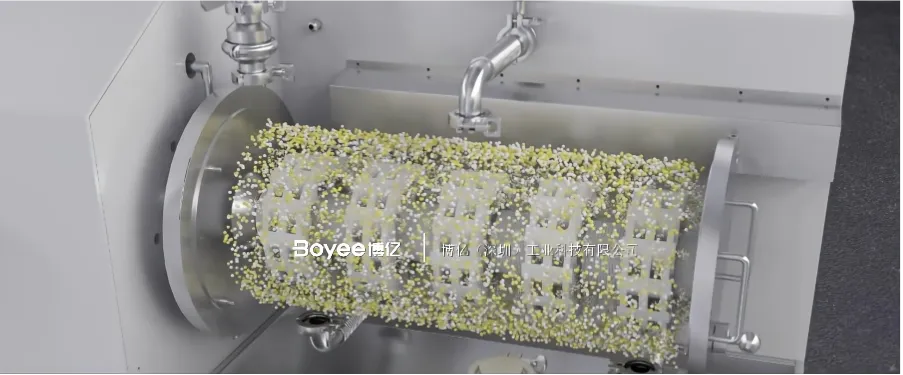
Therefore, what nano-grinding truly requires is identifying the effective energy input range suitable for the material system, rather than simply pursuing higher rotational speeds.
This is especially true for materials that are sensitive to temperature, contamination, and particle structure—such as new energy battery materials and electronic ceramics—where it is essential to balance grinding efficiency with material protection.
2. Is a smaller grinding gap always better?
Not necessarily. The grinding gap affects the local energy density inside the equipment, the motion of the grinding media, and the flow behavior of the slurry.
If one merely pursues a smaller gap without considering material viscosity, grinding bead size, and equipment structure, it may actually impair material flow and the stable operation of the equipment.
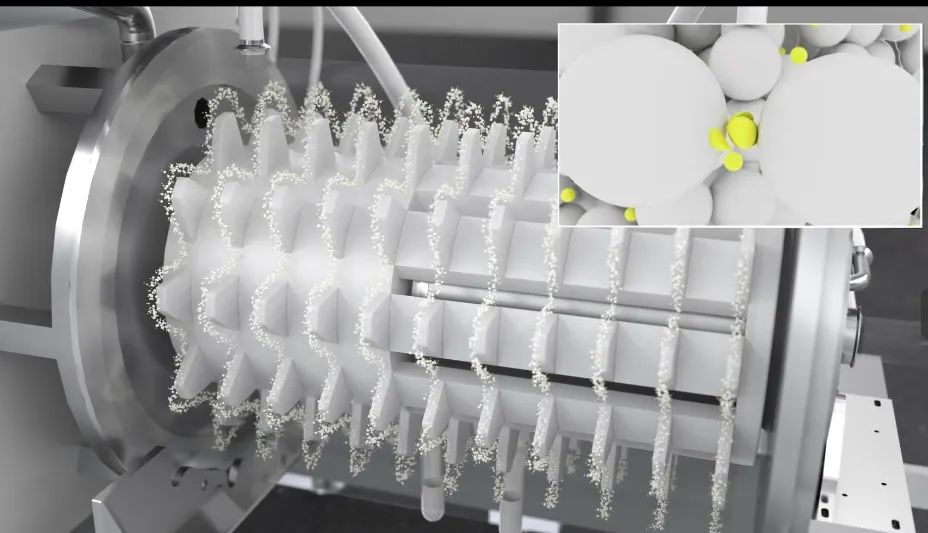
Therefore, the gap must be comprehensively optimized to match the target particle size, grinding media, slurry characteristics, rotor structure, and energy input method.
Horizontal bead mills, vertical bead mills, and nano-bead mills with different rotor structures all have distinct internal energy transfer mechanisms; grinding capacity cannot be judged based on a single parameter.
3. Does Adding More Grinding Beads Increase Efficiency?
More grinding beads do not necessarily mean better results. If the fill rate is too low, there will be insufficient effective collisions; if the fill rate is too high, it will restrict the movement of the grinding media and the flow of the slurry, thereby impairing energy transfer.
In addition to the filling rate, other factors must be considered: What is the size of the grinding beads? What material are they made of? What is their density? Is there a risk of contamination?
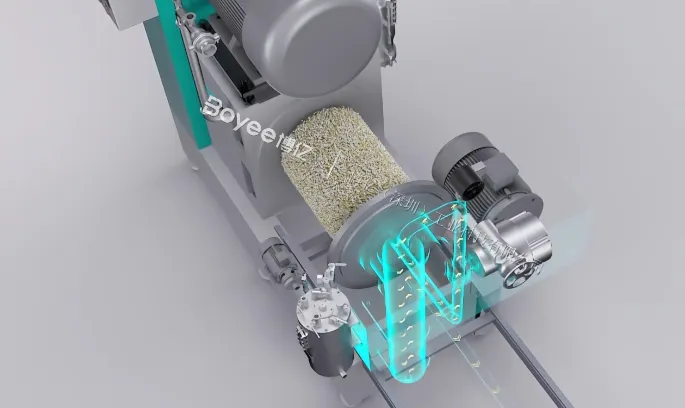
Therefore, selecting a bead mill actually involves selecting the grinding media as well. Only when the equipment structure, bead diameter, material, filling rate, and target particle size are properly matched can optimal grinding results be achieved.
4. Why Can’t Viscosity Be Ignored?
Many customers focus primarily on particle size and production capacity, but they often overlook a critical parameter: slurry viscosity.
Materials with different viscosities exhibit varying flow patterns within the grinding chamber, as well as differences in media movement and energy transfer mechanisms. These factors also affect material conveyance, equipment pressure, processing capacity, and temperature rise.
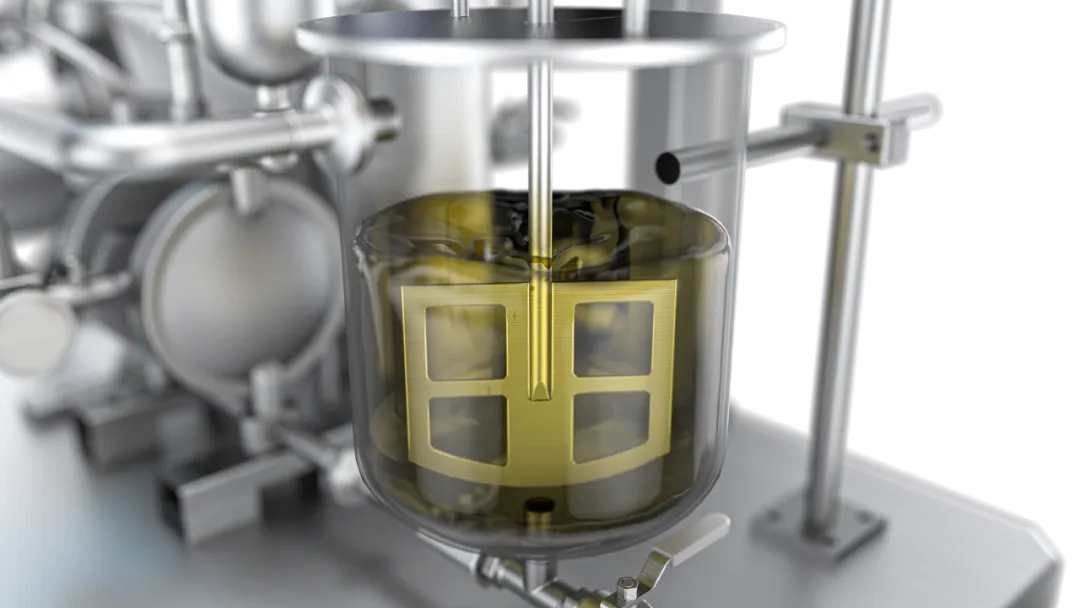
This is why, even with the same bead mill and identical parameters, the grinding results can vary significantly when a different material is used.
For slurries with high solids content, high viscosity, or complex rheological properties, it is strongly recommended to conduct material testing before selecting equipment.
5. Why Is It Even More Important to Monitor Temperature and Pressure During Continuous Production?
During small-batch laboratory grinding, certain issues may not be apparent. However, once continuous production begins, temperature and pressure control directly affect the stability of equipment operation.
During wet grinding, a significant amount of mechanical energy is converted into heat. If cooling capacity is insufficient and the material temperature continues to rise, it may affect the slurry’s consistency, material properties, and process stability.
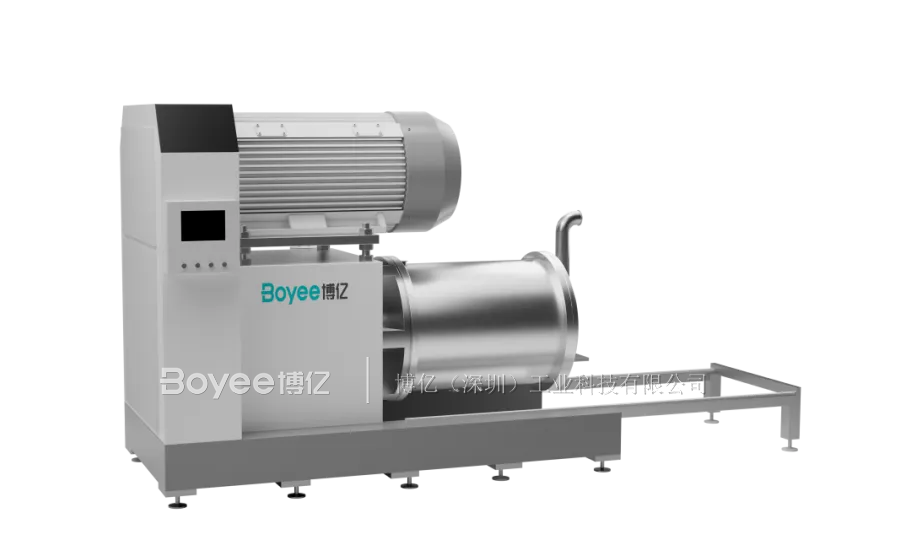
Pictured: Boyee Industrial's NMM Series Nano Bead Mill
At the same time, improper pressure differentials between the feed, grinding chamber, and discharge can increase the load on mechanical seals, accelerate equipment wear, and heighten operational risks.
Therefore, a bead mill suitable for industrial production must not only “grind finely” but, more importantly, be capable of grinding continuously, stably, and over the long term.
6. Why Is It Recommended to Conduct Grinding Tests Before Selecting Equipment?
For new materials or complex material systems, it is difficult to accurately predict the final grinding results based solely on equipment specifications.
Therefore, the most prudent approach is typically to first understand the material, then verify it through testing, and finally select the equipment and scale up the process.
Before selecting equipment, you should at least clarify the following:
What material will be ground?
What are the initial and target particle sizes?
What are the solids content and viscosity?
Are there any contamination control requirements?
What is the maximum allowable temperature rise?
What is the target production capacity?
Then, use experiments to further verify:
Can the target particle size be achieved?
What size grinding beads should be selected?
Is the temperature rise controllable?
Is the particle size distribution stable?
Is there any contamination or abnormal wear?
These data not only determine how to select a bead mill but also impact subsequent pilot-scale scaling, industrial equipment configuration, and the design of the entire production line.
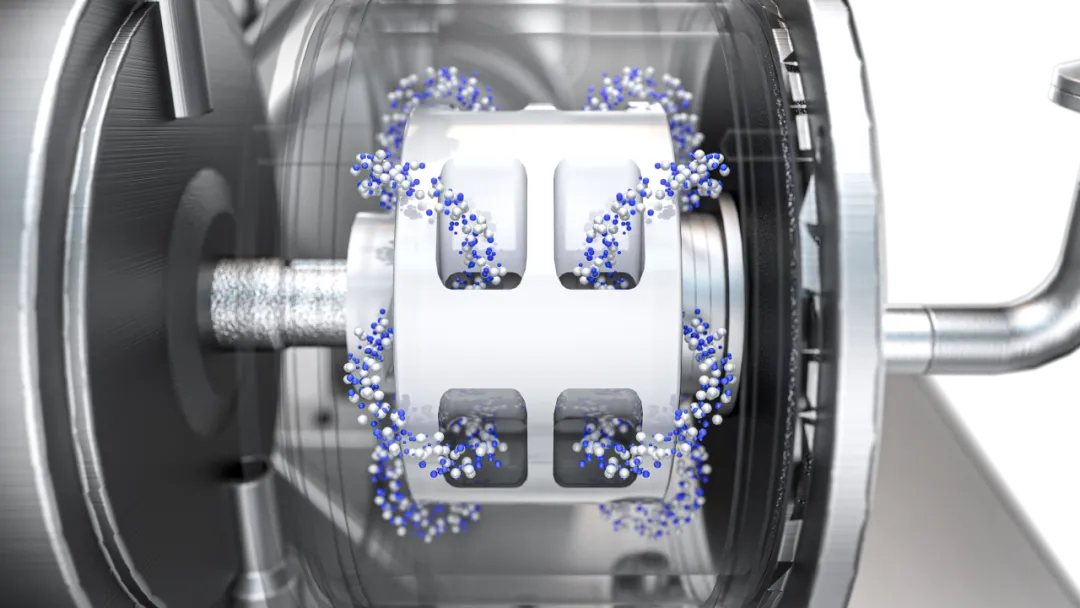
Particularly in fields such as new energy battery materials, MLCC electronic ceramics, silicon-carbon anodes, carbon nanotubes, semiconductor materials, nanomaterials, and inks and coatings, preliminary process validation is often more valuable than simply comparing equipment parameters.
7. Choosing the Right bead Mill Essentially Means Ensuring a True Match Between Materials, Equipment, and Processes
The most critical mistake to avoid when selecting a bead mill is not simply having a parameter that is slightly too high or too low, but rather: the equipment parameters may all look good on paper, yet the equipment is not truly suited to your specific material.
Rotational speed, clearance, grinding beads, viscosity, temperature, pressure, and equipment structure are all interrelated and collectively determine the final grinding result. Therefore, selecting the right bead mill is not simply a matter of pursuing higher specifications, but rather ensuring a reasonable match between the material, equipment, and process.