
















With the development of advanced manufacturing processes, AI chips, advanced packaging, automotive electronics, and high-end passive components, high-end electronic materials are evolving toward nanoscale dimensions, high purity, high uniformity, and high batch-to-batch consistency.
For CMP slurries, nano-dispersed materials related to photoresists, MLCC electronic ceramics, and electronic pastes, material performance depends not only on the formulation but is also closely related to particle size, agglomeration status, dispersion uniformity, impurity control, and paste stability.
This makes nano-grinding, fine dispersion, and low-contamination manufacturing critical steps in the production of high-end electronic materials.
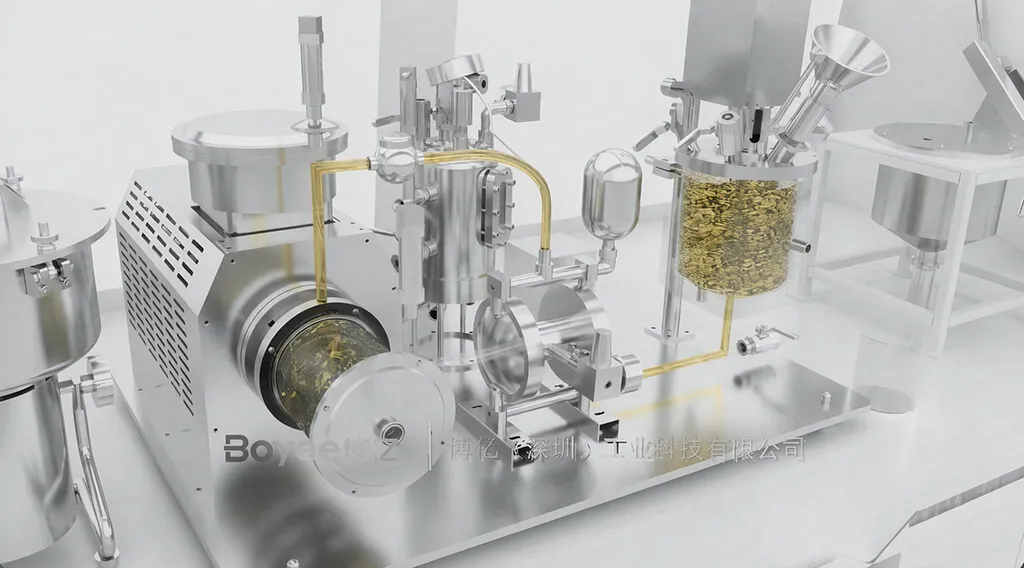
1. Why Is Particle State Becoming an Increasingly Important Consideration for Semiconductor Materials?
In the era of nanoscale manufacturing, abnormally coarse particles, agglomerates, or trace impurities can all affect the stability of subsequent processing steps.
Therefore, high-end electronic materials typically require simultaneous control of: agglomerates, particle size distribution, temperature rise, metal impurities, slurry stability, and batch consistency.
This means that the role of nano-grinding mills is no longer limited to simply pulverizing; they must also achieve deagglomeration, particle size control, and uniform dispersion through equipment design, grinding media, and process parameters.
2. CMP Polishing Slurry: Not Just “Fine Enough,” but Also “Stable”
Abrasive particles such as silicon dioxide, cerium oxide, and aluminum oxide in CMP (Chemical Mechanical Polishing) slurries must be maintained in a stable, nanoscale dispersion.
Key considerations during production include: control of large particles, agglomeration control, particle size distribution, dispersion stability, and impurity contamination.
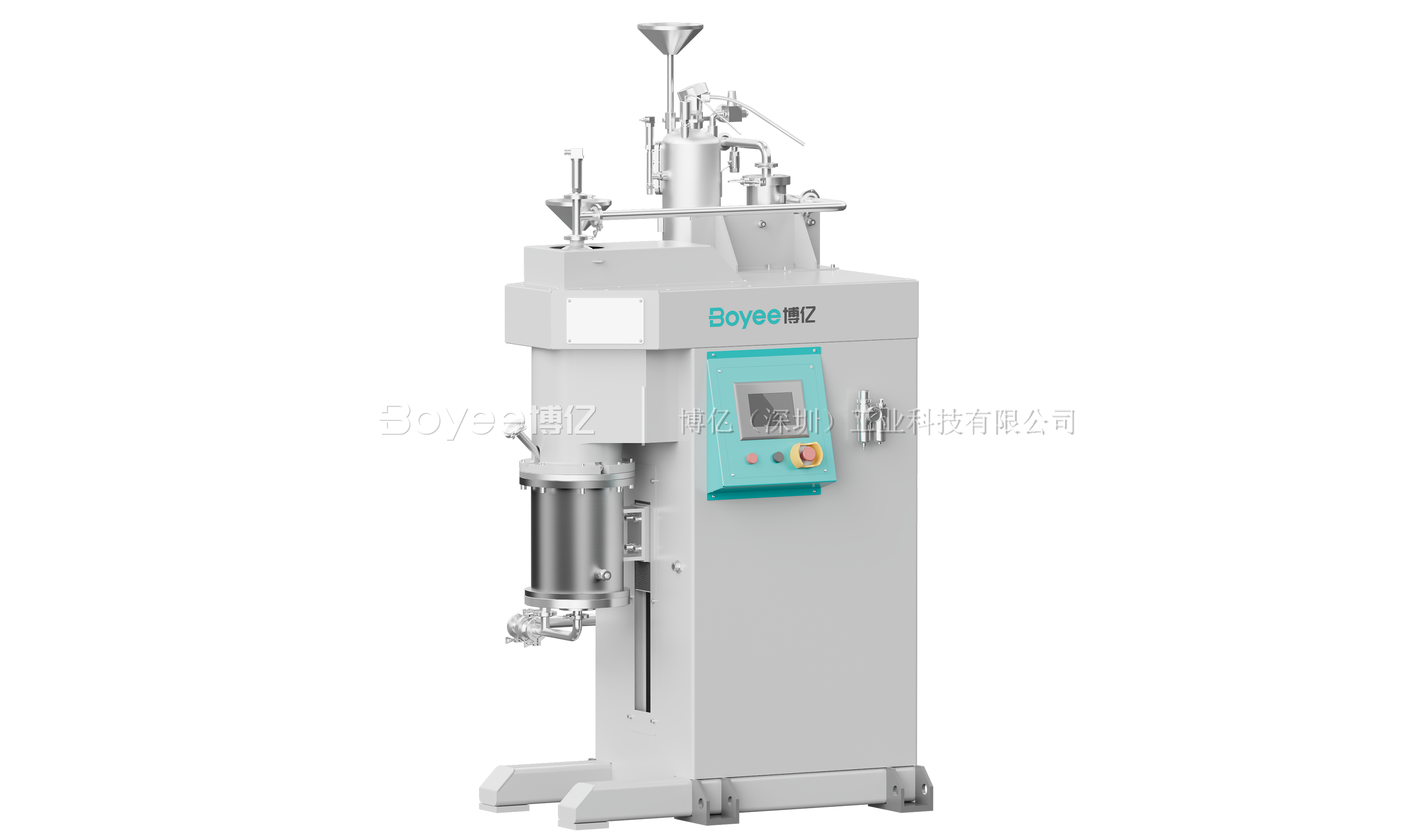
Pictured: Boyee Industrial Single-Drive Vertical Bead Mill
Therefore, CMP polishing and slurry processing equipment must not only achieve fine particle size but also ensure low contamination, controlled temperature rise, and stable dispersion. Based on material solids content, viscosity, and target particle size, Boyee can configure nano bead mills, dispersion equipment, homogenization equipment, and other systems.
3. Photoresist-Related Materials: The Focus Is on “Purity, Stability, and Uniformity”
Photoresist-related materials and functional coatings containing inorganic nanoparticles, pigments, functional fillers, or specific dispersion systems require fine dispersion and particle control.
For these materials, the primary focus is on: uniform dispersion, low metal contamination, low residue, temperature control, and system stability.
Therefore, equipment must control shear intensity, grinding time, grinding media, temperature rise, and cleaning residue based on the specific material.
4. MLCC Electronic Ceramics: The Thinner the Dielectric Layer, the More Critical Particle Control Becomes
As MLCCs evolve toward miniaturization, higher capacitance, multilayer structures, and greater reliability, dielectric ceramic powders such as barium titanate face increasingly stringent requirements regarding particle size and dispersion.
Key considerations include: particle refinement, agglomeration and deagglomeration, particle size distribution, crystal structure protection, low contamination, and dispersion stability.
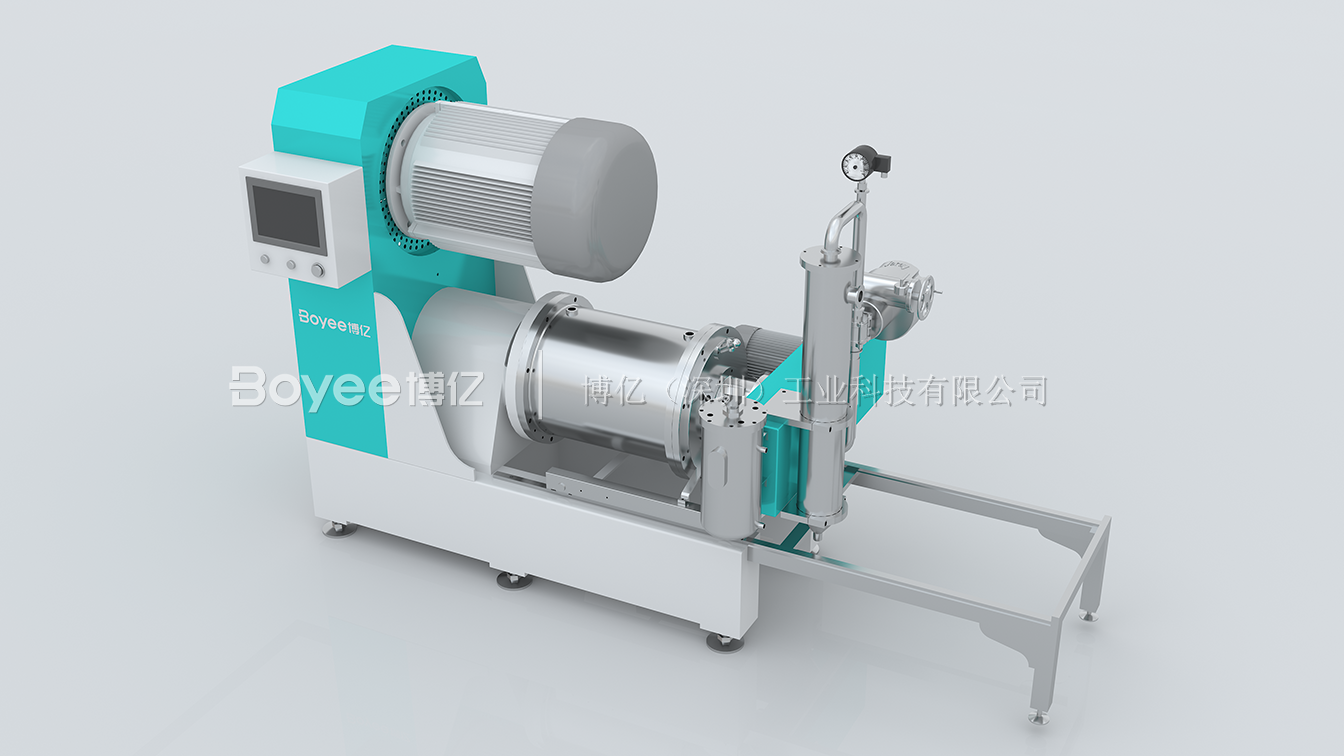 Pictured: Boyee Industrial LMM Ultrafine Centrifugal Nano Bead Mill
Therefore, the core objective of MLCC bead mills and electronic ceramic bead mills is not merely to achieve smaller particle sizes, but to establish an appropriate process window that balances target particle size, crystal structure protection, low contamination, and batch-to-batch consistency. Internal electrode materials, such as nickel slurry, also require stable slurry dispersion and particle control.
5. Boyee Nano bead Mills: From Particle Size Control to Material State Control
For CMP polishing slurries, MLCC electronic ceramics, electronic pastes, and certain semiconductor nano-dispersed materials, Boyee Industrial can configure corresponding nano bead mill equipment based on different material systems.
Process priorities include: low-damage deagglomeration, particle size distribution control, low-contamination grinding, temperature rise management, stable circulation, and batch consistency.
Equipment selection requires comprehensive consideration of initial particle size, material hardness, solids content, viscosity, contamination control requirements, grinding media, and target production capacity to meet the fine grinding and stable dispersion needs of different materials.
6. From Nano bead Mills to Smart Production Lines for High-End Electronic Materials
Once large-scale manufacturing begins, customers are no longer concerned solely with individual machines, but also with: feed stability, pre-dispersion, matching equipment capacity, continuous slurry conveyance, filtration and storage, parameter traceability, and batch consistency.
Based on process requirements, Boyee can configure systems to include: sealed feeding, precise metering, conveying, pre-mixing, dispersion, nano-grinding, homogenization, filtration, filling/packaging, and automated control. Depending on the material system, processes such as drying, heat treatment, and pulverization can also be incorporated.
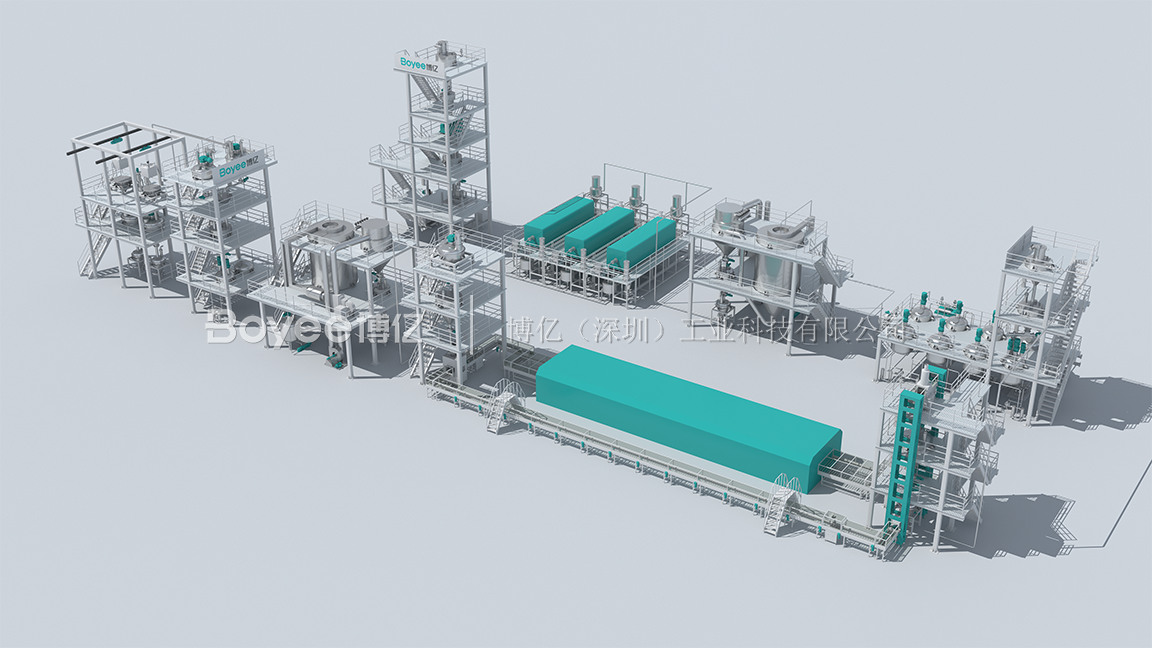
Pictured: Boyee Industrial's MLCC Electronic Ceramic Materials Production Line Solution
Focusing on the manufacturing of high-end electronic materials, Boyee Industrial continues to expand its capabilities in nano-grinding, mixing and dispersion, homogenization, automated control, and smart turnkey EPC solutions. The company provides engineering solutions—ranging from experimental validation, process optimization, and core equipment to the construction of large-scale production lines—for CMP slurries, MLCC electronic ceramics, electronic pastes, and semiconductor-related materials.
