
















Selecting a bead mill often starts with a comparison of chamber volume, motor power and purchase price. These specifications matter, but they do not, by themselves, determine whether a mill can process a particular formulation effectively and efficiently.
A mill that performs well with a low-viscosity pigment suspension may perform very differently when processing an abrasive ceramic slurry or a temperature-sensitive material. Even closely related formulations can require different operating conditions when their solids content or target fineness changes.
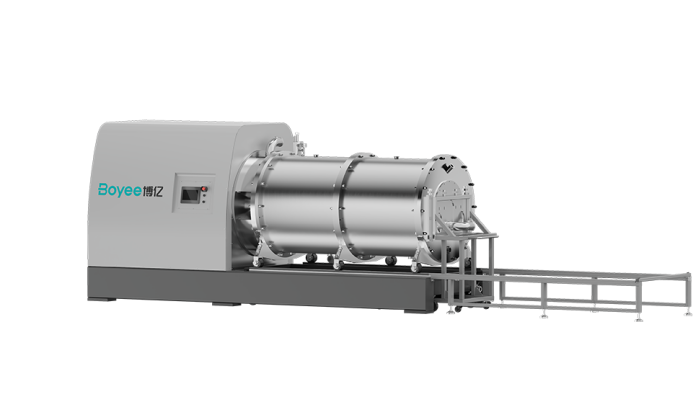
1. Define What the Grinding Process Must Achieve
Before comparing machines, identify the actual processing task. Does the process require primary particle comminution, deagglomeration, or gentle dispersion that preserves particle morphology?
These objectives require different stress conditions. High-intensity grinding may suit hard particles that require size reduction, while sensitive materials may benefit from a lower-intensity approach.
Prepare a material profile covering:
l Chemical composition and liquid medium.
l Feed particle size and coarse-particle content.
l Hardness, abrasiveness and solids concentration.
l Sensitivity to temperature, moisture or oxygen.
l Allowable impurity levels and acceptable changes in particle morphology.
Agitated bead mills can perform both deagglomeration and primary particle comminution. Establishing which operation is required helps narrow the equipment and process options.
2. Specify Target Particle Size Beyond a Single Number
“Nanoscale grinding” is not a complete acceptance criterion. A useful specification defines the particle size distribution and the measurement method.
D50 is the particle diameter at which 50% of the measured distribution lies below that size; D90 is the diameter below which 90% lies, on the stated measurement basis. Two samples with the same D50 can have different coarse-particle fractions and therefore different application performance.
For an equipment inquiry, state:
l Feed and target D50 and D90 values, including the measurement basis.
l Any specified upper particle-size or coarse-particle limit.
l Measurement method and sample preparation procedure.
l Whether particle morphology must be preserved.
Grinding media must then be matched to the feed, target fineness and material properties. Bead size, density, wear resistance and agitator speed must be considered together; selecting the smallest available grinding beads is not automatically the best choice.
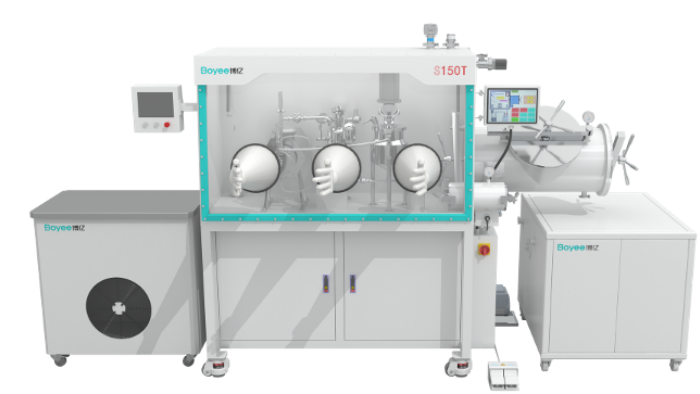
3. Evaluate Viscosity Under Real Processing Conditions
Viscosity influences pumping, grinding-media movement, heat generation and discharge behavior. A single viscosity reading at room temperature may not adequately describe a slurry that changes with temperature or shear.
Provide the measurement temperature, measurement method and shear conditions and expected viscosity range. Account for changes that occur during grinding, particularly for concentrated or shear-sensitive formulations.
The feed pump, piping, grinding chamber and separator must be evaluated as an integrated system. Even a suitable grinding mechanism can perform poorly if the slurry cannot pass through it at a stable rate.
Boyee’s SW Universal Nano Bead Mill offers different grinding systems, discharge arrangements and wetted-part material options. The appropriate configuration should be validated with the actual formulation rather than selected from a broad viscosity description alone.
4. Match Grinding-Media Separation to the Required Flow Rate
The separation system retains the grinding media while allowing processed material to leave the chamber. Its suitability becomes particularly important when using small beads or operating at high circulation flow rates.
Screen-based and centrifugal separation systems have different operating characteristics. Selection should consider slurry viscosity, bead size, feed condition and the target flow rate without excessive pressure buildup.
For suitable low-viscosity formulations requiring ultrafine processing, Boyee’s LMM Ultrafine Centrifugal Nano Bead Mill provides a screenless centrifugal separation option. Material trials should verify bead retention, discharge stability and the achievable particle size distribution.
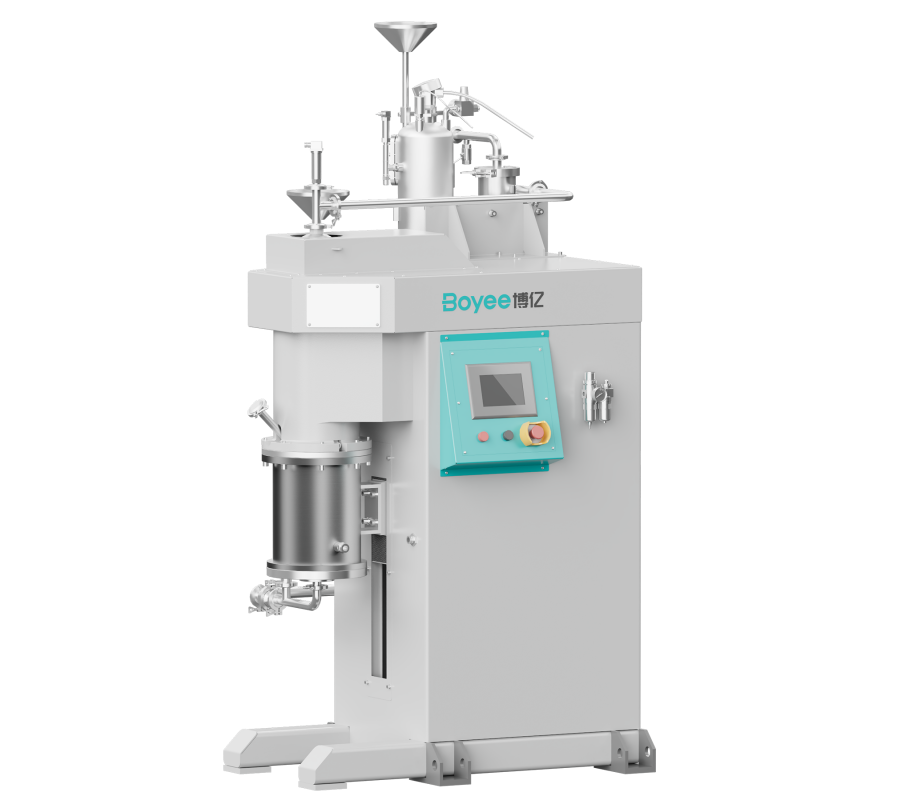
5. Define Capacity in Terms of Qualified Product Output
The circulation flow rate should not be confused with finished-product throughput. Material may pass through the mill repeatedly before reaching the specified particle size and quality requirements.
A meaningful capacity requirement should state:
l Required kilograms or liters of qualified product per hour.
l Whether the figure refers to total slurry or dry solids.
l Batch size and available production hours.
l Target particle size distribution and maximum temperature.
l Time needed for loading, discharge and cleaning.
6. Evaluate Cooling and Product-Contact Materials
Boyee’s BYZr Ceramic Turbo Bead Mill offers an all-ceramic grinding configuration for applications where minimizing metal contamination is important. Ceramic contact components can still wear, so purity should be verified against defined and measurable impurity limits.
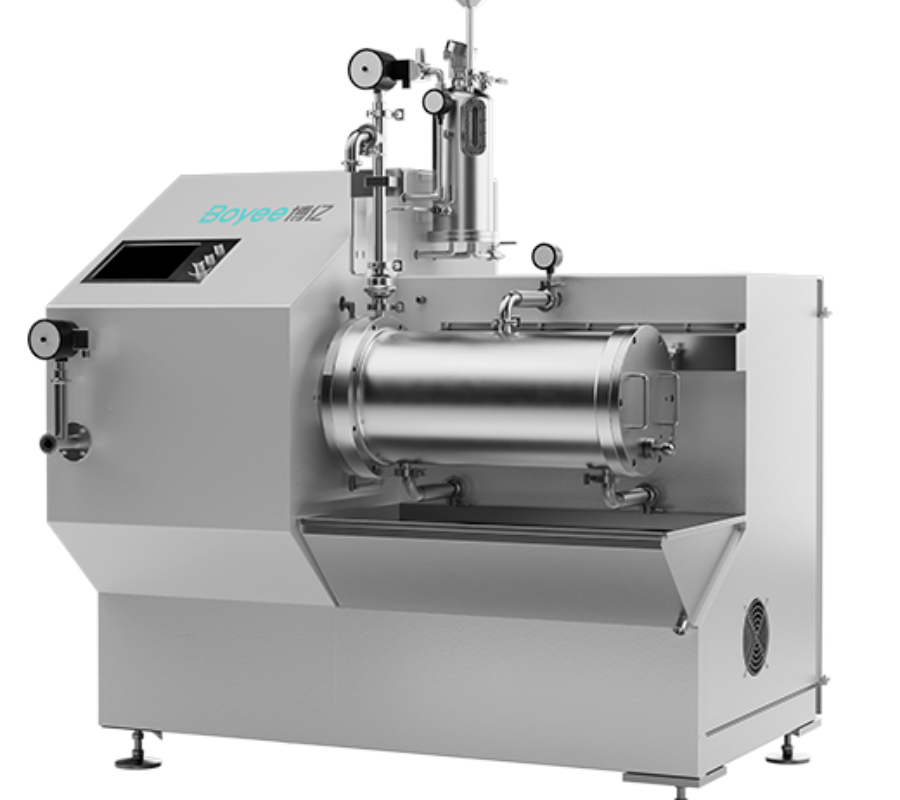
7. Validate Equipment Selection Through Laboratory Trials
A representative trial connects equipment features with real material behavior. Test the intended formulation, including its production solids content and liquid medium, rather than a simplified substitute formulation.
Boyee’s NMM Multi-functional Laboratory Bead Mill supports formulation trials and process development with configurable grinding systems.
Request a trial report recording particle size distribution, processing time, energy consumption, temperature, flow rate, and product quality. Include impurity analysis or application-performance testing where relevant.
Prepare a Complete Bead Mill Inquiry
The most useful inquiry combines a material sample with clearly defined acceptance criteria. Include feed properties, target fineness, viscosity measurement conditions, solids content, batch size, required throughput and purity limits.
Contact Boyee with these requirements to discuss suitable configurations and material testing. This gives both the manufacturer and equipment supplier a common basis for comparing performance, estimating operating costs and selecting a grinding system suitable for industrial production.
