
















A Bead Mill, also known as a Sand Mill or Agitator Bead Mill, is an industrial grinding and dispersion machine designed to reduce particle size and disperse solid particles uniformly throughout a liquid medium. It is widely used in the production of paints, coatings, printing inks, pigments, chemicals, ceramics, and advanced functional materials.
Unlike conventional grinding equipment that relies primarily on rotating containers or large grinding elements, a bead mill uses small grinding beads agitated at high speed to generate repeated impact, compression, and shear forces. These mechanical forces break down solid particles and disperse agglomerates, helping manufacturers achieve finer particle sizes and more consistent product quality.
Understanding the bead mill working principle, internal structure, and operating parameters is essential for selecting suitable grinding equipment and optimizing industrial wet grinding processes.
What Is a Bead Mill?
A bead mill is a type of wet grinding machine that processes solid particles suspended in a liquid carrier. Its primary functions are particle size reduction, deagglomeration, and dispersion.
During operation, a specially designed agitator drives thousands of grinding beads inside a confined chamber. The resulting movement generates frequent contact between the beads and suspended particles, transferring mechanical energy to the material.
Depending on the formulation, grinding media, equipment configuration, and processing conditions, bead milling can produce particles in the micrometer or submicrometer range. Specialized high-energy systems can also process suitable materials into the nanometer range.
The main functions of a bead mill include:
● Fine Grinding: Reduces the size of solid particles through repeated mechanical stresses.
● Particle Dispersion: Breaks apart pigment clusters and other agglomerates to improve uniformity throughout the liquid medium.
● Particle Size Distribution Control: Helps manufacturers achieve targeted particle size specifications under controlled processing conditions.
● Product Quality Improvement: Supports consistent color development, surface finish, stability, and other application-specific properties.
● Continuous Processing: Many industrial bead mills operate continuously, making them suitable for integration into automated production lines.
Because of these capabilities, the industrial bead mill has become an important part of modern wet grinding and dispersion technology.
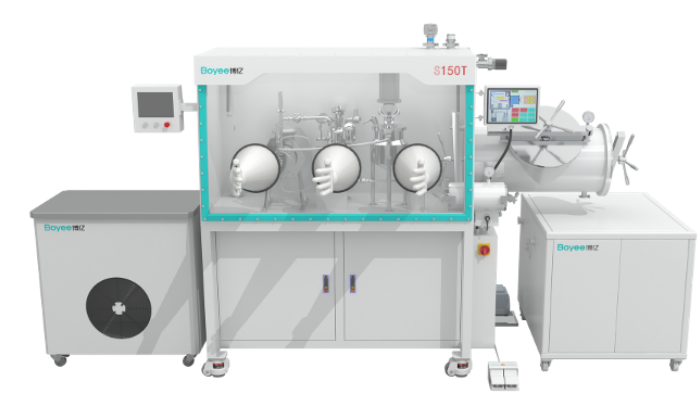
Bead Mill Working Principle
The working principle of a bead mill is based on transferring mechanical energy from a rotating agitator to small grinding media. The grinding beads move throughout the chamber and apply localized stresses to solid particles suspended in the liquid.
The process generally includes the following stages.
Material Preparation and Feeding
Before entering the grinding chamber, solid particles are mixed with a suitable liquid, such as water, solvent, or another formulation-specific carrier.
A premixing or high-speed dispersion stage is often used to wet the powder and break apart large, loosely bound agglomerates.
The prepared slurry is transferred into the grinding chamber through a feeding pump. The flow rate is adjusted according to the viscosity, feed particle size, processing requirements, and mill configuration.
Proper material preparation is important because excessively large particles or poorly wetted powder can reduce grinding efficiency and increase the risk of separator blockage.
Grinding Media Agitation
The grinding chamber contains beads made from materials such as zirconia (zirconium oxide), zirconium silicate, glass, or steel.
When the agitator shaft rotates, its discs, pins, or other grinding elements transfer mechanical energy to these beads.
The beads move rapidly within the chamber, creating frequent collisions and relative motion between the beads, particles, and surrounding liquid.
The grinding process involves several mechanisms:
● Impact: Moving beads strike particles and can cause fracture when the applied stress exceeds the particle's strength.
● Compression: Solid particles become trapped between approaching grinding beads and experience localized pressure.
● Shear: Relative movement between beads and fluid generates stresses that help separate agglomerated particles.
● Attrition: Repeated particle contacts can gradually reduce particle size through surface wear and fracture.
The combined action of these mechanisms enables fine grinding and dispersion within a compact processing chamber.
Particle Size Reduction and Dispersion
As the slurry moves through the grinding zone, suspended particles experience repeated mechanical stresses.
Brittle particles may fracture into smaller fragments, while weakly bonded pigment agglomerates may separate into their constituent particles.
The final result depends on the material's hardness, particle structure, initial size distribution, and formulation chemistry.
For example, pigment processing often focuses on deagglomeration and uniform dispersion rather than continuously breaking individual primary pigment crystals.
In contrast, certain mineral and ceramic applications require actual particle fracture to reach the desired fineness.
Grinding Media Separation and Discharge
After the material passes through the grinding zone, the processed slurry must be separated from the grinding beads.
Bead mills commonly use screen-type, gap-type, or dynamic separation systems.
These systems are designed to retain the grinding media inside the chamber while allowing the processed slurry to exit.
Depending on the required fineness, the material may be discharged after one pass or circulated through the mill repeatedly until the specified particle size distribution is achieved.
Temperature Control During Grinding
A portion of the mechanical energy supplied to the grinding process is converted into heat.
Excessive temperature increases can affect slurry viscosity, solvent evaporation, pigment stability, and other temperature-sensitive properties.
For this reason, many industrial bead mills include cooling jackets or other temperature-control arrangements.
Cooling water removes heat from the processing chamber, supporting stable grinding conditions and consistent product quality.
Main Components of a Bead Mill
Although bead mill designs vary between manufacturers, most industrial systems contain several essential components.
Grinding Chamber
The grinding chamber is the enclosed space where the slurry and grinding media interact.
Its internal geometry influences bead movement, residence time, energy distribution, and grinding efficiency.
Depending on the application, chamber materials may include stainless steel, wear-resistant alloys, or ceramic-lined components.
Agitator and Rotor
The agitator is responsible for transferring mechanical energy to the grinding beads.
Common agitator configurations include disc-type, pin-type, and other specialized rotor designs.
Different configurations create different patterns of media movement and energy distribution. Their suitability depends on the material being processed and the required grinding intensity.
Grinding Media
Grinding beads provide the direct mechanical contact needed for particle size reduction and dispersion.
Important grinding media characteristics include:
● Bead diameter and size consistency.
● Density and hardness.
● Wear resistance.
● Chemical compatibility with the slurry.
● Risk of contamination from media wear.
Smaller beads generally provide more contact points within a given chamber volume, which can be beneficial for fine grinding. However, they may not generate sufficient stress to break coarse or particularly hard particles.
Larger beads provide greater mass per bead and can be more suitable for some coarse grinding tasks.
Therefore, choosing the smallest possible grinding media does not automatically provide the best grinding results.
Media Separation System
The separator prevents grinding beads from leaving the chamber with the finished product.
Its design must be compatible with the selected bead size, slurry properties, and required production flow rate.
An unsuitable separation system can create excessive pressure, restrict throughput, or increase maintenance requirements.
Feeding and Cooling Systems
The feeding system controls the movement of slurry through the machine.
The cooling system removes process heat and helps maintain appropriate operating temperatures.
Together, these systems influence grinding stability, product consistency, and continuous production efficiency.
Main Types of Bead Mills
Bead mills can be classified according to their chamber orientation, agitator structure, grinding intensity, and processing capacity.
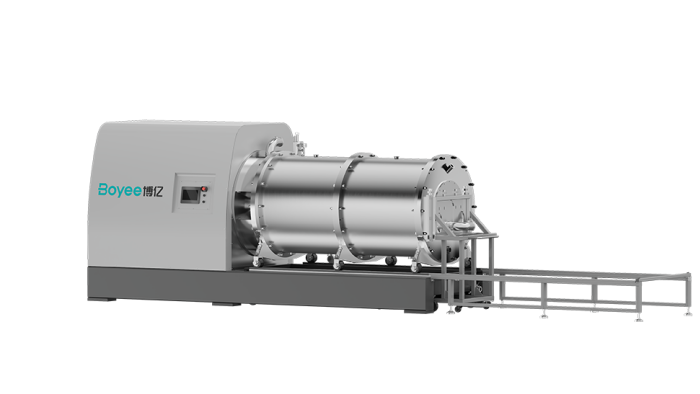
Horizontal bead mill
A horizontal bead mill has a horizontally positioned grinding chamber and is widely used for industrial wet grinding and dispersion.
The horizontal configuration supports continuous slurry flow and can accommodate different agitator and media separation technologies.
Common applications include pigment grinding, paint manufacturing, printing ink production, and chemical dispersion.
Its performance depends on the selected chamber design, rotor configuration, grinding media, and operating conditions.
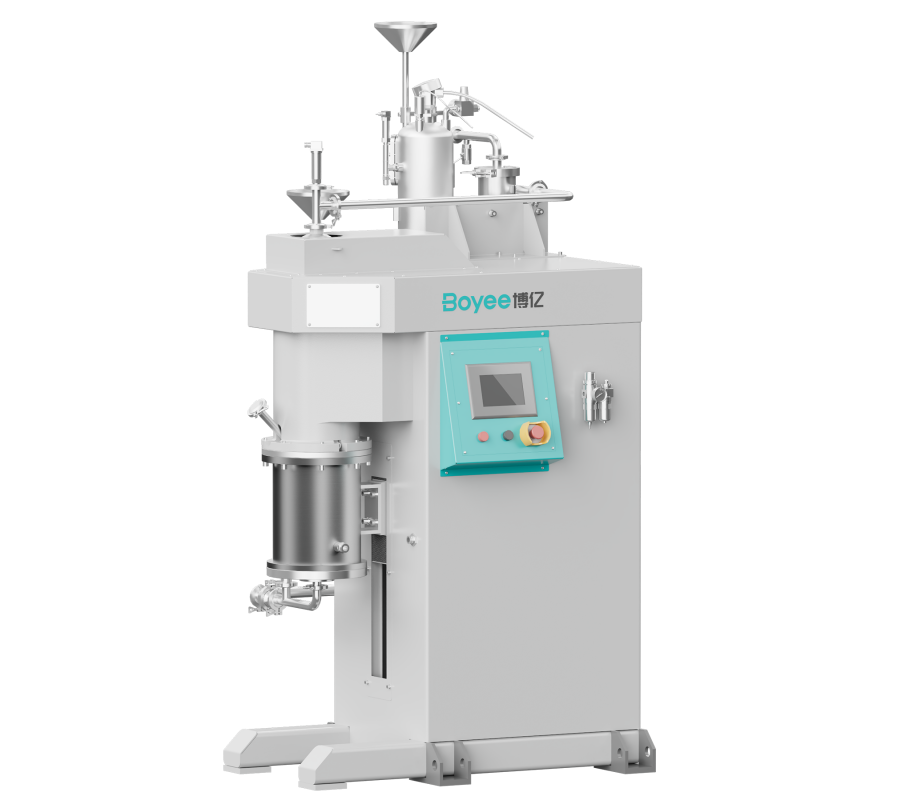
Vertical Bead Mill
A vertical bead mill uses a vertically arranged grinding chamber.
Vertical designs are available for different processing capacities and grinding requirements. Depending on the equipment configuration, they may be used for laboratory testing, dispersion, or industrial production.
The choice between horizontal and vertical equipment should be based on actual processing requirements rather than chamber orientation alone.
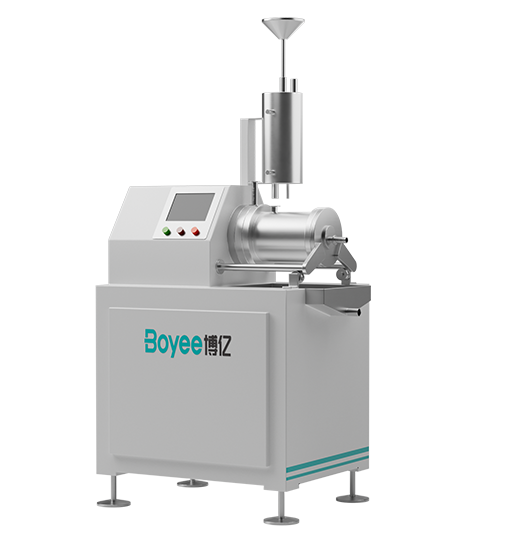
Nano bead mill
A nano bead mill is a specialized high-energy grinding machine designed for extremely fine particle processing.
It commonly uses small grinding media, optimized agitator structures, and advanced separation systems.
For example, certain specialized industrial nano bead mills are designed to operate with grinding media measuring approximately 0.05–0.2 mm in diameter.
Such equipment can be used for appropriate electronic materials, specialty coatings, functional chemicals, and other applications requiring fine particle size control.
However, achieving nanometer-scale particles depends on material properties and process optimization. It is not guaranteed simply by using small grinding beads.
Factors That Affect Bead Mill Grinding Efficiency
The performance of a wet grinding bead mill depends on several interacting process parameters.
Grinding Media Size and Material
Grinding media size affects the number of particle contacts, stress intensity, and final grinding performance.
Media density, hardness, and wear resistance also influence energy transfer and product contamination.
The optimal media selection depends on the initial feed size, target fineness, material hardness, and slurry properties.
Agitator Speed
Agitator speed influences grinding bead movement and mechanical energy input.
Increasing speed can increase grinding intensity, but excessive speed may lead to greater heat generation, media wear, and unnecessary energy consumption.
The operating speed should therefore be optimized rather than simply maximized.
Slurry Viscosity and Solids Concentration
Slurry viscosity affects material flow, grinding media movement, and energy transfer.
Very high viscosity can restrict circulation and cause excessive temperature or pressure increases.
Low solids loading may reduce productivity, while excessive solids loading can make stable processing difficult.
The appropriate solids concentration depends on the formulation, wetting agents, dispersants, and equipment design.
Grinding Time and Flow Rate
The residence time of material inside the grinding chamber affects the amount of mechanical treatment received.
For continuous bead milling, feed flow rate and circulation conditions influence residence-time distribution and production throughput.
Multiple-pass or recirculation processing may be required when one pass cannot achieve the desired fineness.
Particle Size Measurement
Particle size distribution is one of the most important quality indicators in bead milling.
Manufacturers may monitor:
● D50: The particle diameter at which 50% of the measured particle-size distribution is finer, based on the specified distribution basis.
● D90: The particle diameter below which 90% of the measured particle-size distribution falls, based on the specified distribution basis.
● Specific Energy Consumption: The energy used per unit mass of processed material, often expressed as kWh/kg or kWh/t.
● Product Temperature: The temperature reached during processing, particularly important for sensitive formulations.
These measurements help engineers compare processing conditions and evaluate whether the mill meets the required quality specifications.
Industrial Applications of Bead Mills
Bead milling technology is widely used in industries requiring controlled particle size reduction and stable liquid dispersions.
Paints and Coatings
Bead mills are commonly used to disperse pigments and functional fillers in water-based and solvent-based coatings.
Proper grinding and dispersion can contribute to color development, gloss, hiding power, and coating uniformity.
Printing Inks
Printing ink formulations require controlled pigment dispersion and suitable particle size distributions.
Bead mills are used to process pigment concentrates and other ink formulations for applications such as packaging printing, industrial printing, and digital inks.
Chemical and Agrochemical Products
Industrial bead mills are used for processing various specialty chemical dispersions and suitable agrochemical suspension formulations.
Controlled particle size can influence suspension stability, product consistency, and application performance.
Ceramics and Mineral Processing
Ceramic powders, mineral fillers, and selected inorganic materials may require wet grinding to achieve specific particle size requirements.
Bead mills can support the preparation of fine slurries used in ceramic processing, coatings, and advanced material manufacturing.
Battery and Electronic Materials
Selected bead mill technologies are used in battery and electronic material processing to disperse suitable fine powders and functional materials.
These applications may require careful control of particle size distribution, contamination, slurry temperature, and formulation stability.
Pharmaceuticals and Cosmetics
Specialized bead milling systems are used in certain pharmaceutical nanosuspension processes and cosmetic formulations.
For these applications, product-contact material compatibility, contamination control, cleaning procedures, and relevant regulatory requirements are particularly important.
Not every general-purpose industrial bead mill is suitable for pharmaceutical or hygienic processing.
Bead Mill vs. Ball Mill: Understanding the Difference
Although bead mills and ball mills both use grinding media, their operating principles are different.
A conventional ball mill typically rotates a cylindrical drum containing grinding balls and material. Particle size reduction occurs through the movement and collision of the balls as the drum rotates.
In contrast, an agitator bead mill generally keeps the grinding chamber stationary while an internal rotating agitator drives the grinding media.
This difference changes how mechanical energy is transferred into the material.
A bead mill is often preferred for fine wet grinding and controlled dispersion of pumpable slurries, while conventional ball mills may be more suitable for other grinding duties, including certain coarse-feed applications.
Equipment selection should consider feed particle size, final fineness, material characteristics, processing method, production capacity, and energy consumption.
How to Choose a Suitable Bead Mill
Selecting the right bead mill requires evaluating both the material characteristics and production requirements.
Important considerations include:
● Feed Material: Identify particle hardness, initial size distribution, abrasiveness, and chemical properties.
● Target Particle Size: Define the required fineness using appropriate particle size measurements, including D50 or D90 where relevant.
● Production Capacity: Determine the required batch volume or continuous processing throughput.
● Grinding Media Compatibility: Select media that provide sufficient grinding performance while minimizing contamination and wear.
● Temperature Requirements: Evaluate whether the material is sensitive to heat and whether sufficient cooling capacity is available.
● Maintenance and Cleaning: Consider wear-part replacement, separator access, cleaning procedures, and product changeover.
● Process Safety: Assess mechanical sealing, pressure limits, solvent compatibility, and any requirements for handling flammable or hazardous materials.
Laboratory or pilot-scale grinding trials are particularly useful before selecting full-scale production equipment.
Testing with representative materials helps determine the grinding media, operating conditions, processing time, energy demand, and achievable particle size distribution.
Frequently Asked Questions About Bead Mills
Can a bead mill produce nanoparticles?
Yes. Certain specialized high-energy bead mills can produce nanometer-scale particles or help prepare stable nanosuspensions.
However, the achievable particle size depends on the material properties, media selection, energy input, formulation, and processing conditions.
Is a bead mill suitable for continuous production?
Many industrial bead mills are specifically designed for continuous operation.
A feeding pump transfers slurry through the grinding chamber while the separator retains the grinding beads.
The processed material can be collected directly or recirculated for further grinding.
How do you improve bead mill efficiency?
Grinding efficiency can often be improved by optimizing bead size, agitator speed, media filling, slurry viscosity, feed flow rate, and temperature control.
Regular inspection of grinding media, separators, and wear components also helps maintain stable operating conditions.
Conclusion
A bead mill is an important piece of industrial wet grinding and dispersion equipment that uses agitated grinding media to achieve particle size reduction and uniform particle distribution.
Its working principle combines mechanical impact, compression, shear, and attrition inside a controlled grinding chamber. By adjusting grinding media properties, agitator speed, material flow, and temperature, manufacturers can optimize the process for different materials and particle size requirements.
From paints and printing inks to ceramics, chemicals, and advanced functional materials, bead milling technology supports applications where fine particles and consistent dispersion quality are essential.
Understanding the bead mill working principle, equipment configurations, and key processing parameters provides a practical foundation for selecting suitable grinding equipment, improving production efficiency, and maintaining reliable product quality.
