















Since the cathode and anode material systems in sodium-ion batteries differ, the requirements for raw material processing, particle size control, heat treatment, impurity control, and downstream powder processing also vary.
Therefore, sodium-ion battery material production lines cannot be configured based on a fixed equipment list. Instead, the equipment configuration and the coordination between process steps must be determined based on the material system, target particle size, process route, production capacity, and finished product specifications.
This is also a key challenge that must be addressed when scaling sodium-ion battery materials from the laboratory development to pilot-scale and mass production.
1. Sodium-Ion Battery Cathode Materials: What Are the Key Points of Process Control?
Taking polyanionic sodium-ion battery cathode materials as an example, after the raw materials undergo unpacking, feeding, mixing, and wet grinding before entering subsequent processes such as drying, heat treatment, and downstream powder processing. Depending on the specific material system and process route, certain intermediate steps can be configured according to actual production requirements.
Sodium-ion Battery Cathode Process Flow: Unpacking and feeding → Blending → Wet grinding → Spray drying → Kiln sintering → Roller crushing → Air-jet milling → Batch blending → Screening/packaging
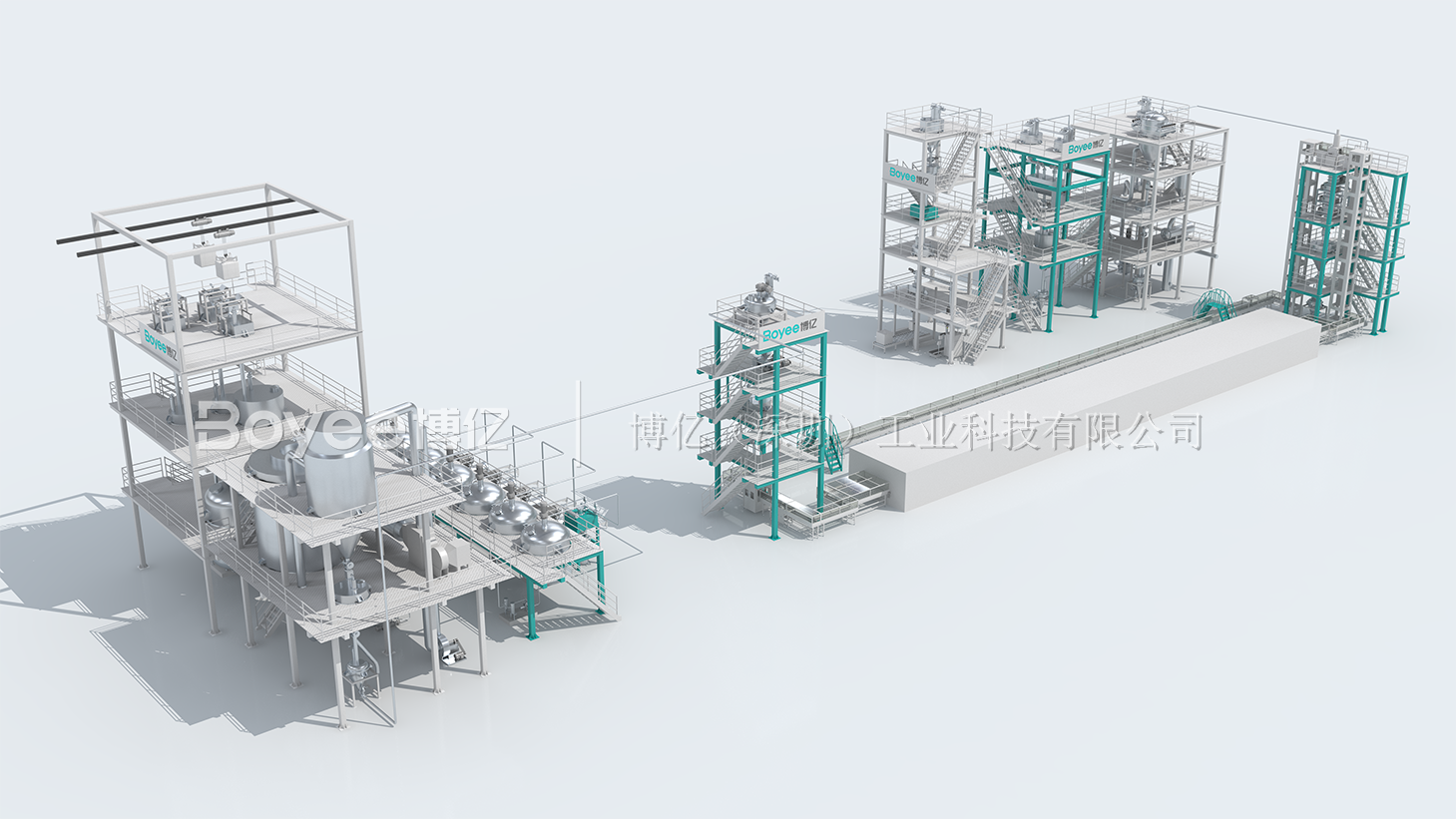
Pictured: BOYEE Sodium Poly-anion Cathode Materials Production Line
In actual production line design, relevant processes and equipment combinations must be specifically configured based on material properties, precursor state, sintering requirements, and final product specifications.
Key control points throughout the entire process route include the uniformity of raw material mixing, particle size and size distribution during grinding, slurry dispersion, the drying process, sintering temperature and atmosphere, as well as the particle size and batch consistency of the final powder. Only through effective coordination between each process step can stable material quality be maintained from initial preparation to final product..
2. Sodium-Ion Battery Anode Materials: Why Are Different Preparation Routes Used?
Sodium-ion battery anodes are produced using different process routes. After the raw materials undergo unpacking, pre-carbonization, and grinding and washing, they proceed to the spray-drying and sintering stages. Following sintering, the process continues with air-jet milling, batch mixing, sieving, demagnetization, and packaging to complete the production of the finished product.
Sodium-ion Battery Anode Process Flow: Raw material unpacking/pre-carbonization → Grinding and washing → Spray drying → Sintering → Air-jet milling → Batch mixing → Sieving/demagnetization/packaging
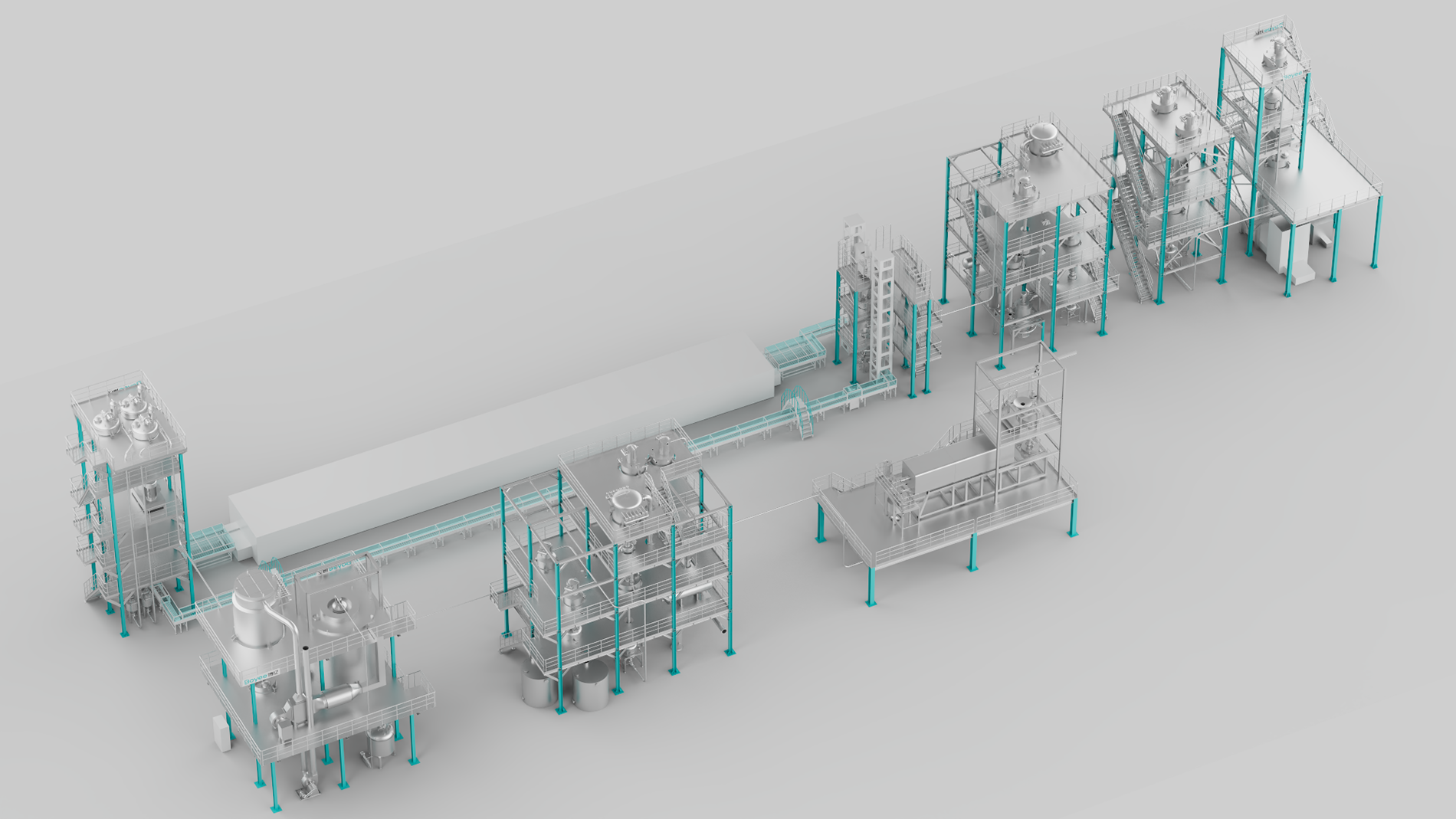
Pictured: BOYEE Sodium-Ion Battery Anode Materials Production Line Solution
3. Boyee Designs Complete Production Lines Around Material Processes
For different sodium-ion battery anode and cathode material systems, Boyee can configure complete production lines according to material processes and production capacity requirements.
The design of the complete production line focuses on three main aspects:
Process Matching: Determining the process route and core equipment based on the material system, target particle size, slurry condition, and heat treatment requirements.
Engineering Integration: Addressing equipment capacity matching, material conveyance, spatial layout, integration with upstream and downstream processes, and auxiliary system configuration.
Automated Control: Centralized management of feeding, grinding, conveying, and the operational status of each process step to enhance production stability.
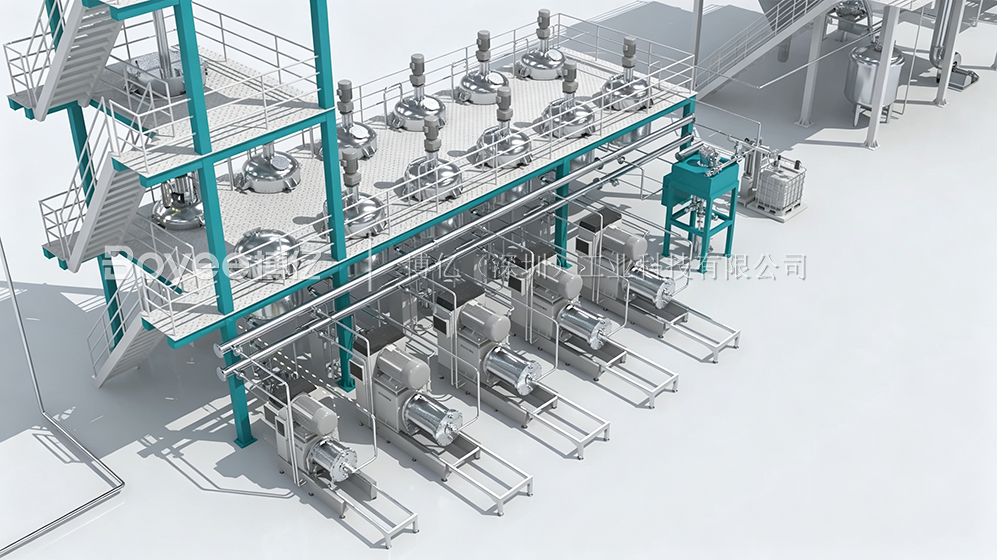
Pictured: BOYEE Sodium Poly-anion Cathode Materials Production Line
Therefore, Boyee provides more than just a combination of equipment; it offers comprehensive sodium-ion battery material production line solutions centered on the material preparation process.
4. From Core Equipment to Full-Line Implementation
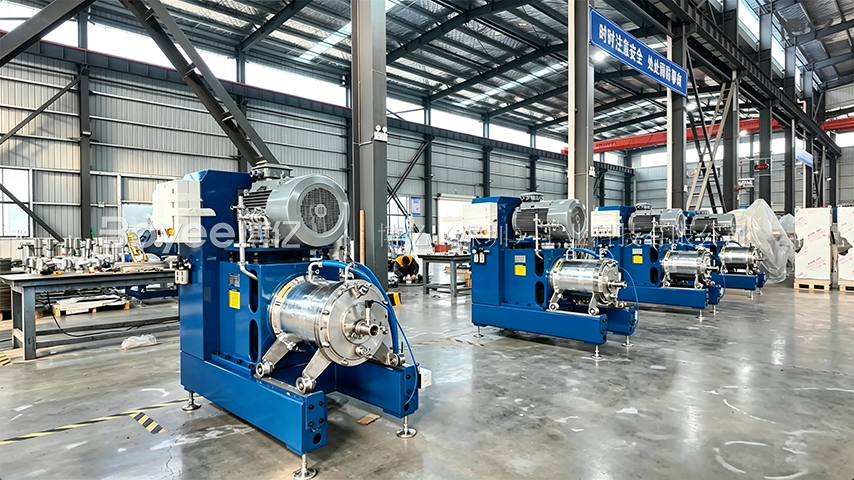
A complete production line solution ultimately involves equipment manufacturing, installation, commissioning, and stable operation. Boyee has long been engaged in equipment R&D and full-line engineering focused on new energy materials and powder preparation, accumulating project implementation experience in areas such as nano-grinding, mixing and dispersion, powder processing, material conveying, automated control, and full-line integration.
At the same time, leveraging our in-house manufacturing system, we handle the machining, assembly, and testing of core equipment, as well as the manufacturing of the entire production line. For materials companies, what is truly needed is not just a process flowchart, but a production line capable of stable operation.
5. Sodium-Ion Battery Material Production Lines: Essentially the Engineering of Material Processes
Although the development paths for sodium-ion battery cathodes and anodes differ, industrialization faces the same challenge: how to transform material processes validated in the laboratory into stable, continuous, and reproducible production processes.
To meet the needs for constructing sodium-ion cathode material production lines, anode material production lines, and pilot-scale production lines, Boyee provides equipment and engineering support ranging from experimental validation, equipment selection, process optimization, and pilot-scale upscaling to the design and delivery of full-scale production lines.
From individual machine performance to line-wide coordination, and from material parameters to engineering implementation, the ultimate goal is to transform validated process technology into stable and scalable production capability.
