















As solid-state battery materials advance toward pilot-scale and mass production, the focus of oxide solid-state electrolyte production line construction has shifted from the performance of individual machines to particle size control, impurity control, heat treatment, and system integration with upstream and downstream processes.
In response to customer LLAZO’s material production needs, Boyee has completed the project design and engineering implementation for a complete production line with an annual capacity of 200 metric tons of oxide solid-state electrolytes. The line is configured to achieve target particle size, low-contamination production, sealed conveying, and automated control.
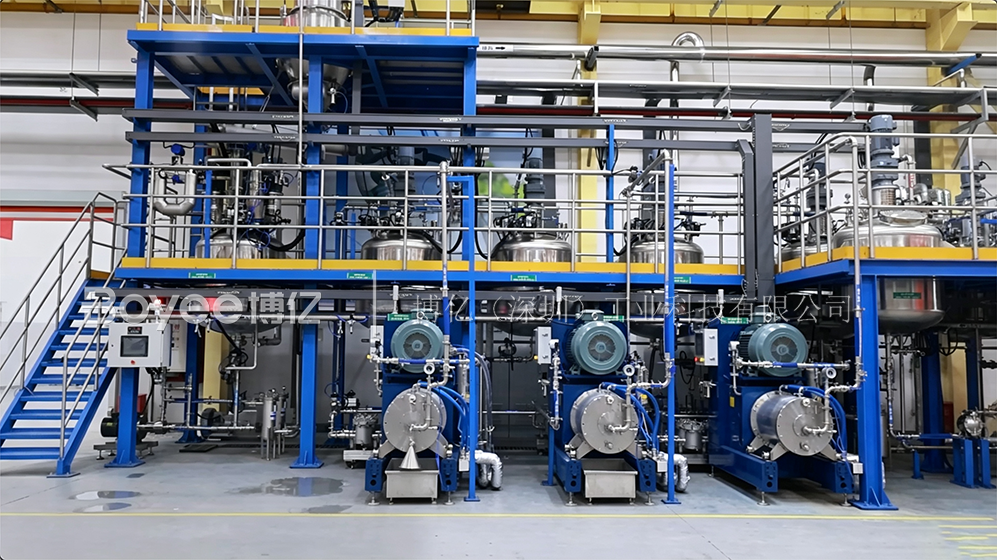
On-Site Project Footage: BOYEE Provides Clients with a Complete Line of Equipment Solutions for Oxide Solid-State Electrolytes
1. Basic Project Parameters
Material System: LLAZO
Design Capacity: 200 metric tons per year
Target Particle Size: D50 = 300 nm
Key Requirements: Low contamination, explosion protection, sealed conveying, automation, and batch-to-batch consistency
For this type of oxide solid-state electrolyte material, the design of the entire production line must not be based solely on production capacity when selecting equipment; it must also take into account the grinding particle size, sintering process, powder handling, impurity control, and equipment processing capacity as a unified whole.
2. Establishing a Complete Solid-State Electrolyte Preparation Process from Raw Materials to Finished Products
Based on the material system and customer production requirements, this project has established a complete material preparation process:
Raw material batching → Wet coarse grinding → Wet fine grinding → Spray drying → Roller kiln → Twin-roll mill → Dispersion and emulsification → Coarse grinding → Fine grinding → Demagnetization cycle → Spray drying → Air-jet milling → Single-cone drying → Agitation and cooling → Sieving → Demagnetization → Packaging
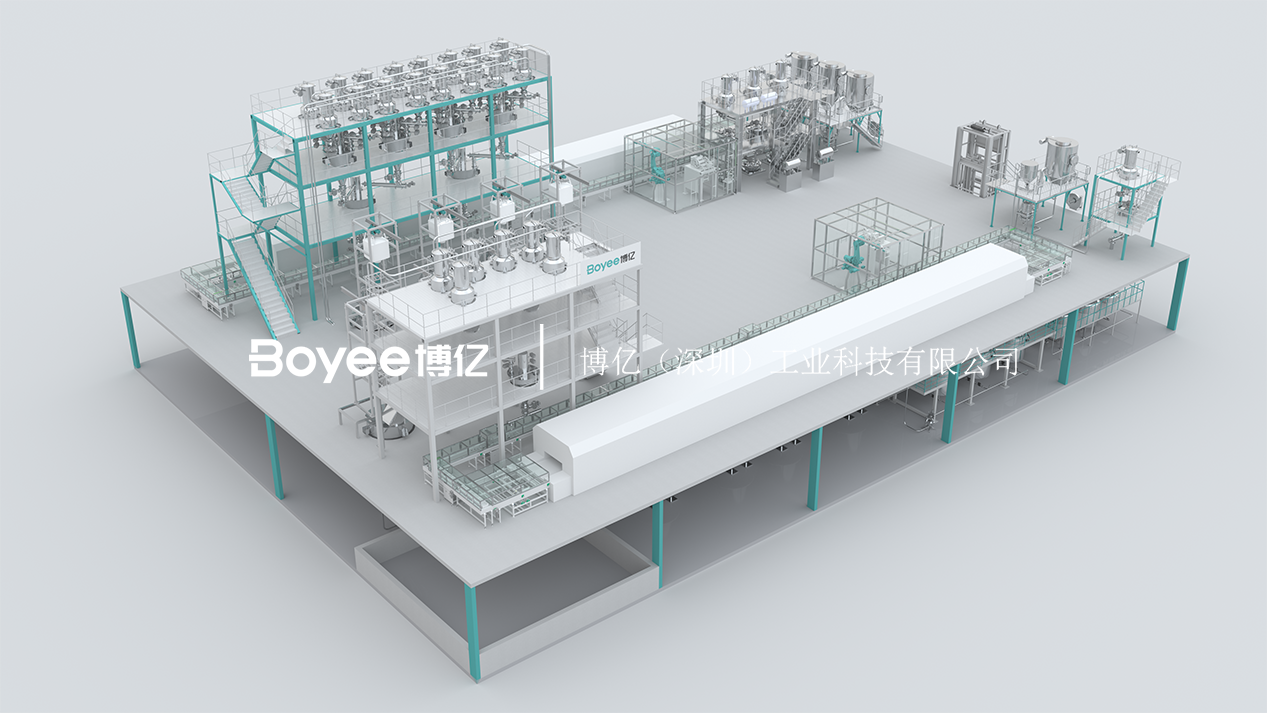
Pictured: BOYEE Oxide Solid-State Electrolytes Production Line Solution
The entire oxide solid-state electrolyte production line covers key processes such as batching, nano-grinding, spray drying, sintering, pulverization, drying, screening, demagnetization, and packaging.
In particular, the two grinding processes handle particle processing tasks at different stages, with equipment and process parameters optimized to achieve a target particle size of D50 = 300 nm.
3. Grinding Must Not Only Achieve the Desired Particle Size but Also Control Contamination and Particle Size Distribution
For solid electrolyte powders, wet grinding must not only achieve particle refinement but also address particle size distribution, slurry dispersion, temperature rise, and the introduction of impurities during the grinding process.
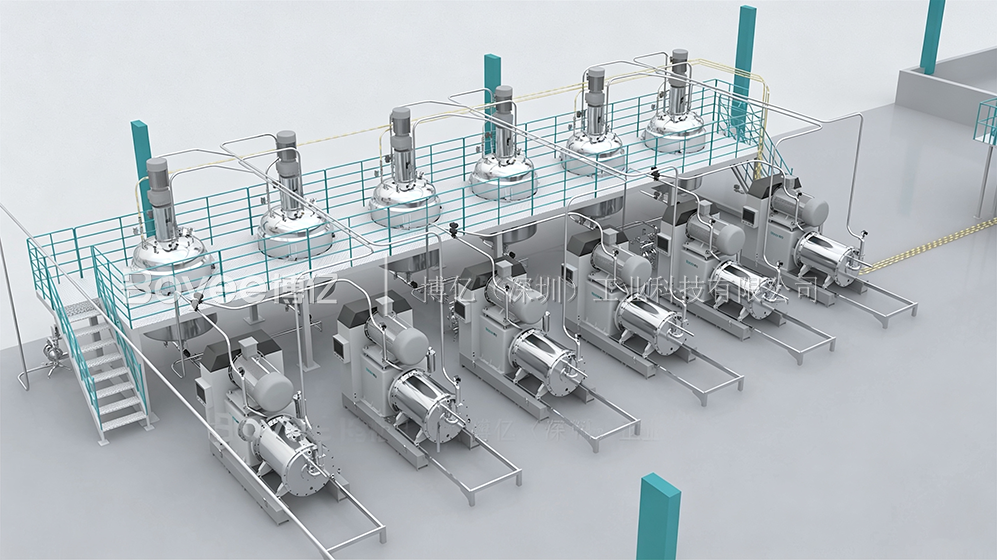
Pictured: BOYEE Oxide Solid-State Electrolytes Production Line Solution
Therefore, this project employs a staged configuration of coarse and fine grinding, matching appropriate grinding equipment to the material state at each process stage, and incorporates a demagnetization system in the later stages to control the risk of metallic contamination during production.
From an engineering perspective, the goal is not simply to “grind to 300 nm,” but to achieve the target particle size while ensuring stability, low contamination, and continuous production capacity.
4. The processes from sintering to secondary powder processing must be realigned
After undergoing wet grinding and spray drying in the front end, the material enters a roller kiln for heat treatment. Since the state of the material changes after sintering, it must undergo further processing in the back end—including twin-roll crushing, dispersion and emulsification, coarse grinding, fine grinding, and demagnetization—before proceeding to processes such as spray drying and air-jet milling.
The key consideration at this stage is aligning the changes in material state before and after sintering with the subsequent powder processing steps, ensuring that the processing capacities of each stage remain coordinated and minimizing the risk of any single step becoming a bottleneck in the overall production line’s capacity.
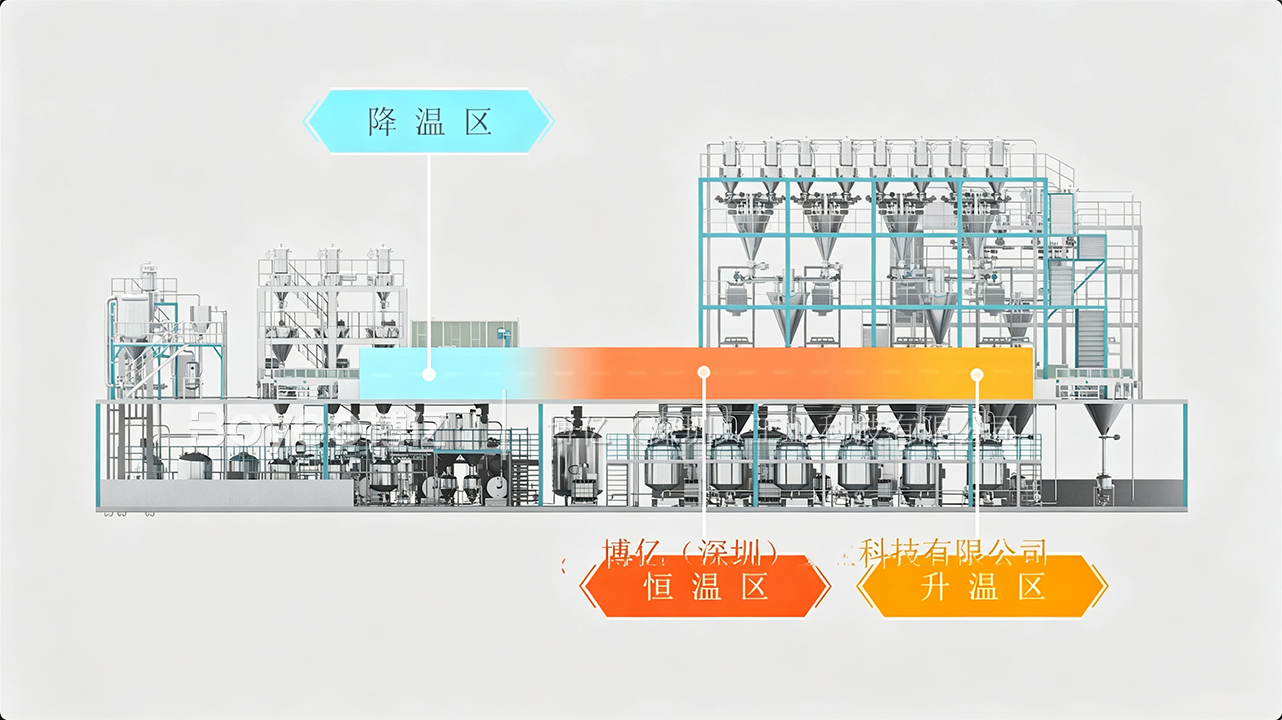
Pictured: BOYEE Oxide Solid-State Electrolytes Production Line Solution
5. Low Pollution, Sealed Systems, and Automation Throughout the Entire Production Line
To meet customer requirements for pollution-free, explosion-proof, sealed conveying, and batch consistency, the design of the entire line must focus not only on core equipment but also take auxiliary systems and engineering controls into account.
In process sections involving solvents, explosion-proof and safety designs must be implemented in accordance with process conditions; material transfer should utilize sealed solutions wherever possible to minimize the impact of dust, the environment, and manual operations on the materials.
At the same time, automated control manages the operating parameters of batching, grinding, conveying, and key process steps, enhancing the controllability and repeatability of the production process and providing an engineering foundation for batch consistency.
6. From Process Parameters to the Implementation of a Complete Production Line with an Annual Capacity of 200 Metric Tons
For new energy materials to transition from the laboratory to mass production, the key challenge is how to transform validated material processes into stable, continuous, and scalable production processes.
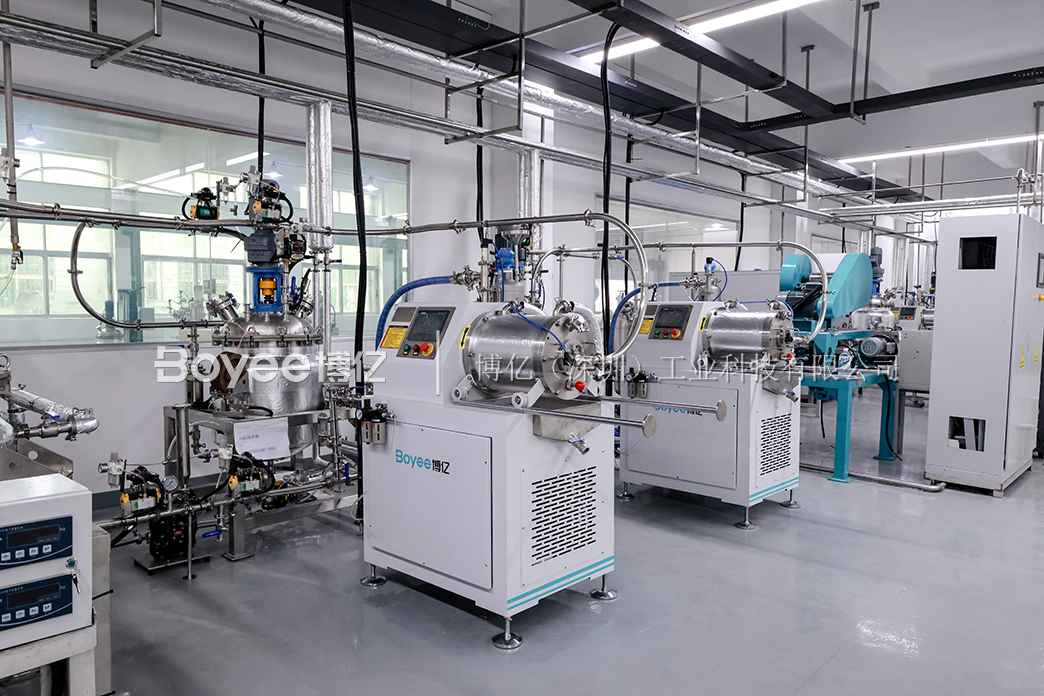
For this LLAZO oxide solid-state electrolyte project, Boyee focused on the client’s annual production capacity target of 200 metric tons, a D50 particle size of 300 nm, and low-pollution production requirements. We completed the comprehensive integration of the process route, core equipment selection, and the coordination of grinding, sintering, powder handling, sealed conveying, and automation systems.
Leveraging its project experience in nano-grinding, powder processing, new energy materials equipment, and turnkey line engineering, Boyee can provide comprehensive turnkey solutions for oxide solid-state electrolytes—from experimental validation and pilot-scale upscaling to full-scale production.
The value of a turnkey project lies not merely in connecting equipment, but in ensuring that material processes, equipment parameters, and engineering systems truly come together to form a stable production capacity.