















With the rapid development of AI servers, smart vehicles, and high-end electronic devices, electronic components are evolving toward smaller size, higher capacity, and greater reliability.
As a fundamental electronic component, MLCCs are widely used in server power supplies, computing modules, automotive electronics, and industrial control systems, where they perform functions such as filtering, decoupling, voltage regulation, and energy storage. As application performance continues to improve, higher demands are being placed on MLCCs in terms of voltage withstand capability, stability, and long-term reliability.
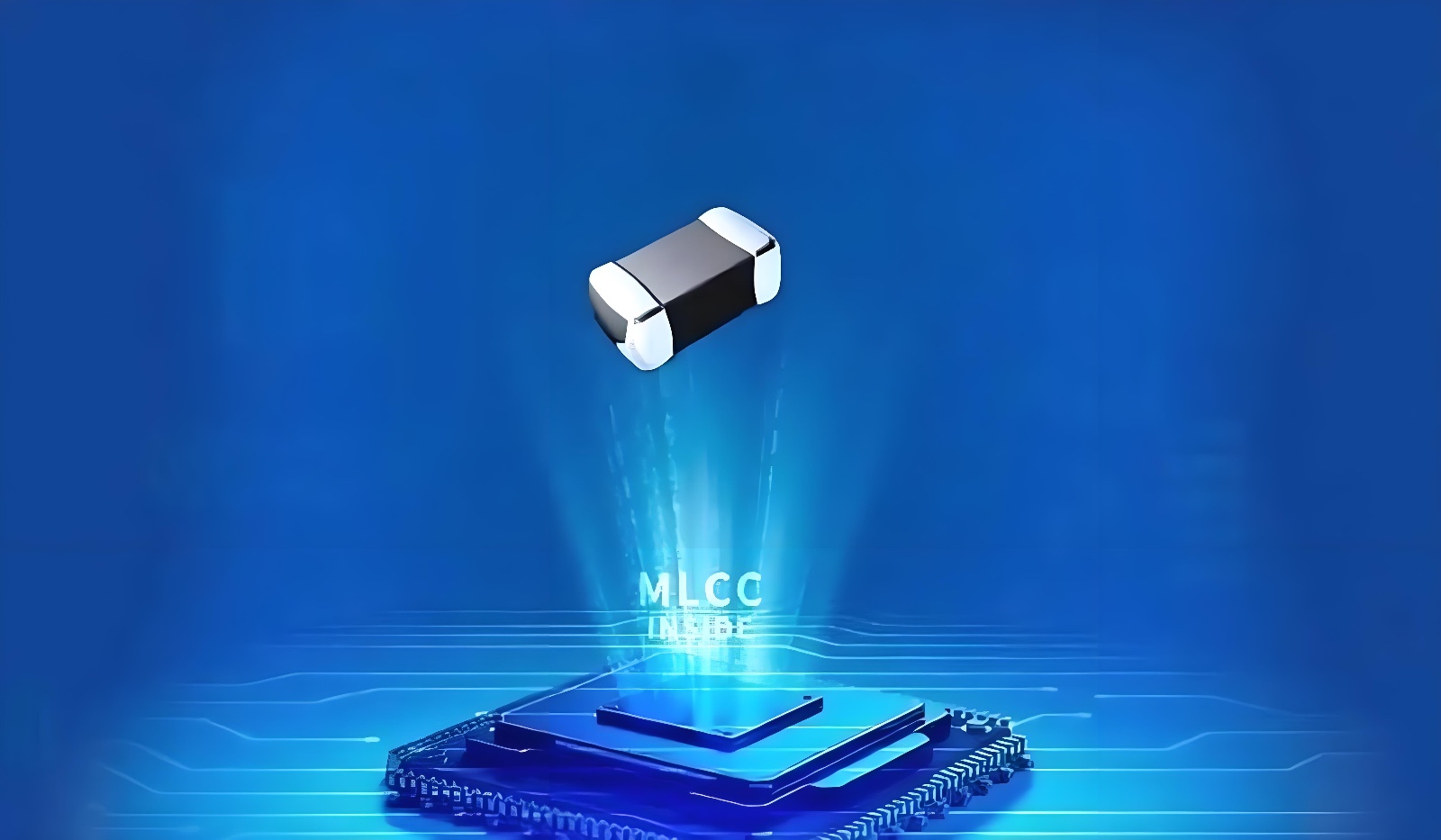
1. Competition in the high-end MLCC market is extending to upstream materials
MLCCs are composed of multiple alternating layers of ceramic dielectric material and internal electrodes. As component sizes continue to shrink and dielectric layers become thinner, minor defects in ceramic powders may be further magnified. For electronic ceramic powders, such as barium titanate, factors including particle size, particle size distribution, purity, agglomeration state, and sintering activity all affect the uniformity, density, and insulation reliability of the dielectric layers.
Therefore, the manufacturing of high-performance MLCCs is not merely determined by downstream processes such as stacking and sintering, it also requires strict control starting from ceramic powder preparation.
2. In nano-grinding, finer particle size does not always mean better performance.
In the production of MLCC electronic ceramic powders, wet nano-grinding serves to reduce particle size, break up agglomerates, and control particle size distribution.
However, achieving smaller particle size alone is the ultimate goal, advanced ceramic powder processing requires a balance between particle refinement, crystal structure preservation, temperature control and contamination prevention. Insufficient grinding makes it difficult to fully break up powder agglomerates; excessive grinding, on the other hand, may negatively affect material structure and subsequent sintering performance.
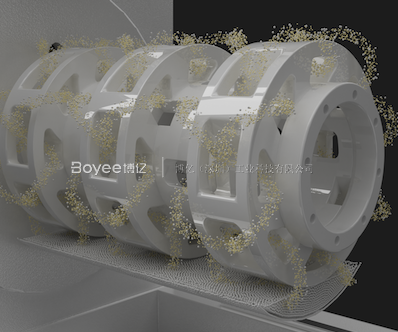
Contact between equipment and materials, wear on grinding media, and residues in piping can also serve as sources of impurities.
What truly needs to be controlled are: particle size, distribution, purity, crystal structure, and batch consistency.
3. Moving from individual Equipment to Integrated Production Line Solution.
The manufacturing of MLCC ceramic materials involves multiple interconnected processes.Even when individual equipment meets technical specifications, poor coordination between production capacity, process timing, and material transfer systems may lead to: process interruptions, material residue, cross-contamination, and batch-to-batch variations.
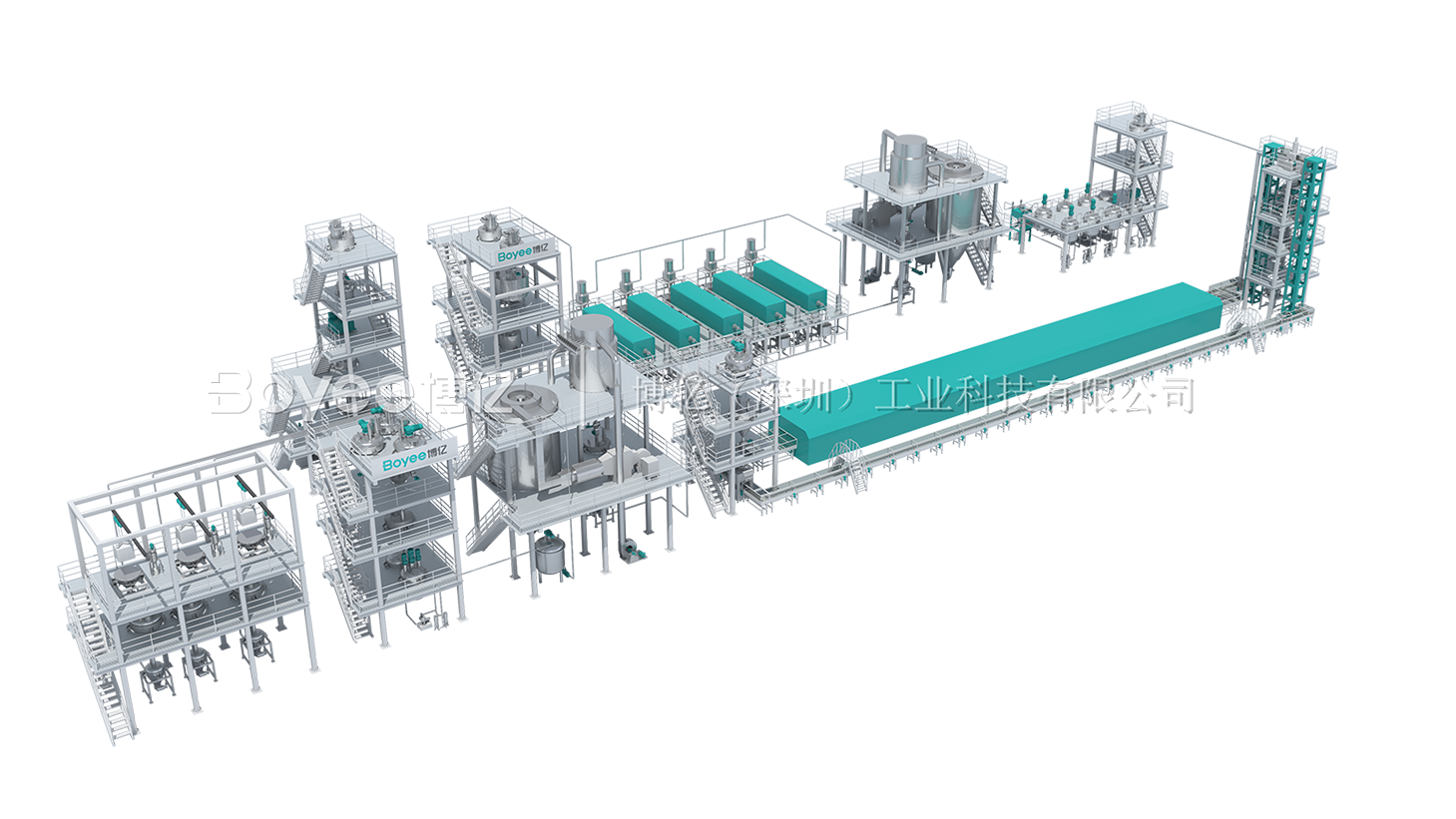
Pictured: Boyee Industrial's MLCC Electronic Ceramics Production Line Solutions
Therefore, MLCC material manufacturing is moving toward integrated production solutions featuring low contamination, continuous operation, automation, and full-process traceability.
4. Boyee Provides Turnkey Solutions for MLCC Electronic Ceramic Materials
To support MLCC ceramic material development, pilot production, and industrial-scale manufacturing, Boyee Industrial provides:
· process engineering
· core powder processing equipment
· automation systems
· turnkey EPC production line solutions
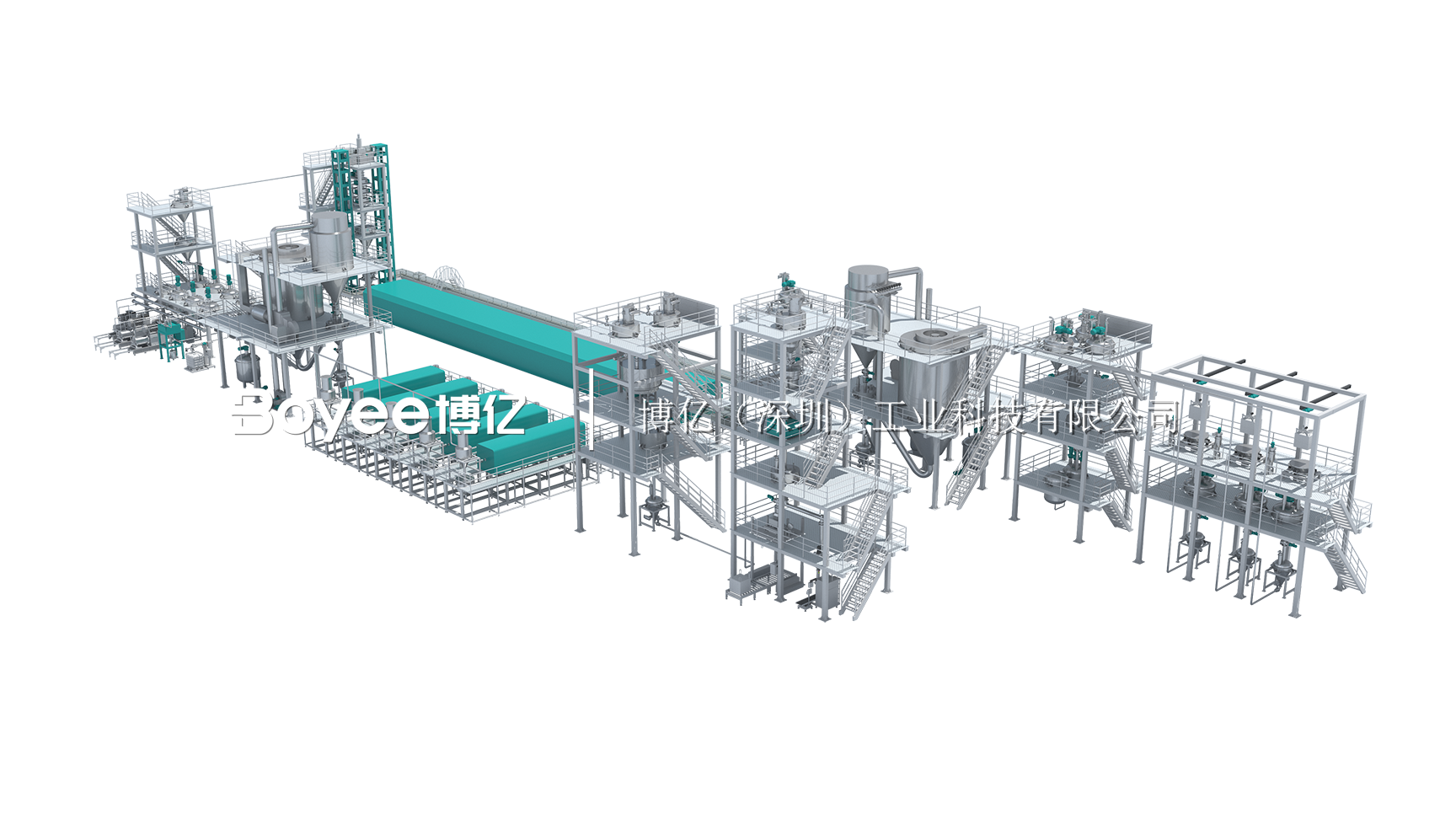
Pictured: Boyee Industrial's MLCC Electronic Ceramics Production Line Solutions
Full-Line Coverage: Unpacking and Feeding System—Mixing—Spray Drying—Kiln Sintering—Crushing—Wet Grinding—Spray Drying—Rotary Kiln Sintering—Batch Mixing/Screening/Packaging
Through integrated process design and capacity optimization, Boyee helps customers address key manufacturing challenges including:
· particle size control
· contamination prevention
· process integration
· batch consistency
By combining equipment technology, process expertise, and turnkey engineering capabilities, Boyee Industrial supports stable production and industrial-scale manufacturing of advanced MLCC ceramic materials.
