
















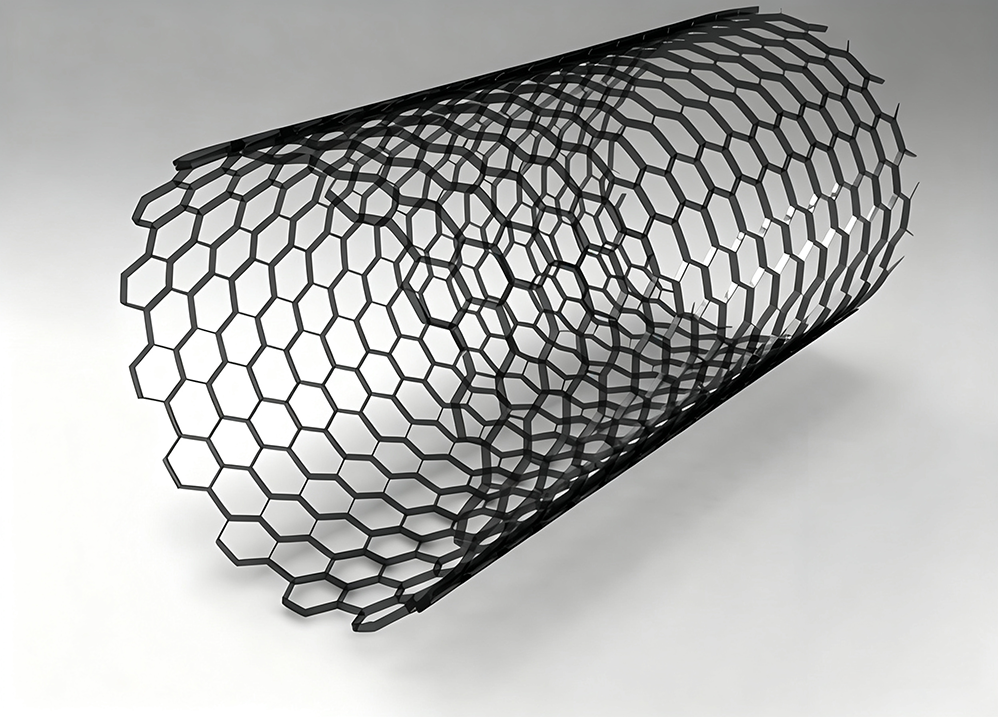
In recent years, with the rapid development of new energy vehicles, semiconductors, flexible electronics, and advanced composite materials, a nanomaterial with a unique one-dimensional structure has attracted increasing attention: single-walled carbon nanotubes (SWCNTs), which are formed by a single layer of graphene rolled into a hollow tubular structure, exhibit excellent electrical conductivity, high thermal conductivity, high strength, and the ability to significantly enhance material performance even at low loading levels.
Therefore, SWCNTs are considered one of the key directions for next-generation high-performance conductive materials.
However, in the transition from laboratory research to industrial applications, single-walled carbon nanotubes still face key challenges, including stable, large-scale synthesis; control of product consistency; optimization of dispersion and application processes; and the development of continuous production equipment.
1. Why are single-walled carbon nanotubes attracting attention?
Compared to traditional conductive materials, SWCNTs possess a unique one-dimensional nanostructure. In the field of new energy batteries, even a small amount of SWCNT can form a highly efficient conductive network, helping to improve electrode conductivity, active material utilization, and battery cycling stability.
In the semiconductor and electronics sectors, SWCNTs, with their superior electrical properties, can be used in flexible electronic devices, nanoelectronic materials, and high-performance composites. In the field of composite materials, SWCNTs can enhance a material’s mechanical properties, electrical conductivity, and functionalization capabilities. As application scenarios continue to expand, market demand for high-quality SWCNT materials continues to grow.
2. What are the challenges in the large-scale production of single-walled carbon nanotubes?
Although SWCNTs possess outstanding properties, industrialization involves more than simply “manufacturing carbon nanotubes.” To truly enter the application phase, the following challenges must be addressed:
1) Continuous and stable growth
One of the current mainstream SWCNT preparation techniques is floating catalyst chemical vapor deposition (FCCVD). This method achieves continuous carbon nanotube growth through the control of catalysts, carbon sources, and reaction conditions. However, during large-scale production, precise control of the temperature profile, gas flow rates, catalyst state, and growth environment is required to ensure consistency in product length, purity, and performance.
2) Purification and Post-Treatment
The preparation process typically results in catalyst residues, amorphous carbon, and impurities. Therefore, post-treatment processes are required to enhance material purity and meet the requirements of various applications.
3) Dispersion and Slurry Preparation
SWCNTs have a high specific surface area and strong intermolecular interactions, making them prone to agglomeration, entanglement, and uneven dispersion. Achieving stable dispersion is a critical factor affecting the performance of the final application. In particular, during the preparation of conductive carbon nanotube slurries, it is necessary to control dispersion uniformity, slurry viscosity, the structure of the conductive network, and batch consistency.
3. Carbon Nanotube Conductive Slurries: A Critical Link Between Materials and Applications
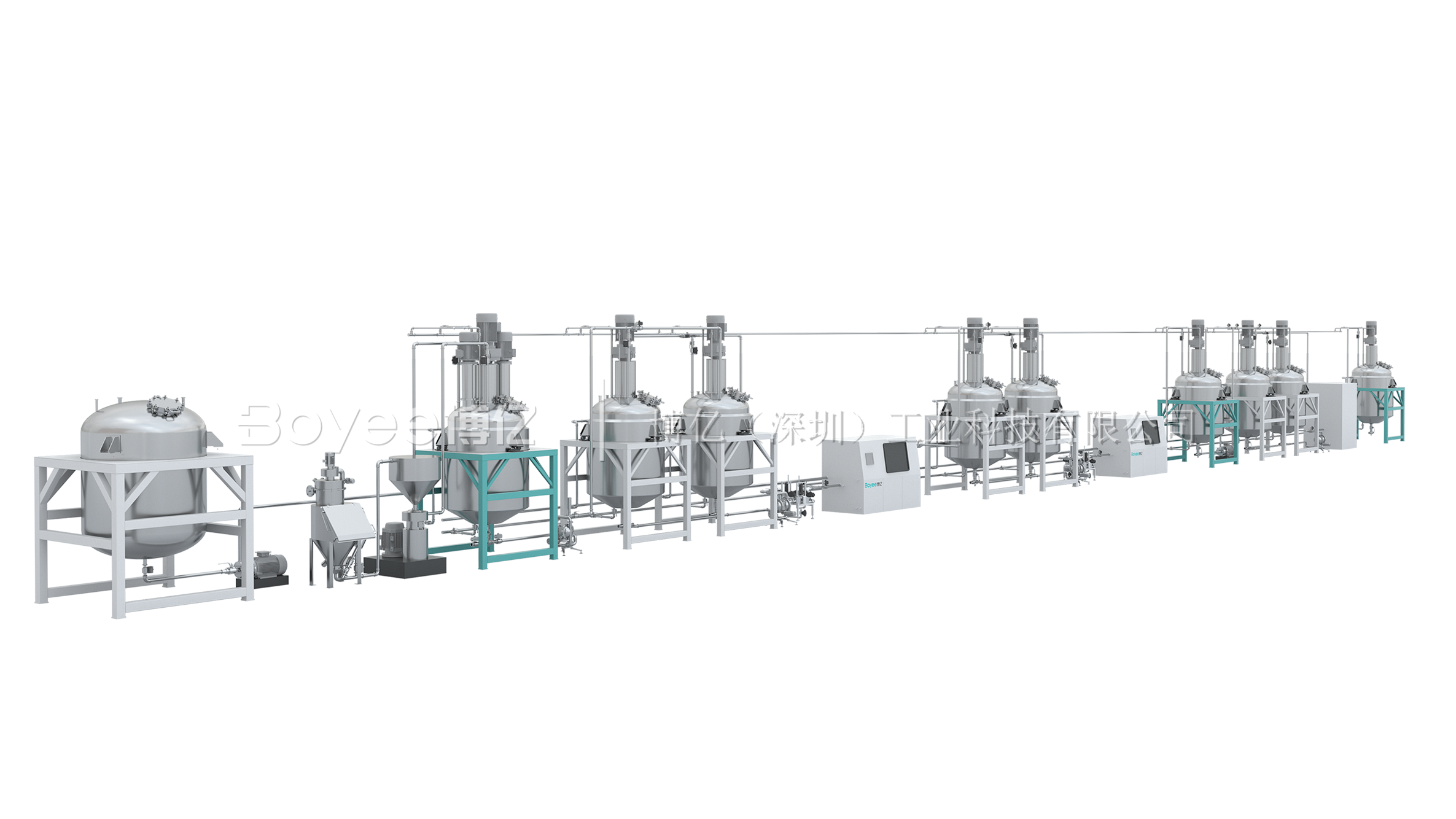
For end-use applications, single-walled carbon nanotubes (SWCNTs) are typically incorporated into downstream manufacturing processes in the form of slurries. The production of high-performance CNT conductive slurries involves: CNT pretreatment, powder dispersion, nano-grinding, homogenization, and slurry stabilization.
Among these, the dispersion process directly affects the formation of the conductive network, electrode performance, and product consistency. Therefore, the manufacture of CNT slurries requires not only excellent material properties but also suitable processing equipment and process solutions.
4. From Material Preparation to Application: Equipment Capabilities Determine Industrialization Efficiency
As the applications of SWCNTs continue to expand, industry competition has shifted from purely material R&D to encompass: material preparation capabilities + process control capabilities + equipment manufacturing capabilities.
A complete industrial chain must cover: carbon nanotube growth → purification → dispersion and processing → slurry preparation → large-scale production. Each of these stages requires stable and reliable equipment support.
5. Boyee Industrial: Providing Carbon Nanotube Material Processing and Turnkey Solutions
Focusing on the application needs of single-walled and multi-walled carbon nanotubes as well as conductive slurries, Boyee Industrial continues to expand its portfolio of nanomaterial processing equipment.
Currently, the company offers: CNT conductive slurry preparation solutions, nano-grinding equipment, dispersion and mixing equipment, homogenization equipment, and automated slurry production systems.
Addressing the challenges of carbon nanotubes—such as their tendency to agglomerate and difficulty in dispersion—Boyee Industrial enhances slurry processing stability through the synergistic optimization of grinding, dispersion, and mixing processes. Additionally, in conjunction with FCCVD carbon nanotube production, Boyee Industrial provides equipment support ranging from material processing validation to large-scale production.
6. Future Development: SWCNT Industrialization Requires Joint Breakthroughs in Materials and Equipment
The development of single-walled carbon nanotubes is not merely a competition in material performance. Future industrial competition will center on: stable production capacity, batch consistency, process scale-up capabilities, and equipment integration capabilities. Moving from experimental validation to large-scale manufacturing requires joint efforts from materials companies, equipment manufacturers, and the entire supply chain.
Boyee Industrial continues to focus on nanomaterial processing and intelligent equipment technologies, providing equipment and engineering solutions for the industrialization of carbon nanotube conductive slurries and advanced materials.