
















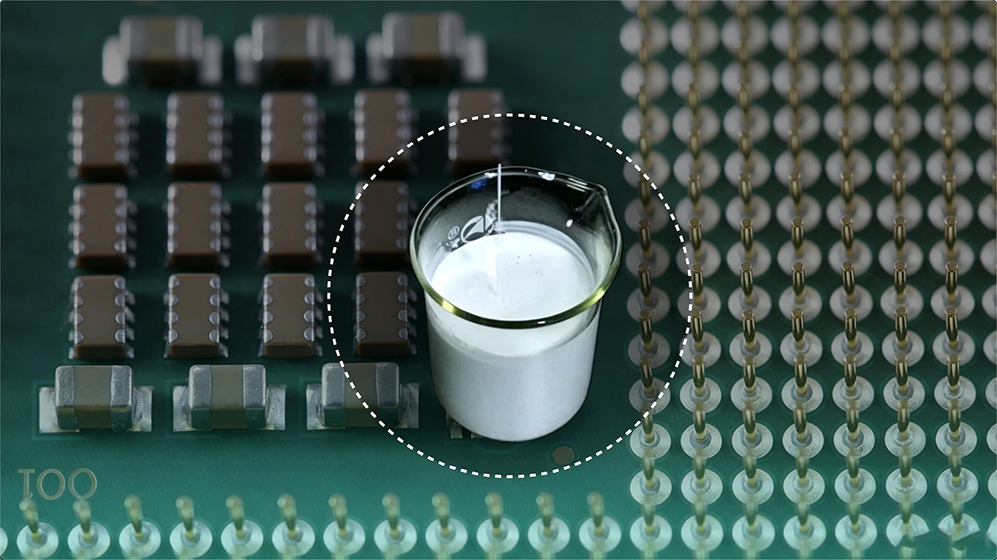
According to supply chain information recently compiled by TrendForce News, a single high-end AI server cabinet can use approximately 440,000 MLCCs. With the rapid growth of AI servers, demand for high-end MLCCs—featuring high capacitance, low voltage, and compact sizes—continues to rise.
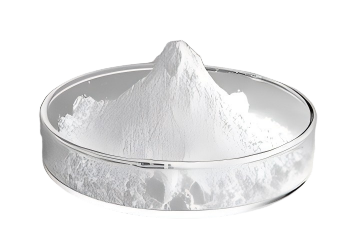
The expansion of AI computing power is propelling multilayer ceramic capacitors (MLCCs) to the forefront of the industry chain, and the key underlying material—barium titanate electronic ceramic powder—is also attracting increasing attention.
1. Why Do AI Servers Require Large Quantities of High-End MLCCs?
High-power chips such as GPUs, ASICs, and CPUs have stringent requirements for power supply stability during operation, necessitating a large number of MLCCs to perform functions such as decoupling, filtering, voltage regulation, and noise suppression.
At the same time, high-end MLCCs are continuously evolving toward miniaturization, higher capacitance, thinner dielectric layers, multilayer structures, and greater reliability, which in turn places higher demands on the particle size, dispersion, purity, and consistency of the upstream electronic ceramic materials.
2. Why is barium titanate widely used in MLCCs?
MLCCs are constructed by alternately stacking ceramic dielectric layers and metal internal electrodes; barium titanate is one of the key ceramic dielectric materials used in high-dielectric MLCCs.
As MLCC dielectric layers continue to become thinner, barium titanate powder must be further refined to achieve finer particles, uniform particle size, and stable dispersion. Significant agglomeration, an overly broad particle size distribution, or uneven dispersion can increase the difficulty of subsequent processes such as electronic ceramic slurry preparation, tape casting, and sintering control.
Therefore, AI servers not only drive an increase in MLCC consumption but also raise the bar for high-quality barium titanate electronic ceramic powders.
3. Is finer grinding always better for barium titanate?
Not necessarily. The purpose of fine grinding barium titanate is not merely to “grind the particles smaller”; it must also balance the following factors: particle refinement, deagglomeration, uniform dispersion, particle size control, low contamination, and preservation of the material structure.
What truly needs to be controlled is the overall state of the powder—achieving the target particle size while maintaining a good particle size distribution, uniform dispersion, and material stability. Therefore, for MLCC electronic ceramic materials, the key is not simply pursuing a specific particle size in nanometers, but rather achieving stable, uniform, and controllable powder preparation.
4. What type of bead mill is suitable for barium titanate used in MLCCs?
In the preparation of barium titanate, advanced ceramic powders, and MLCC electronic ceramic slurries, vertical bead mills and nano bead mills are commonly used for wet fine grinding.
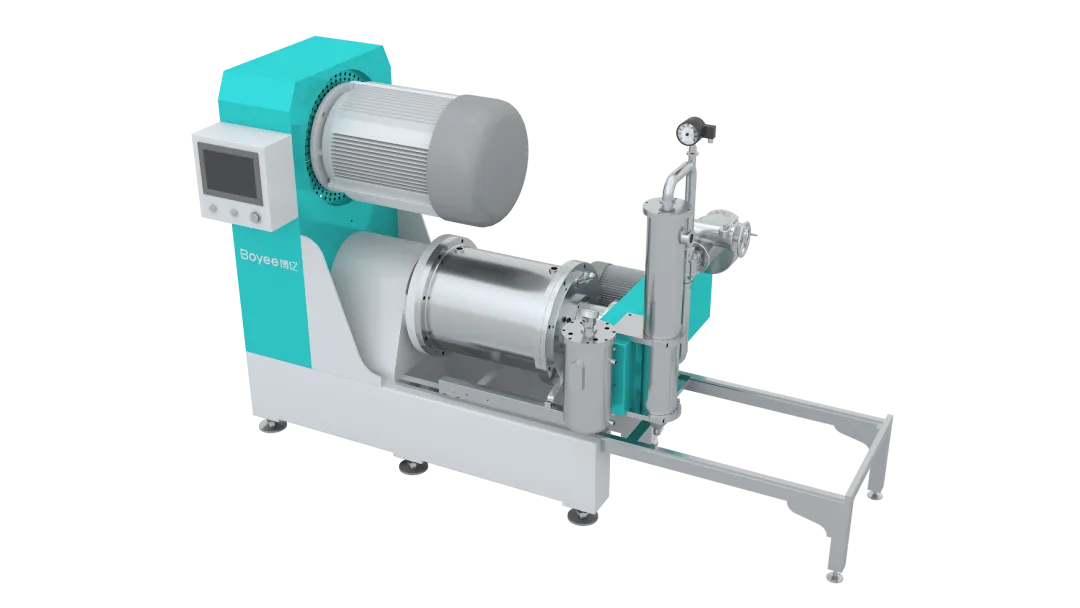
Pictured: Boyee Industrial LMM Ultrafine Centrifugal Nano Bead Mill
These machines achieve particle refinement and the deagglomeration through continuous collision, shearing, and friction between the grinding media and the material. However, when moving into nanoscale fine grinding, special attention must be paid to issues such as the suitability of small-particle-size grinding media, media separation, screen clogging, temperature rise, and metal contamination.
These are also key considerations when selecting bead mills for high-end electronic ceramic materials.
5. What are the advantages of a screenless vertical bead mill?
For the fine grinding of advanced ceramic powders, Boyee Industrial has developed a single-drive vertical bead mill. The equipment employs a screenless centrifugal separation structure that uses centrifugal force to separate the slurry from the grinding media, thereby reducing the clogging issues associated with traditional screens when using small grinding media for high-fineness grinding.
Taking Boyee Industrial’s 5L single-drive vertical bead mill as an example, it can accommodate grinding media ranging from 0.03 to 0.8 mm, meeting the grinding requirements for advanced ceramics and nanomaterials at various fineness stages.
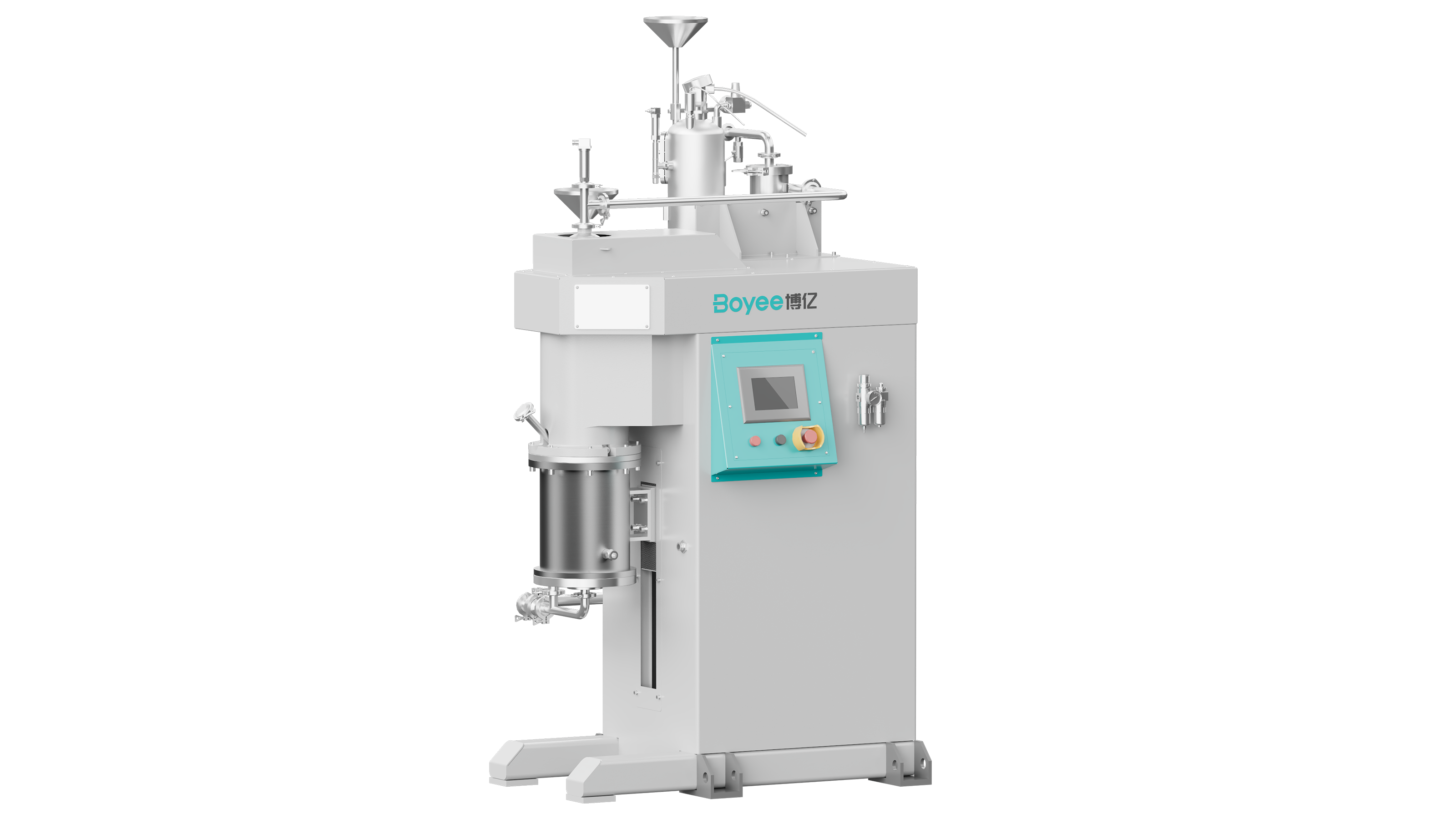 Pictured: Boyee Industrial Single-Drive Vertical Bead Mill
Additionally, the core grinding area features a zirconia rotor paired with a silicon carbide grinding chamber. This ceramic contact structure helps reduce the risk of introducing metallic impurities. Combined with grinding chamber cooling, double-ended mechanical seals, and temperature and pressure monitoring, it provides the equipment foundation for low-contamination grinding of barium titanate and continuous grinding of electronic ceramic slurries.
6. From AI Servers to Barium Titanate Powder
Looking upstream along the industrial chain: Growing demand for AI servers → Increased usage of high-end MLCCs → Thinner and multi-layer MLCCs → Higher requirements for particle size, dispersion, and purity of barium titanate powder.
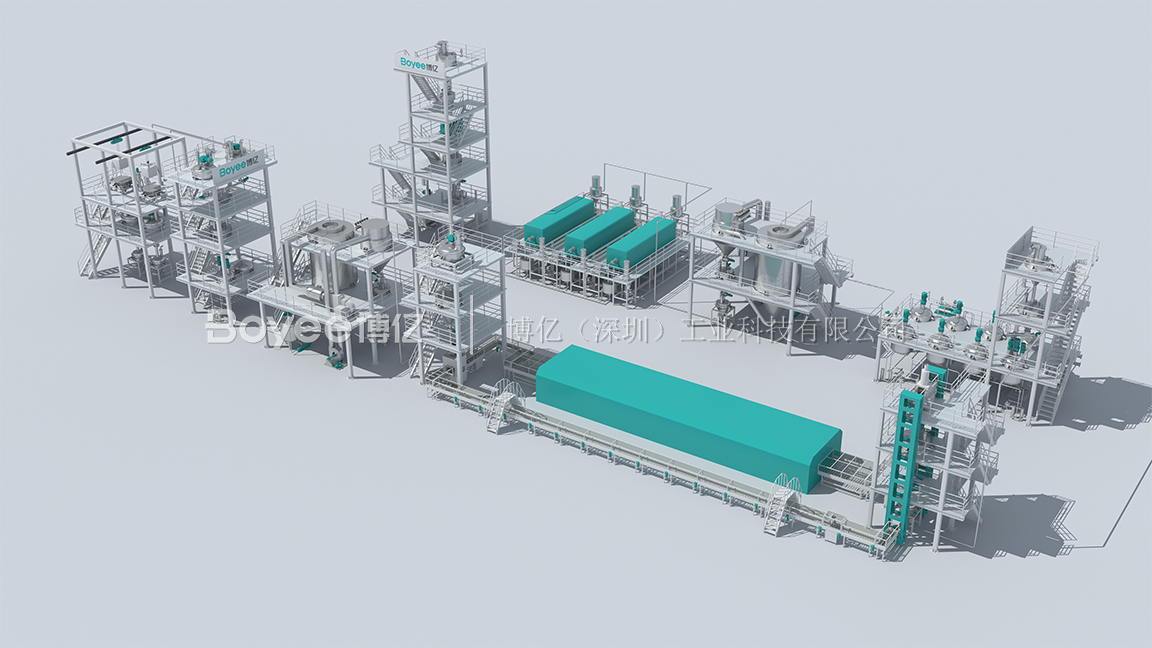
Pictured: Boyee Industrial's MLCC Electronic Ceramics Production Line Solution
In the future, competition in the high-end MLCC market will extend beyond the capacitor manufacturing stage to include electronic ceramic materials and powder preparation processes.
Focusing on the preparation of advanced ceramic materials, Boyee Industrial has developed a product portfolio that includes single-drive vertical bead mills, nano bead mills, mixing and dispersion equipment, and complete production line solutions for MLCC electronic ceramics. These solutions cover experimental validation, wet fine grinding, and production line coordination, providing equipment support for the large-scale manufacturing of electronic ceramic materials.
From barium titanate powder to MLCC electronic ceramic slurry, and from fine grinding to production line coordination, Boyee continues to serve the manufacturing of advanced ceramic materials through its equipment and technology.
