
















In 2026, the commercialization of sulfide solid-state electrolytes is accelerating further.
On the one hand, the latest international research continues to make breakthroughs in key areas such as air stability, raw material costs, and ultra-thin electrolyte films. on the other hand, domestic and international companies are accelerating the deployment of pilot lines, 100-metric-ton-scale production capacity, and all-solid-state battery validation.
This means that the focus of competition in the sulfide solid-state electrolyte sector is gradually shifting from material performance in the laboratory stage to a comprehensive competition involving cost, process scale-up, and large-scale manufacturing capabilities.
1) Sulfide Solid-State Electrolytes: “Moisture Resistance” Alone Is Not Enough
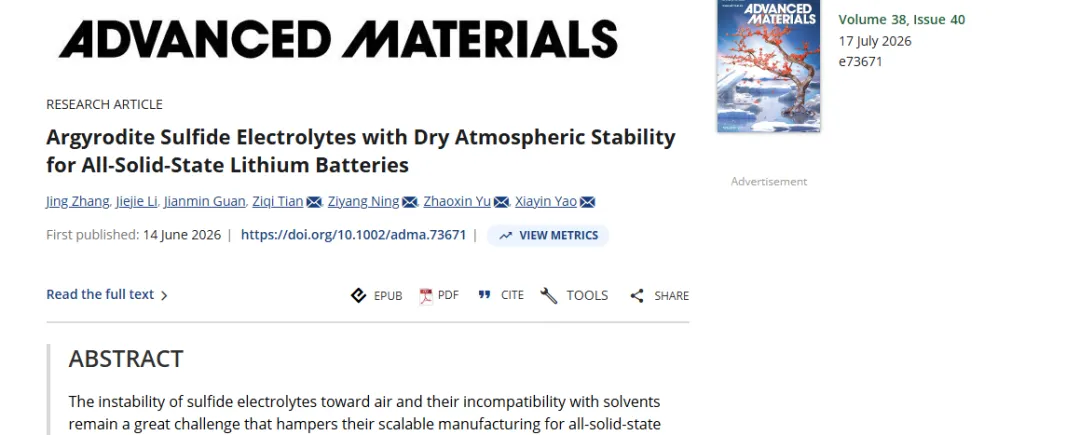
In 2026, *Advanced Materials* published a study on the air stability of argyrodite-type sulfide solid-state electrolytes..
The study found that materials such as Li₆PS₅Cl are relatively stable toward N₂ but react with O₂ and CO₂. This implies that, during the preparation of sulfide solid-state electrolytes, attention needs to be paid not only to traditional moisture and dew point control, but also to oxygen content, carbon dioxide, and the overall atmospheric environment.
The research team enhanced environmental stability through material structure engineering and fabricated a sulfide solid-state electrolyte film approximately 12 μm thick using a wet=coating process, achieving an ionic conductivity of 2.34 mS/cm at room temperature. The lithium symmetric cell operated stably for approximately 10,000 hours, and the full cell achieved a capacity retention rate of 81.6% after 1,000 1C cycles.
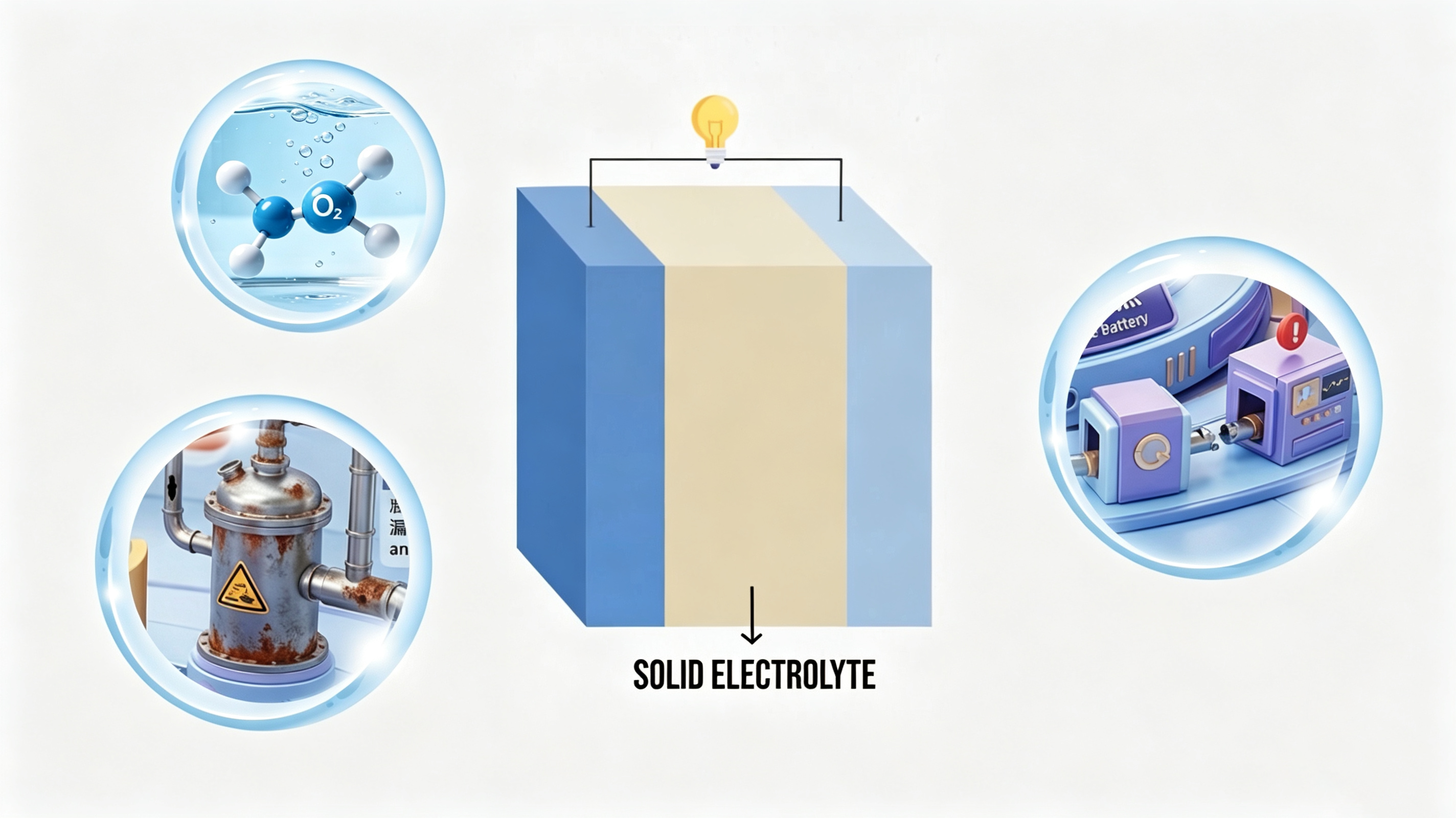
These advances indicate that sulfide solid-state electrolytes are evolving beyond a sole focus on high ionic conductivity toward greater environmental stability, thinner-film fabrication, and improved manufacturability.
2) Reducing the Cost of Li₂S: Another Key Focus for Industrialization
In addition to stability, cost is also a major hurdle to the large-scale application of sulfide solid-state electrolytes.
In 2026, a study published in *Angewandte Chemie International Edition* noted that in traditional sulfide solid-state electrolyte systems, Li₂S accounts for approximately 90% of the material cost.
The study used Li₂CO₃ and NH₄SCN to prepare low-cost Li₂S, which was then used to synthesize LPSCB and LPSC, achieving room-temperature ionic conductivities of 11.33 mS/cm and 7.94 mS/cm, respectively. According to the cost analysis presented in the study, the material costs of these sulfide solid-state electrolytes are expected to decrease by approximately 86.6% and 88.5%, respectively.
Future industrial competition will increasingly focus on raw material costs, process efficiency, yield, energy consumption, environmental control, and final manufacturing costs.
3) The industry is entering the pilot-scale testing and scale-up phase
In addition to research breakthroughs, industrial projects are also moving forward steadily.
In 2026, Japan’s Idemitsu Kosan announced plans to build a large-scale pilot plant for solid-state electrolytes with an annual production capacity of several hundred metric tons, while simultaneously expanding its Li₂S raw material production capacity. In China, pilot lines for high-purity lithium sulfide and sulfide-based solid-state electrolytes, as well as real-world vehicle validation of all-solid-state batteries, are also accelerating.
Policy support is also continuing. Solid-state batteries and solid electrolytes have been identified as priority areas in multiple national and local new-energy development initiatives, with related basic research, industrialization demonstrations, and project construction are advancing in parallel.
The sulfide route is gradually transitioning from material validation to the pilot-scale development, process scale-up, and industrial-scale production validation .
4) Full-Scale Production: The Core Challenge Shifts to Manufacturing Engineering
As production lines for sulfide solid-state electrolytes scale up from the laboratory to the metric ton, hundred-metric-ton, or even higher capacities, the manufacturing process will face additional engineering challenges:
How to store, measure, and feed raw materials in a sealed environment with low dew point and low oxygen levels. How to achieve uniform mixing and grinding of powders. How to control contamination and particle size distribution during heat treatment and grinding. How to manage H₂S risks during the production process, and how to achieve sealed transportation and automated integration between different pieces of equipment.
These factors directly impact the material’s ionic conductivity, purity, particle size distribution, batch consistency, and production costs.
Therefore, the industrialization of sulfide solid-state electrolytes is not simply a matter of scaling up a material process. It is fundamentally a process of integrating and scaling up material processes together with engineering equipment and production systems.
5) Boyee Industrial: Turnkey Solutions for Sulfide Solid-State Electrolyte Production Lines
Addressing the challenges posed by sulfide materials—including their sensitivity to environmental conditions, complex processing requirements, and difficulties in scaling up production—Boyee Industrial provides production lines for sulfide solid-state electrolytes as well as turnkey EPC solutions.
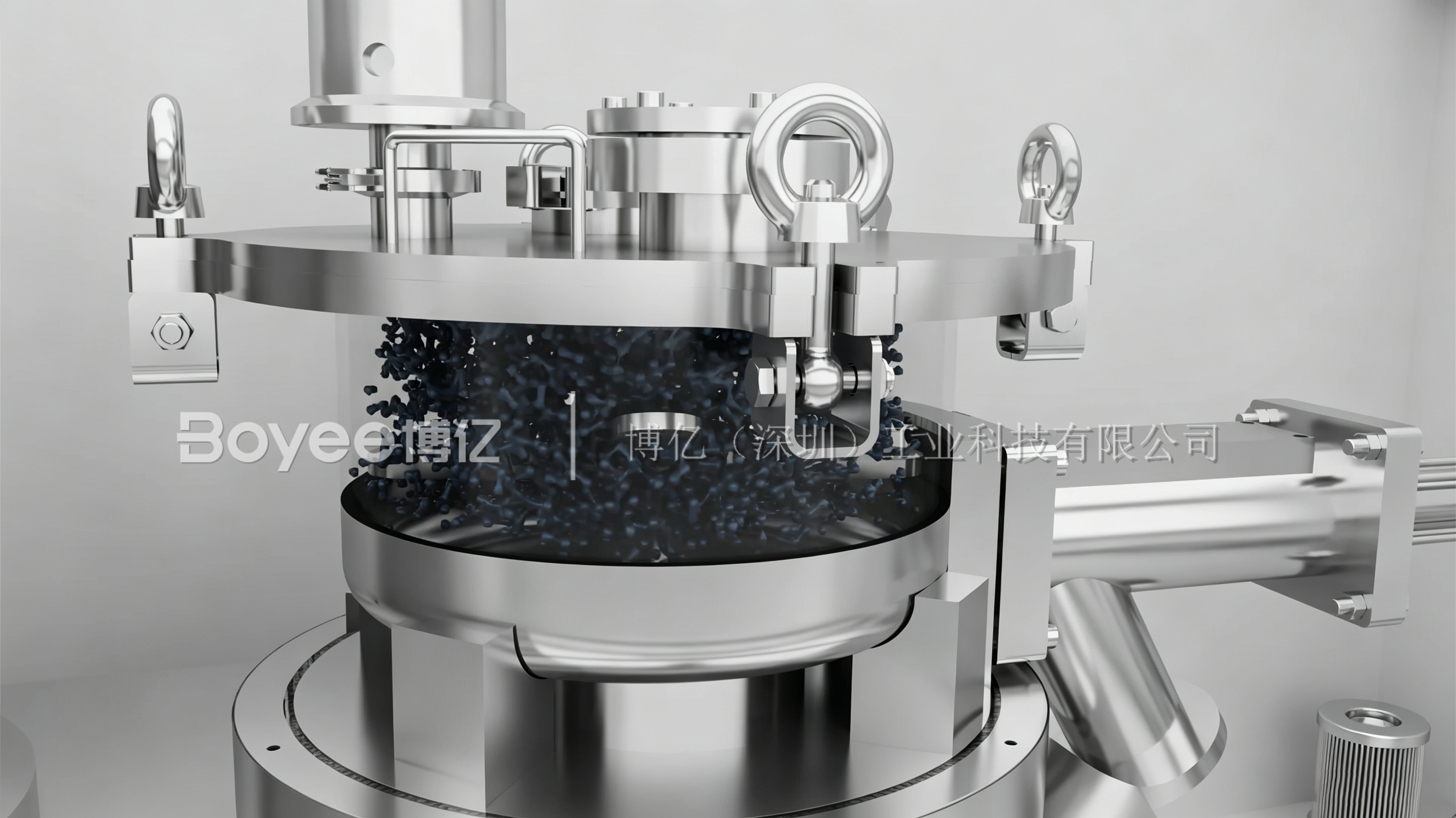
Based on the material system, process route, and target production capacity, Boyee provides comprehensive planning for processes such as sealed feeding, precise metering, mixing and grinding, heat treatment, powder handling, sealed conveying, and automated control. Boyee also configures low-dew-point, low-oxygen, and safety protection systems according to production requirements.
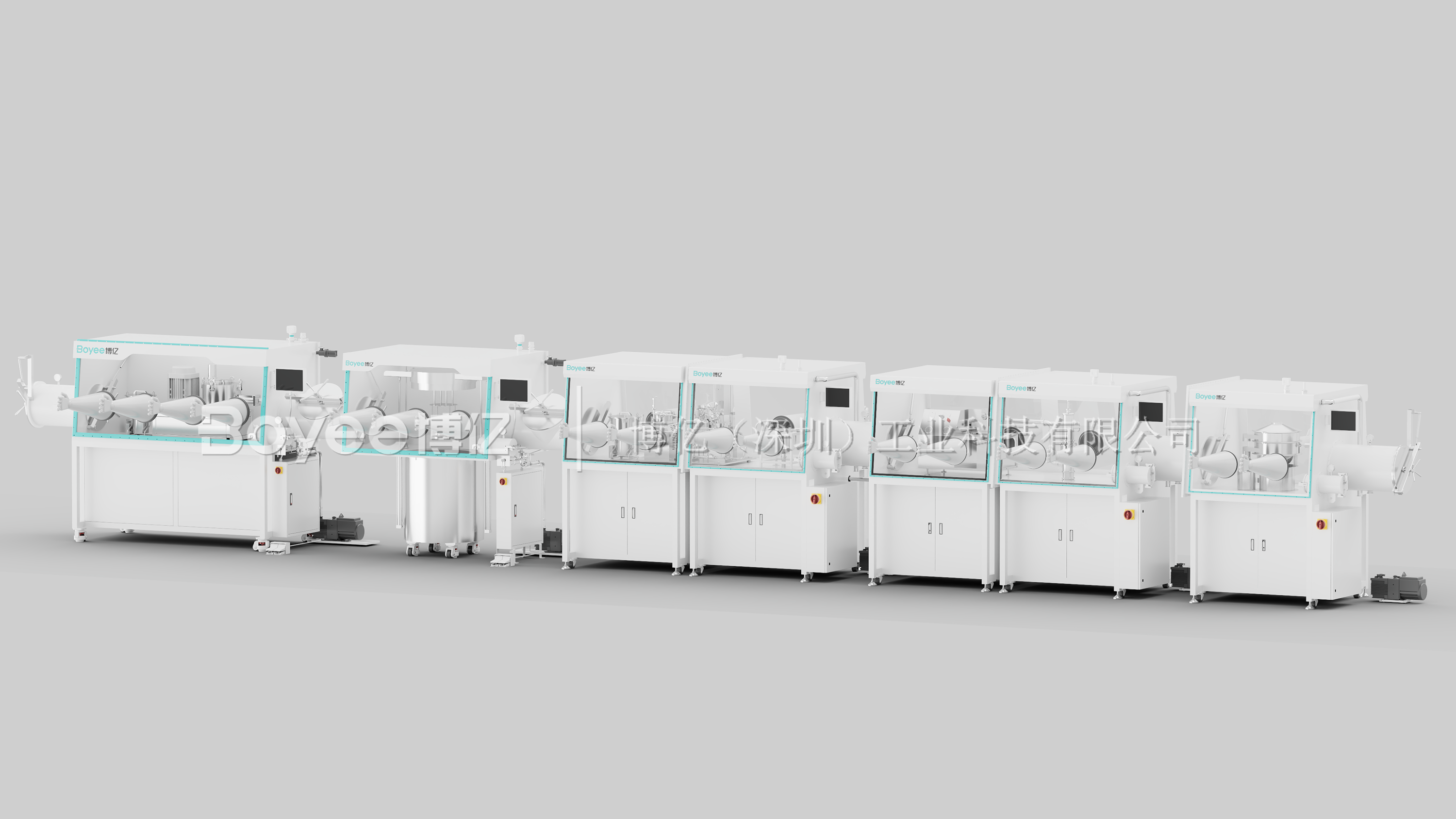
Pictured: BOYEE Industrial's Sulfide Solid-State Electrolytes Production Line Solution
From laboratory validation and pilot line scale-up production, Boyee leverages the its core solid-state battery equipment and turnkey production engineering capabilities to support customers with process design, equipment configuration, and the construction of solid-state electrolyte production lines.
As sulfide solid-state electrolytes continue to evolve toward lower costs, higher stability, and large-scale manufacturing, what will truly determine the pace of industrialization in the future is not only breakthroughs in material performance but also stable, continuous, and reproducible engineering and manufacturing capabilities.
