















A printing ink may meet its specified viscosity requirement yet still show visible specks or inconsistent color. A coating may appear uniform in the mixing vessel but develop streaks or a rough surface after application. These defects may indicate inadequate pigment dispersion rather than a problem with the formulation itself.
For manufacturers processing concentrated pigment pastes and high-viscosity resin systems, a three-roll mill provides an effective method for achieving finer, more uniform dispersion. Its controlled mechanical shearing action helps break up agglomerates remaining after premixing, supporting the appearance, performance, and consistency required in high-performance inks and coatings.
How a Three-Roll Mill Generates Shear Forces
A three-roll mill, also called a three-roller mill, consists of three adjacent rollers operating at different surface speeds. The material enters the gap between the feed roll and the center roll, passes through the first narrow nip, and then transfers toward the faster discharge roll.
The difference in roller surface speeds generates high shear forces within the material film. Further shearing occurs at the second nip, and a scraper blade removes the processed paste from the discharge roll.
Roll gap settings and roller speeds influence both dispersion intensity and throughput. Additional passes may improve dispersion until the specified quality is achieved. In pigment processing, the primary objective is often to break up agglomerates and distribute pigment particles uniformly throughout the binder, rather than to fracture the primary pigment particles.
Printing Inks: Improving Color Consistency and Reducing Visible Defects
Offset and Screen Printing Inks
High-viscosity printing inks require uniform pigment dispersion to achieve consistent color and reliable ink transfer. Residual agglomerates can cause visible specks, interfere with fine printed details, or lead to batch-to-batch variation.
Three-roll milling is particularly suitable for inks that are too viscous to circulate effectively through conventional wet-grinding systems. The paste passes directly through the roller gaps, where localized shear helps break up remaining agglomerates.
For suitable formulations, improved pigment dispersion can support:
l More consistent color strength and hue.
l Fewer visible coarse particles and pigment specks.
l Smoother, more uniform ink films.
l More consistent printing performance.
Final product evaluation should include print trials. A visually smooth paste does not necessarily guarantee the required ink transfer, adhesion, or drying performance.
UV-Curable Ink Formulations
High-viscosity UV-curable inks contain pigments, reactive resins or oligomers, and additives. Their dispersion process must balance the required fineness with temperature control and formulation stability.
Roll cooling helps control the heat generated during milling. Processing temperatures should remain within the validated limits of the formulation, and the finished ink should be evaluated for both print quality and curing performance.
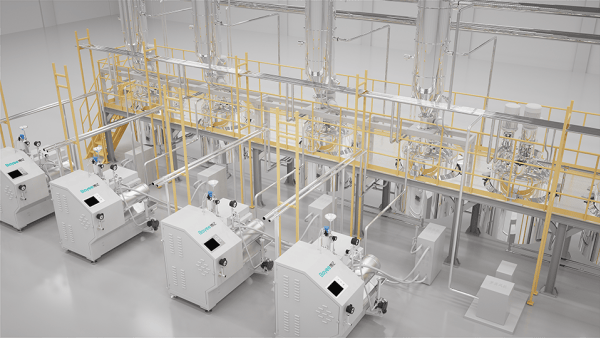
For broader manufacturing requirements, Boyee’s UV ink production line solution covers connected stages including dispersion, grinding, filtration, blending and filling. These operations need to be coordinated so that dispersion quality is preserved through the final product.

High-Performance Coatings: Improving Pigment Dispersion Quality
In coatings manufacturing, three-roll milling is particularly suitable for concentrated pigment pastes and selected high-viscosity formulations. These intermediates can subsequently be blended with additional resins, solvents, or other ingredients.
Breaking up pigment agglomerates helps produce a more uniform pigment concentrate for downstream blending. Depending on the formulation, improved dispersion can contribute to more consistent tinting strength, gloss, and coating appearance.
However, coating ingredients respond differently to shear. Delicate effect pigments and other shear-sensitive materials may require gentler mixing. The process sequence should distinguish components requiring intensive dispersion from those that should be added afterward.
Pigment Pastes: High-Concentration Dispersion Before Final Letdown
Pigment concentrates allow manufacturers to prepare a well-dispersed base before adjusting the application properties of the finished product. A three-roll mill can be effective when the concentrate has sufficient viscosity and appropriate flow behavior to form a stable film on the rollers.
Effective processing begins with proper premixing. Pigments should be thoroughly wetted with a compatible liquid vehicle and suitable dispersants to obtain a reasonably homogeneous premix. Unwetted powder and poorly incorporated pigments can reduce the consistency of subsequent milling.
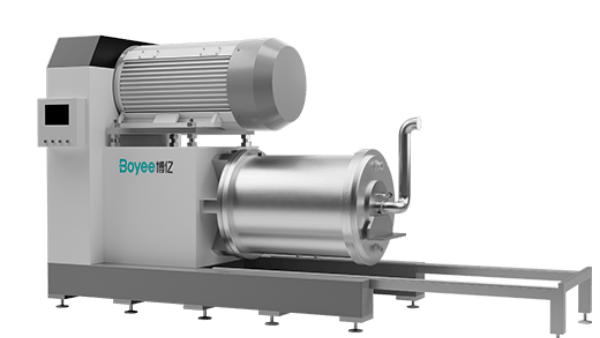
Boyee’s high-speed disperser is designed for incorporating powders and pigments into liquids. Depending on viscosity and formulation, this type of equipment can support premixing before a separate fine-dispersion stage.
Four Key Variables Affecting Three-Roll Milling Performance
1. Roller Gap and Surface Speed Differential
The two roller gaps and the relative surface speeds determine the shear applied to the material. Settings should be selected according to the feed characteristics and desired dispersion quality. Excessively aggressive settings can increase heat generation or reduce throughput without delivering a meaningful improvement in quality.
2. Feed Consistency
Variations in solids content, temperature, or premix uniformity affect how the paste enters and transfers between the rollers. Maintaining consistent feed properties helps improve process repeatability.
3. Temperature Control
Temperature affects viscosity and, consequently, the behavior of the material on the rollers. Stable cooling conditions help maintain consistent processing, particularly for temperature-sensitive binders.
4. Number of Passes and Cleaning
The required number of passes should be determined through material trials. Additional passes after the specified quality has been achieved increase processing time and material handling without necessarily improving dispersion. Thorough cleaning between colors or formulations is also essential, particularly when switching from dark to light pigments.
Integrating Dispersion into the Complete Production Process
Three-roll milling is one of several dispersion methods used in ink and coating manufacturing. Its suitability depends on paste rheology, target fineness, batch size, throughput, and material-handling requirements.
Boyee’s intelligent production line for coatings brings together feeding, metering, mixing, grinding, filtration and filling. Considering these stages together helps manufacturers identify where dispersion problems originate and how equipment choices affect overall production.
To discuss an ink or coating processing project, contact Boyee with your formulation type, viscosity range, pigment loading, target fineness and required output. These details provide a practical starting point for evaluating the appropriate mixing and dispersion route.
