
















Nano Bead Mill Applications in Battery Materials: From Solid-State Electrolytes to MLCC Ceramics
Particle size control, uniform dispersion, and contamination management are critical considerations in the production of advanced battery materials and electronic ceramics. As material specifications become more demanding, manufacturers need grinding technologies that deliver the required particle characteristics while maintaining process stability and material integrity.
Nano bead mills, also known as nano sand mills, are widely used for fine grinding and dispersion in applications such as solid-state electrolytes, lithium iron phosphate (LFP), silicon-based anodes, and multilayer ceramic capacitor (MLCC) materials.
By combining suitable grinding media, rotor configurations, wear-resistant contact materials, and optimized processing parameters, nano bead milling can help reduce particle agglomeration, improve particle size distribution, and produce more uniform slurries.
As a provider of nanomaterial processing equipment and integrated production line solutions, Boyee supports material manufacturers from laboratory testing and process validation to industrial-scale production.
1. How Does a Nano Bead Mill Work?
A nano bead mill uses mechanical energy to achieve particle size reduction and dispersion in a liquid medium.
During wet grinding, a rotating agitator transfers energy to the grinding beads inside the milling chamber. The movement and interaction of these beads generate impact, shear, and compressive forces that act on particles suspended in the slurry.
Depending on the material properties and operating conditions, these forces can break down primary particles, separate agglomerates, or improve particle dispersion.
The main processing objectives include:
Fine Grinding: Reducing particle size to meet specified processing or material requirements.
Particle Size Distribution Control: Managing coarse particles and improving distribution consistency through suitable grinding conditions.
Uniform Dispersion: Breaking up particle agglomerates and promoting a more homogeneous slurry.
Low-Contamination Processing: Using compatible ceramic components and grinding media to minimize wear-related impurities.
Process Stability: Controlling temperature, flow rate, and grinding intensity to support repeatable production.
However, finer particles do not always produce better material performance. Excessive grinding may damage particle morphology, introduce impurities, or affect the properties required for downstream processing.
The objective is therefore to achieve the required particle size distribution and dispersion quality without compromising material integrity.
2. Nano Bead Milling for Solid-State Electrolytes
Solid-state electrolyte manufacturing presents demanding requirements for particle size, purity, material stability, and process control.
Different electrolyte chemistries require different grinding approaches, particularly when comparing oxide and sulfide materials.
2.1 Oxide Solid-State Electrolytes: Particle Size and Dispersion Control
Oxide solid-state electrolytes, including lithium lanthanum zirconium oxide (LLZO), lithium lanthanum titanate (LLTO), and lithium aluminum titanium phosphate (LATP), require carefully controlled powder preparation.
Particle agglomeration and inconsistent particle size distributions can affect subsequent processing steps, including mixing, forming, and sintering.
At appropriate stages of production, nano bead milling can support:
Reduction of coarse particles and agglomerates.
Improved powder dispersion and mixing uniformity.
Better control of particle size distribution.
More consistent feed preparation for downstream processes.
Grinding parameters must be selected according to the specific electrolyte chemistry, synthesis route, solvent system, and required final powder properties.
Boyee's Oxide Solid-State Electrolyte Production Line Solution integrates key operations such as material handling, mixing, grinding, drying, sintering, classification, and packaging.
By coordinating grinding with upstream and downstream processes, manufacturers can evaluate particle size control as part of the complete electrolyte production process rather than as an isolated operation.
2.2 Sulfide Solid-State Electrolytes: Grinding Under Controlled Atmospheres
Sulfide solid-state electrolytes present additional processing challenges because many sulfide compositions are highly sensitive to moisture.
Exposure to moisture can cause unwanted chemical reactions and, for certain compositions, the release of hydrogen sulfide (H₂S). Oxygen sensitivity must also be evaluated according to the material chemistry.
Consequently, conventional open grinding systems may be unsuitable for processing these materials.
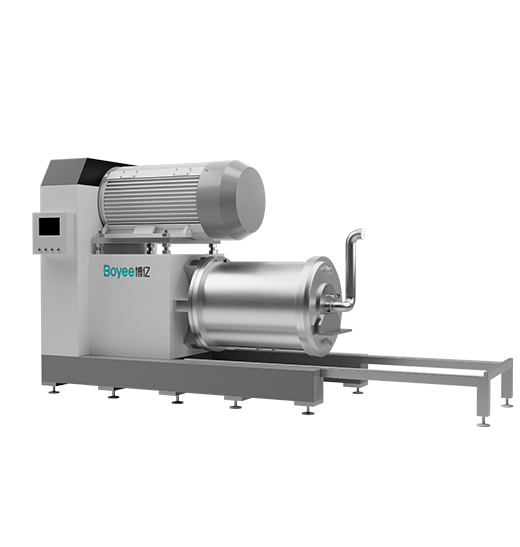
Boyee's Glovebox Sealed Integrated Bead Mill combines bead milling equipment with a controlled inert-atmosphere enclosure to support material grinding and dispersion under low-moisture and low-oxygen conditions.
Key process considerations include:
Atmosphere Control: Maintaining the required moisture and oxygen levels during processing.
Sealed Material Handling: Limiting exposure during feeding, grinding, and discharge.
Solvent Compatibility: Selecting liquid media compatible with the electrolyte chemistry.
Temperature Management: Controlling heat generated during grinding.
Material Integrity: Verifying that processing does not adversely affect the electrolyte's chemical structure or functional properties.
For sulfide electrolytes, successful grinding is determined not only by particle size but also by the preservation of the material's required chemical and electrochemical characteristics.
3. Nano Bead Mills for LFP and LMFP Cathode Materials
Lithium iron phosphate (LFP) and lithium manganese iron phosphate (LMFP) are important cathode materials for battery applications.
In selected manufacturing processes, wet grinding is used to prepare and homogenize raw materials before downstream thermal treatment.
Appropriate grinding and dispersion can help manufacturers achieve:
Improved raw material mixing uniformity.
Reduced particle agglomeration.
Controlled slurry particle size distribution.
More consistent feed characteristics for subsequent processes.
The required grinding conditions depend on the material composition and production stage.
For example, grinding conditions suitable for precursor preparation may be too aggressive for finished cathode particles whose morphology and structure must be preserved.
Boyee's LFP/LMFP Production Line Solution integrates nano bead milling with automated material handling, process control, and supporting production equipment.
For industrial applications, equipment selection should consider not only target particle size but also production throughput, temperature management, slurry characteristics, and operating stability.
4. Nano Grinding and Dispersion for Silicon-Based Anode Materials
Silicon-based anode materials have attracted significant attention because of their potential to increase lithium-ion battery energy density.
However, silicon particle processing requires careful control of particle size, agglomeration, and material morphology.
In manufacturing routes that use wet-ground silicon, nano bead milling can support particle size reduction and slurry dispersion before subsequent composite material preparation.
Important processing considerations include:
Achieving the required silicon particle size distribution.
Reducing agglomeration during slurry preparation.
Controlling grinding intensity and temperature.
Minimizing contamination from grinding media and contact components.
Maintaining slurry consistency for downstream processing.
Grinding requirements vary depending on whether the process involves silicon powder preparation, silicon dispersion, or silicon-carbon composite manufacturing.
Boyee's Silicon-Carbon Anode Production Line Solution integrates grinding and dispersion with supporting process equipment for silicon-based material preparation.
Through material-specific testing, manufacturers can determine suitable grinding conditions before moving toward pilot-scale or industrial production.
5. Nano Bead Milling for MLCC Ceramic Slurries
Beyond battery materials, nano bead milling is also used in the preparation of advanced electronic ceramics.
Multilayer ceramic capacitors (MLCCs) are widely used in automotive electronics, industrial electronics, and other electronic systems.
Barium titanate (BaTiO₃) is a key dielectric material used in many MLCC formulations.
As dielectric layers become thinner, ceramic powder processing requires tighter control of particle size distribution, dispersion uniformity, and impurity levels.
Coarse particles and persistent agglomerates can interfere with the preparation of uniform ceramic layers.
Why Is Controlled Deagglomeration Important?
In MLCC ceramic processing, the objective is often not simply to reduce particle size as much as possible.
Instead, manufacturers may need to separate agglomerated particles while minimizing damage to the primary particles and preserving the material characteristics required for dielectric performance.
Suitable bead milling conditions can support:
Controlled deagglomeration of ceramic powders.
Reduction of oversized particles.
Improved slurry dispersion uniformity.
Lower contamination through compatible wear-resistant components.
More consistent slurry preparation between production batches.
Boyee's MLCC Electronic Ceramics Production Line Solution combines powder handling, mixing, grinding, spray drying, thermal processing, and other supporting operations.
The integrated approach addresses powder purity, particle size distribution, dispersion quality, and batch-to-batch consistency throughout ceramic material preparation.
6. How to Improve Grinding Efficiency Without Compromising Material Purity
Grinding efficiency involves more than achieving a small particle size.
For industrial material processing, an effective grinding system must balance particle size requirements, throughput, energy consumption, temperature control, and contamination risk.
Several factors should be evaluated when optimizing a nano bead milling process:
Grinding Media Selection
Bead size and material influence energy transfer, grinding intensity, wear, and contamination. The appropriate configuration depends on the feed material and target particle size.
Rotor and Chamber Design
Rotor geometry and chamber configuration affect energy distribution, slurry movement, and grinding performance.
Temperature Control
Grinding generates heat. Suitable cooling and operating conditions help keep the material within its allowable processing temperature range.
Wear Resistance and Material Compatibility
Ceramic grinding chambers and suitable contact components can help reduce wear-related contamination, particularly in applications with strict purity requirements.
Continuous Processing Capability
For industrial production, stable slurry flow, reliable media separation, and consistent operating conditions are important considerations.
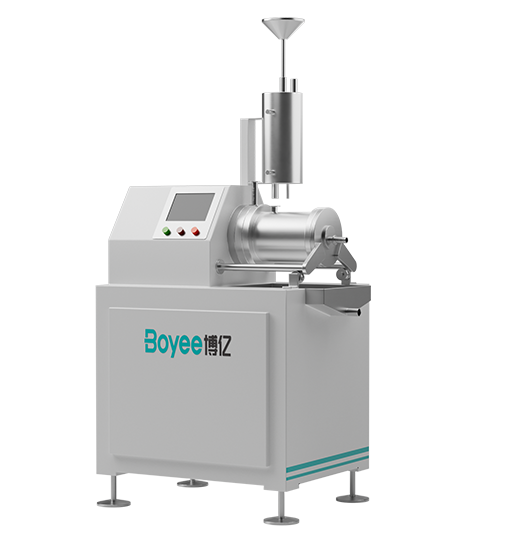
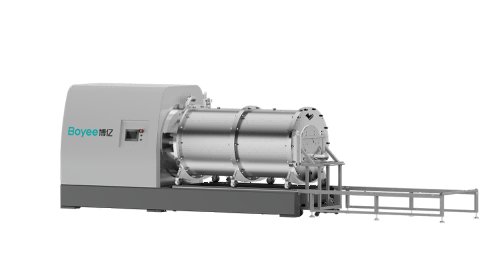
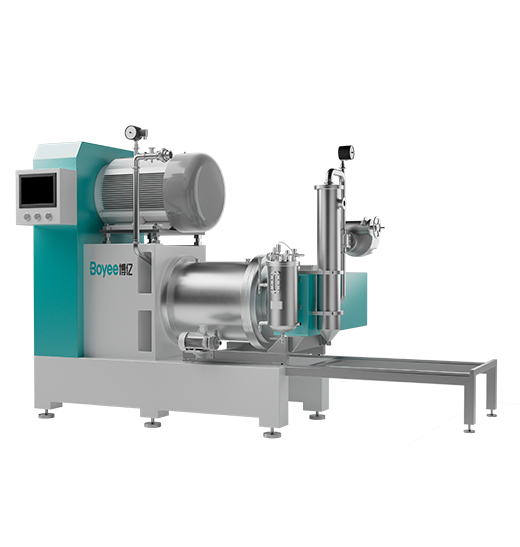
Boyee's NMM Direct-Drive Nano Bead Mill features a permanent-magnet direct-drive system, a wear-resistant ceramic grinding chamber, and a high-energy pin-type rotor designed for demanding battery material processing.
Its configuration supports continuous wet grinding applications, including industrial-scale LFP material production.
Actual grinding performance and equipment suitability must be confirmed through representative material trials and process evaluation.
7. How to Select a Nano Bead Mill for Battery Materials and MLCC Applications
Selecting the appropriate nano bead mill requires a clear understanding of both the material and the intended production process.
Before equipment selection, manufacturers should define the following requirements:
Parameter | Key Consideration |
Material Type | LFP, LMFP, solid-state electrolyte, silicon-based material, or MLCC ceramic powder |
Feed Particle Size | Initial particle size and distribution |
Target Particle Size | Required D50, D90, or other distribution specifications |
Slurry Characteristics | Solvent, solids content, viscosity, and dispersion stability |
Production Capacity | Required processing throughput and operating mode |
Contamination Limits | Allowable impurities and compatible contact materials |
Temperature Control | Maximum permissible processing temperature |
Atmosphere Requirements | Whether inert gas protection or moisture control is required |
Process Integration | Compatibility with upstream and downstream equipment |
Laboratory trials can then be used to evaluate particle size reduction, dispersion performance, material integrity, contamination, and processing stability.
The resulting data provide a foundation for comparing mill configurations and establishing a suitable process window for scale-up.
8. Frequently Asked Questions About Nano Bead Mills
What Is the Difference Between a Nano Bead Mill and a Conventional Sand Mill?
Both operate on the principle of agitated-media grinding. The term nano bead mill generally refers to equipment configured for fine or nanoscale grinding and dispersion, often using smaller grinding media and application-specific separation and control systems.
The achievable particle size depends on the material properties, grinding media, operating parameters, and process conditions.
Can a Nano Bead Mill Be Used for Solid-State Electrolytes?
Yes. Nano bead milling can be used at appropriate stages of oxide and sulfide solid-state electrolyte processing.
However, the grinding configuration must be selected according to the electrolyte chemistry. Sulfide materials may require sealed systems, inert-atmosphere protection, and carefully validated solvent compatibility.
Is Finer Grinding Always Better for Battery Materials?
No. Excessive grinding may damage particle morphology, increase contamination, or alter material properties.
The appropriate target is a validated particle size distribution that supports the required downstream processing and final material performance.
Why Are Ceramic Grinding Components Important?
Ceramic contact materials can help reduce wear-related contamination and improve compatibility with certain high-purity material systems.
However, contamination performance depends on the entire grinding system, including the grinding beads, seals, piping, and actual operating conditions.
How Can Manufacturers Scale Up from Laboratory Grinding to Industrial Production?
Scale-up requires more than increasing equipment size. Manufacturers should evaluate grinding energy, residence time, flow rate, temperature control, media separation, and slurry characteristics.
Representative pilot trials help establish operating conditions that can be transferred to larger production systems.
9. From Laboratory Trials to Industrial Production with Boyee
Nano bead milling plays an important role in the preparation of battery materials and electronic ceramics, but equipment performance must always be evaluated within the complete manufacturing process.
From solid-state electrolytes and LFP cathode materials to silicon-based anodes and MLCC ceramic slurries, each material presents different requirements for particle size reduction, dispersion, contamination control, and process integration.
Boyee provides nano grinding equipment and integrated production line solutions for advanced material manufacturing, supporting customers across laboratory testing, pilot-scale process development, and industrial production.
By combining equipment selection, material-specific process evaluation, and production line engineering, Boyee helps manufacturers develop grinding and dispersion solutions suited to their material characteristics and production requirements.
Looking for a nano bead mill or an integrated production line solution?
Share your material specifications, target particle size, slurry characteristics, and required production capacity with Boyee. Our team can discuss suitable equipment configurations, material testing, and production line integration based on your process requirements.
