
















In the dry-process electrode preparation, binder fibrillation is a critical step that affects film formation in the electrode material. To improve mixing efficiency, does simply increasing the rotational speed lead to better fibrillation results?
The answer is no. The key to the dry-process electrode lies in the proper balance between mixing shear, material temperature rise, and material motion.
1. Why Shouldn’t Dry-Process Electrodes Simply Aim for High Rotational Speeds?
Unlike traditional wet-process slurry preparation, dry-process electrodes do not rely on solvents to form a slurry; instead, they are prepared through processes such as powder mixing, binder fibrillation, and subsequent film formation.
In this process, the binder must gradually form a fiber network under mechanical action to connect the active material with the conductive agent, providing a structural foundation for subsequent film formation.
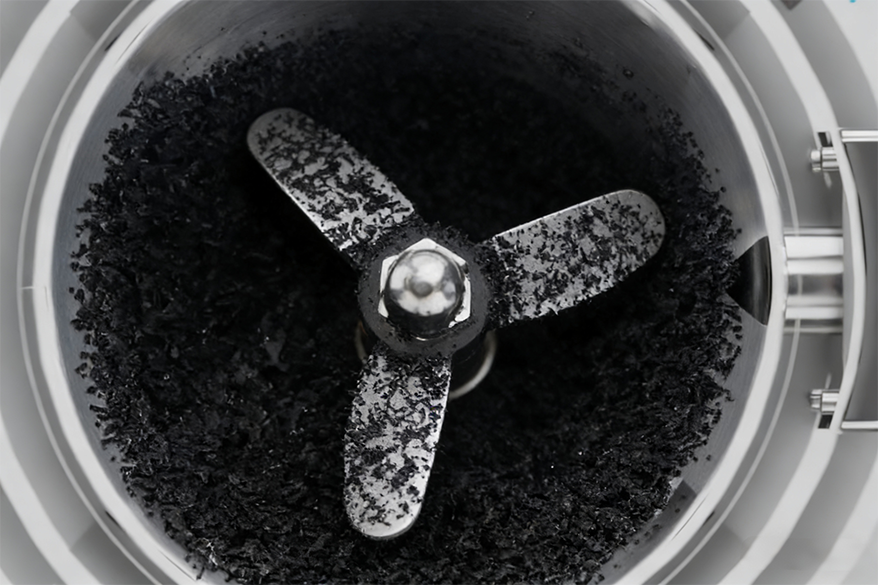
In this process, mixing process parameters are particularly important:
Shear intensity: Affects the dispersion state of the material and the fibrillation process of the binder.
Material temperature rise: Friction and shear during mixing generate heat, so temperature must be controlled in accordance with material properties.
Material motion: This determines whether the material can circulate, come into contact, and mix sufficiently, thereby affecting overall uniformity.
Insufficient mixing intensity may result in incomplete fibrillation; similarly, if process parameters do not align with material properties, this may also affect the material’s state and subsequent film-forming performance.
Therefore, dry electrode mixing is not simply a matter of pursuing higher rotational speeds; rather, it requires establishing an appropriate window of mixing parameters based on material properties and process objectives.
2. How do mixing devices adapt to the fibrillation process, from recirculating feeding to shear dispersion?
To meet the powder mixing and fibrillation requirements at the front end of the dry-process electrode production line, Boyee’s high-speed mixers employ a synergistic design featuring lower paddles for recirculating feeding and middle and upper paddles for shear dispersion.
The lower paddles drive the material in a circulating motion, while the middle and upper paddles promote material dispersion through shearing and impact; the coordinated action of multiple paddles ensures continuous mixing of the material during circulation and meets the requirements of related plasticization processes through friction.
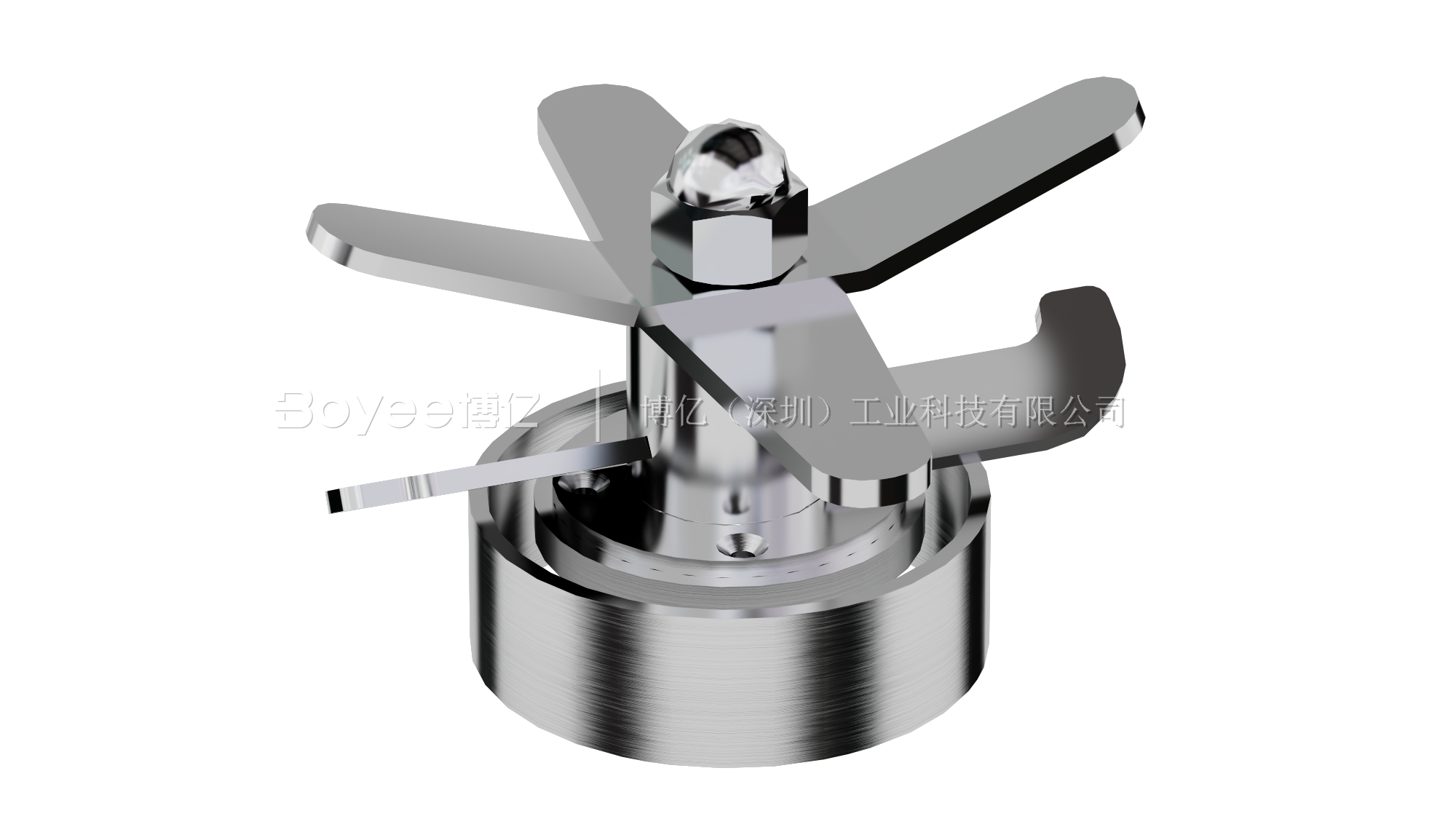
Pictured: Boyee Industrial High-Speed Mixer Paddles
At the same time, the equipment supports precise multi-speed control and multidimensional temperature control, and can be configured with functions such as vacuum sealing and inert gas atmosphere according to process requirements, providing equipment support for process development across different material systems.
For dry-process electrodes, equipment selection must not only focus on mixing efficiency but also comprehensively consider shear effects, temperature control, and material motion patterns to ensure that equipment parameters align with actual process requirements.
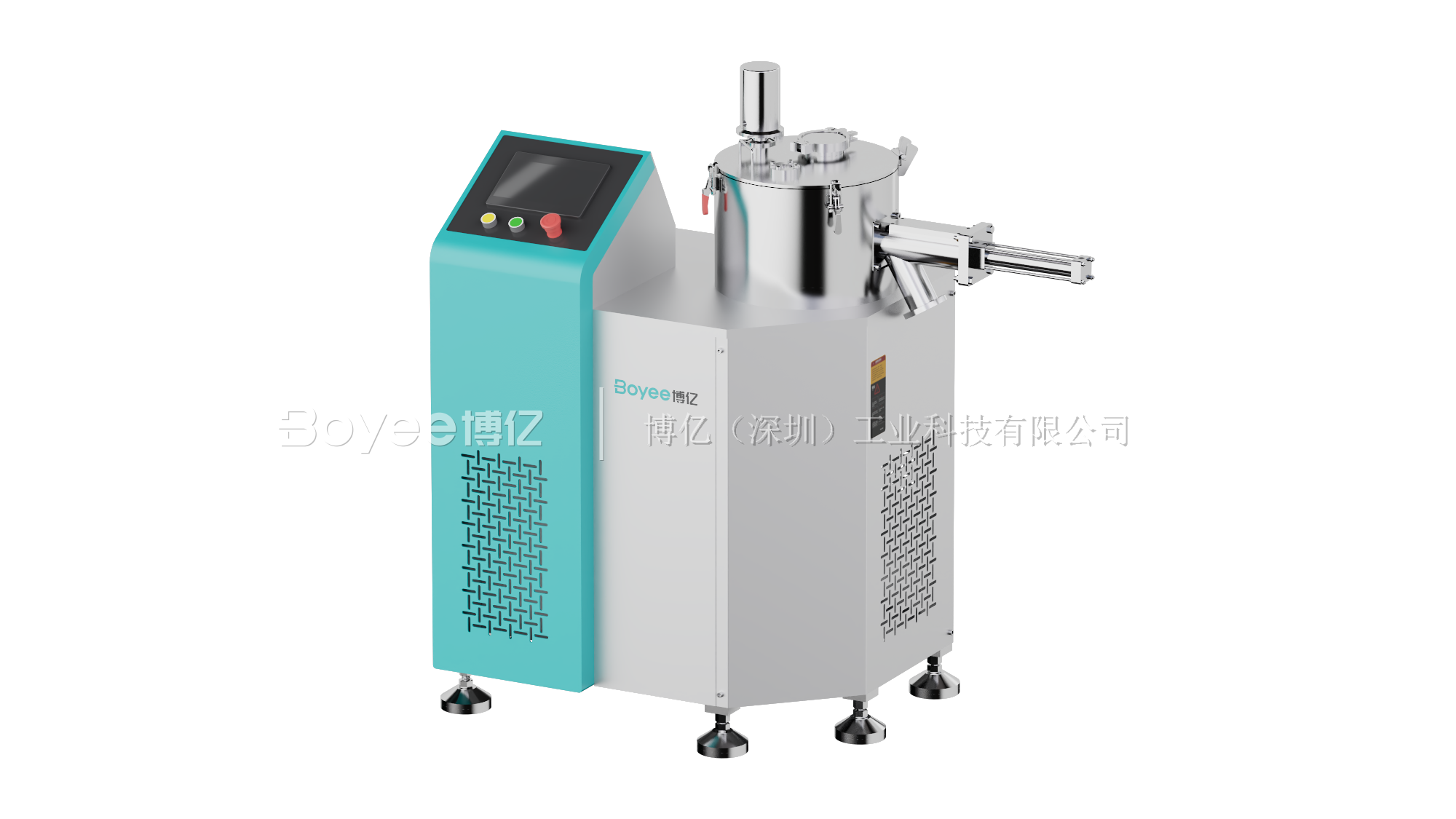
Pictured: Boyee Industrial High-Speed Mixer
3. Driving the Application of Dry-Process Electrodes: From Mixing Parameter Optimization to Process Development
Process development for dry-process electrodes requires integrating the characteristics of active materials, conductive agents, and binders. Through experimental validation, mixing conditions must be continuously optimized, and the fibrillation state, material uniformity, and subsequent film-forming performance must be evaluated.
The Boyee high-speed mixer integrates uniform mixing, grinding, and plasticization functions into a single unit. It can be used for powder mixing and fibrillation process exploration related to dry-process electrodes, providing equipment support for material R&D and process adaptation.
The key to dry-process electrodes lies not simply in increasing rotational speed, but in achieving a synergistic balance between mixing intensity, temperature rise, and material flow dynamics.
Boyee Industrial continues to deepen its expertise in the field of advanced battery material equipment, leveraging its professional mixing equipment and process adaptation capabilities to support the development and application of dry-process electrode technologies.
