
















Introduction: Engineering Support Beyond Equipment Delivery
In industrial manufacturing, purchasing high-performance equipment is only the first step toward establishing a reliable production process. Equipment configuration, installation, commissioning, process parameters, operator training, and ongoing technical support all contribute to the successful implementation of a grinding or dispersion project.
For manufacturers processing battery materials, advanced ceramics, conductive pastes, and other fine materials, these factors are particularly important. Equipment performance must be considered alongside material characteristics, production capacity, process requirements, and the conditions of the production site.
Founded in 2004 and headquartered in Shenzhen, China, BOYEE (Boyee Industrial) specializes in intelligent equipment and integrated production line solutions for advanced materials, with a strong focus on new energy battery materials.
Combining equipment development and manufacturing with process engineering and production line integration, BOYEE supports customers across key project stages, from equipment selection and manufacturing to installation, commissioning, technical training, and after-sales service.
The objective is not simply to deliver machinery, but to help customers establish equipment and process configurations suited to their production requirements.
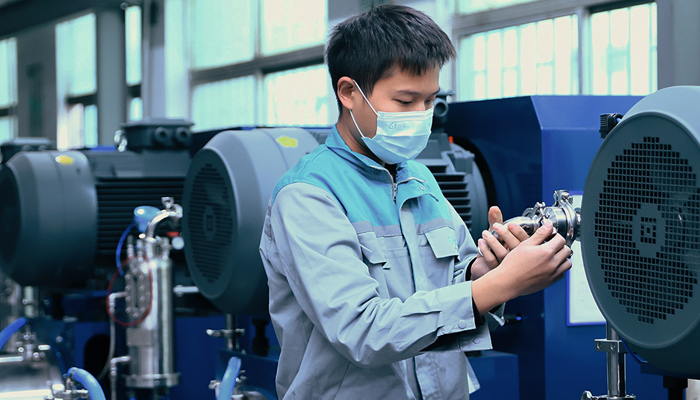
1. From Equipment Selection to Production Line Integration
Industrial grinding and dispersion projects often involve more than a single bead mill. Depending on the material and production process, a complete system may include feeding equipment, grinding and mixing units, pumps, pipelines, process controls, and auxiliary systems.
The compatibility of these components can influence operating stability, processing efficiency, and final material quality.
BOYEE provides equipment and engineering support based on project requirements, helping customers evaluate the relationship between material properties, processing objectives, equipment configuration, and production capacity.
Key areas of support include:
Process requirement evaluation: Reviewing material characteristics, target particle size, processing capacity, and grinding or dispersion objectives.
Equipment selection and configuration: Matching bead mills and auxiliary equipment to the intended process.
System integration: Coordinating relevant equipment and process interfaces according to the project design.
Installation and commissioning: Supporting equipment setup, functional checks, and initial operation.
Technical training: Helping customer personnel understand operating procedures, process parameters, and maintenance requirements.
After-sales support: Providing technical assistance, troubleshooting, spare parts support, and process optimization according to project needs.
For customers developing new production lines or upgrading existing facilities, this integrated approach helps connect equipment performance with practical manufacturing requirements.
2. Equipment Installation and Commissioning: Preparing for Reliable Operation
Proper installation and commissioning are essential stages in bringing industrial grinding equipment into operation.
A bead mill must be installed in accordance with its technical requirements and the relevant project design. Mechanical positioning, electrical connections, auxiliary equipment, cooling arrangements, and control interfaces should be checked before startup.
Typical installation considerations include:
l Equipment positioning, leveling, and mechanical stability.
l Connections between pipelines, pumps, valves, and auxiliary equipment.
l Electrical wiring and control system configuration.
l Cooling water supply and other required utilities.
l Equipment guards, emergency stops, and applicable safety interlocks.
l Accessibility for operation, inspection, and maintenance.
Following installation, commissioning helps verify equipment functions and evaluate operating performance under the intended conditions.
Dry Commissioning and Process Validation
Dry commissioning generally focuses on mechanical operation, electrical functions, control responses, and protective devices before production material is introduced.
Wet commissioning, where applicable, evaluates equipment performance using suitable process materials under defined operating conditions.
For bead milling applications, relevant parameters may include:
l Grinding media size and filling conditions.
l Rotor speed and motor load.
l Slurry feed rate and circulation conditions.
l Grinding chamber temperature and cooling performance.
l System pressure and mechanical seal conditions.
l Particle size distribution and dispersion quality.
l Alarm functions and control system responses.
The specific parameters and acceptance criteria depend on the equipment configuration, material properties, and project requirements.
Through systematic commissioning and process evaluation, customers can better understand equipment behavior and identify adjustments needed before routine production.
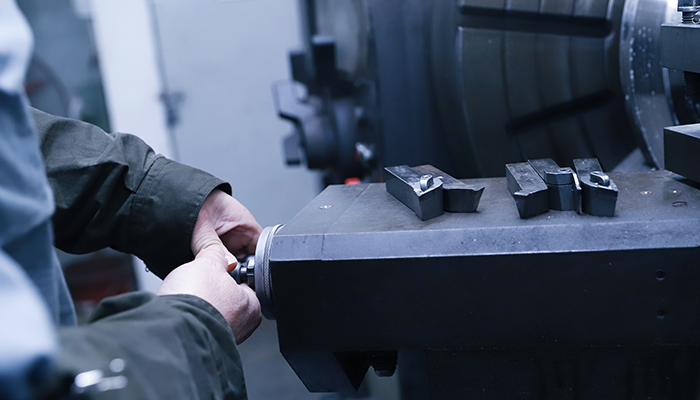
3. Process Engineering for Grinding and Dispersion Applications
Grinding performance depends on the interaction between equipment design, grinding media, material properties, and operating conditions.
For example, changes in particle structure, slurry viscosity, solids concentration, grinding media size, or rotor speed may affect particle size reduction, energy consumption, temperature development, and equipment wear.
Consequently, equipment selection and process optimization should be considered together rather than as separate activities.
BOYEE's equipment and process engineering capabilities support customers in evaluating grinding and dispersion requirements for different material systems.
Depending on the application, technical evaluation may consider:
l Initial particle size and target particle size distribution.
l Material viscosity and solids concentration.
l Grinding media selection and operating conditions.
l Temperature control requirements.
l Dispersion quality and material sensitivity.
l Processing capacity and production continuity.
l Equipment wear, maintenance, and operating considerations.
These factors are relevant to applications such as battery material processing, conductive paste preparation, and advanced ceramic powder processing.
The appropriate equipment configuration and process parameters should be determined through application-specific evaluation and, where necessary, material testing.
4. On-Site Engineering Support for Project Implementation
Industrial projects are rarely identical. Production layouts, utilities, material handling systems, and operating requirements vary between facilities.
During installation and startup, effective coordination between equipment suppliers and customer engineering teams can help identify interface issues, clarify operating requirements, and address technical questions.
BOYEE's company news previously reported a commendation letter from a customer in the conductive paste industry in December 2025. The report highlighted the engineering team's coordination and technical guidance during production line installation, including equipment positioning, assembly checks, and on-site support.
This example illustrates the importance of engineering collaboration during equipment implementation.
For complex grinding and dispersion projects, practical support during installation can help customers understand equipment requirements, prepare for commissioning, and build familiarity with subsequent operation and maintenance.
The specific scope of on-site support depends on the project agreement, equipment configuration, and installation requirements.
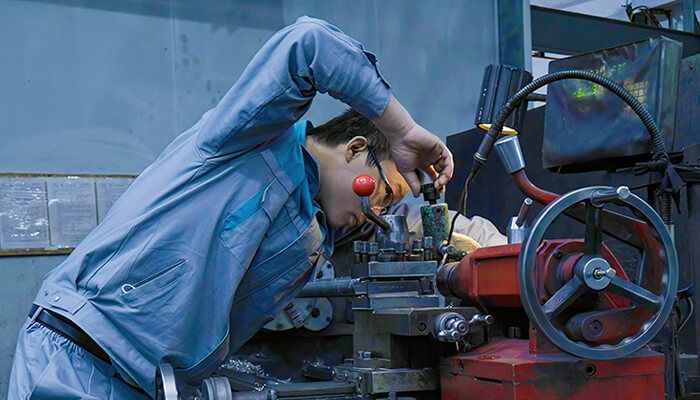
5. Technical Training and Equipment Maintenance
Equipment performance over its service life depends not only on manufacturing quality, but also on correct operation, routine inspection, and appropriate maintenance.
Industrial bead mills and automated processing systems require operators to understand basic operating procedures, process parameters, equipment alarms, and maintenance requirements.
Through BOYEE College, BOYEE provides technical learning resources, equipment-related guidance, and professional training activities. Training arrangements can be tailored to the equipment and customer requirements.
Typical training topics include:
l Equipment startup, operation, and shutdown.
l Control interface operation and parameter adjustment.
l Grinding media handling and inspection.
l Monitoring temperature, pressure, and flow conditions.
l Recognizing abnormal noise, vibration, or operating behavior.
l Cleaning procedures and routine maintenance.
l Identifying conditions that require technical assistance.
Maintenance training may also cover the inspection of mechanical seals, grinding chambers, separation components, cooling systems, and other critical equipment parts, as applicable to the installed configuration.
By improving operational understanding, training helps customer teams manage routine equipment tasks more effectively and recognize when further engineering support may be required.
6. Safety Considerations in Manufacturing and Commissioning
Safety is an important consideration throughout industrial equipment manufacturing, installation, commissioning, and maintenance.
Activities such as machining, welding, component handling, mechanical assembly, electrical work, and equipment testing involve different risks. Installation and commissioning may introduce additional considerations related to lifting operations, moving machinery, electrical systems, process materials, and stored energy.
Depending on the task and applicable requirements, relevant safety measures may include:
l Appropriate machine guarding and protective devices.
l Suitable personal protective equipment.
l Energy isolation procedures for maintenance and servicing.
l Safe lifting and handling of heavy components.
l Clear work areas and appropriate material storage.
l Verification of emergency stops and applicable safety interlocks.
l Communication of site-specific hazards and emergency procedures.
For projects involving flammable solvents, hazardous chemicals, or battery materials requiring special handling, additional precautions may be necessary based on the process design and applicable local regulations.
Safety checks should form part of installation and commissioning preparation, with responsibilities coordinated between the equipment supplier and the customer's site team.
Manufacturing quality and occupational safety serve different purposes, but both are important considerations in responsible equipment production and project implementation.
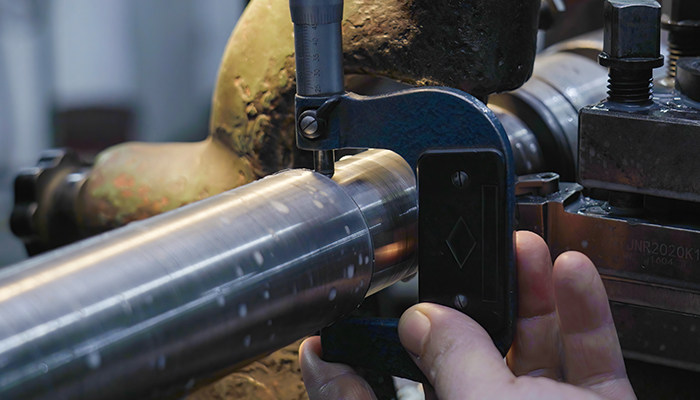
7. After-Sales Service for Long-Term Equipment Support
After equipment enters production, customers may require assistance with maintenance, troubleshooting, spare parts, or process adjustments.
BOYEE's after-sales service covers equipment-related technical support, maintenance, repairs, spare parts, and process optimization according to customer and project requirements.
The appropriate service method depends on the equipment, the nature of the issue, and the project location.
Remote technical communication may help address certain operating questions and support initial troubleshooting. Issues involving complex mechanical adjustments, installation conditions, or on-site verification may require intervention by qualified technical personnel.
For international projects, clear technical documentation, communication, and coordination with local teams are also important to effective service delivery.
By connecting equipment manufacturing knowledge with engineering support, BOYEE aims to help customers address operational challenges throughout the equipment's service life.
8. From Core Equipment to Turnkey EPC Solutions
For customers planning a new material production facility, individual equipment performance is only one part of the overall project requirement.
A complete production line may require process planning, equipment configuration, system integration, utility coordination, installation, commissioning, and project-level delivery management.
BOYEE combines core equipment manufacturing, process engineering, and production line integration to support projects ranging from laboratory and pilot-scale systems to industrial production lines.
Its equipment and solution portfolio serves applications including:
Solid-state electrolyte production.
Silicon-carbon anode materials.
Lithium iron phosphate (LFP) cathode materials.
Sodium-ion battery materials.
Carbon nanotube (CNT) conductive pastes.
Multilayer ceramic capacitor (MLCC) and advanced ceramic materials.
Depending on the material system and project scope, production line configurations may incorporate feeding, grinding, dispersion, mixing, drying, sintering, pulverizing, classification, and packaging processes.
Through its turnkey EPC capabilities, BOYEE can support the integration of relevant equipment and engineering activities according to project requirements.
For customers moving from laboratory evaluation to pilot-scale validation or mass production, this approach helps connect individual processing operations within a broader production system.
Conclusion: Engineering Expertise That Extends Beyond Delivery
Reliable material production requires more than a high-performance machine. Equipment configuration, process compatibility, installation quality, commissioning, operator knowledge, and ongoing technical support all contribute to successful industrial implementation.
Since its establishment in 2004, BOYEE has focused on equipment development and manufacturing, process engineering, and integrated production line solutions for advanced materials.
By combining grinding and dispersion equipment with engineering support and turnkey EPC capabilities, BOYEE works with customers to address requirements ranging from individual equipment applications to complete production line projects.
BOYEE's approach extends beyond equipment delivery—connecting equipment engineering, material processing requirements, and project integration to support customers throughout their production journey.
Planning a bead mill installation, grinding system upgrade, or advanced material production line?
Contact BOYEE to discuss your material processing requirements, equipment configuration, and potential engineering solutions.
Website: https://www.boyeemill.com/
Frequently Asked Questions (FAQ)
1. What engineering services does BOYEE provide for bead mill projects?
BOYEE supports relevant project stages through equipment selection, installation and commissioning support, technical training, after-sales service, spare parts support, and process optimization, depending on the project scope.
2. Why is commissioning important for industrial bead mills?
Commissioning helps verify equipment functions and evaluate operating performance under intended conditions. Depending on the application, checks may cover mechanical operation, control functions, cooling performance, operating parameters, and material processing results.
3. Can BOYEE support complete material production lines?
BOYEE provides equipment and integrated production line solutions, including turnkey EPC services, for applicable advanced material projects. The scope depends on the material system, production capacity, technical requirements, and project agreement.
4. Which industries and materials does BOYEE serve?
BOYEE's equipment and production line solutions serve applications including solid-state electrolytes, silicon-carbon anode materials, LFP cathode materials, sodium-ion battery materials, CNT conductive pastes, MLCC, and advanced ceramics.
5. Does BOYEE provide technical training and after-sales support?
BOYEE provides equipment-related technical guidance and training through BOYEE College, along with after-sales services covering maintenance, repairs, spare parts, and process optimization according to customer requirements.
6. How can customers discuss a grinding or dispersion project with BOYEE?
Customers can visit https://www.boyeemill.com/ to learn about BOYEE's equipment and solutions and contact the company to discuss material properties, processing targets, production capacity, and engineering requirements.
